 | | | | | | 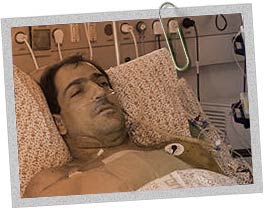 | | | Israeli patient, Igal Cohen, recieved the heart of a Palestinian donor | |
| | | |  | | | | | | | | Peace donation:
• In June 2001, Palestinian Mazen Djulani died after being shot in the head in Jerusalem.
• His family donated his organs to five people, four of them were Israelis.
• After recieving his heart, Igal Cohen said, "If this can help advance the peace, then I've contributed my part." | |
| | |  |
| | |  | | | The Middle East kidney trade
The Middle East is a hub of the live kidney trade. We know a lot about it thanks to Dr Michael Friedlaender.
Dr Friedlaender is director of the kidney transplant unit at the Hadassah University Hospital in Jerusalem. The unit carries out transplants, but also treats those who have been transplanted elsewhere.
To understand what has happened, he told the BBC World Service, you must understand something of the geopolitics of Jerusalem, which is in the middle of the West Bank.
"Up to the late 1980s we transplanted 50 to 60 Arab patients in our centre in Jerusalem. But after the first Intifada, at the end of the 1980s, the patients were no longer referred to us.
"They were stuck in dialysis treatment. So they found their own way out - first to India and after the gulf war to Saddam Hussein's Iraq."
They could still come to Dr Friedlaender's clinic for their post-operation care.
"We saw around 300 West Bank Arab patients who had bought a kidney abroad for quite cheap prices: around US$15,000 in India and US$7,000 for the round trip to Iraq including the kidney.
"Then our own Arab patients, the Israeli Arabs in dialysis, started asking why they were waiting three to four years for a cadaver kidney. Why can't we do as our cousins and friends just down the road have done and go to Iraq?
"So something like 40 to 50 patients, Israeli Arabs, have been to Iraq and bought kidneys and come back to our clinic."
But there is also a third group of patients.
"The final link in this chain is the Jewish patients. They started noticing that their Arab colleagues in dialysis, their fellow patients, were disappearing. | | next > |  | |
|




 ^^ Back to top


