
PROGRAMMES
GLOBAL INITIATIVES
COPENHAGEN
AMAZON ROAD
DEBATE
Last updated: 18 november, 2009 - 11:32 GMT
Climate connections: Lagos
Climate Connections
- Copenhagen

- Aswan
- Chicago

- Chongqing
- Kolkata
- Lagos
- Manaus
- Mekong
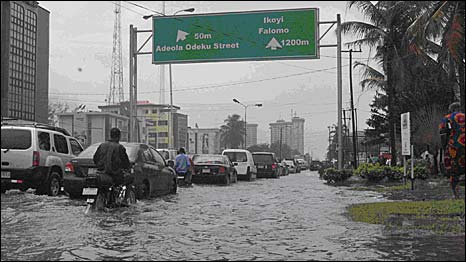
Sub-Saharan Africa is becoming prone to more extreme weather
The BBC is visiting eight areas of the world to find how people are preparing for climate change. BBC Africa English reporter Uduak Amimo reports from the Nigerian city of Lagos.
9 DECEMBER 2009
To play this content JavaScript must be turned on and the latest Flash player installed.
8 DECEMBER 2009
To play this content JavaScript must be turned on and the latest Flash player installed.
7 DECEMBER 2009
To play this content JavaScript must be turned on and the latest Flash player installed.
BACKGROUND
Sub-Saharan Africa's greenhouse gas emissions are negligible. But its people - among the poorest in the world - are being hardest-hit by climate change.
The environmental changes could wipe out all the advances made in recent years to eradicate poverty.
Dry areas are getting drier, wetter areas are getting wetter.
In the last year alone, 25 million people in Sub-Saharan Africa have faced food crisis.
African heads of state have agreed to a "common position" on climate change. At Copenhagen, they will demand $67bn a year in compensation from the developed world, for mitigation and adaptation policies.
Nigeria needs money for both.
It is an oil producer which has done little to reduce its hugely wasteful gas-flaring policy - while millions of people in Lagos are threatened by rising sea levels.
The Climate Connection




BBC iD
BBC iDBBC navigation
BBC links

BBC © 2014The BBC is not responsible for the content of external sites. Read more.
This page is best viewed in an up-to-date web browser with style sheets (CSS) enabled. While you will be able to view the content of this page in your current browser, you will not be able to get the full visual experience. Please consider upgrading your browser software or enabling style sheets (CSS) if you are able to do so.
