The Jews of India: In pictures
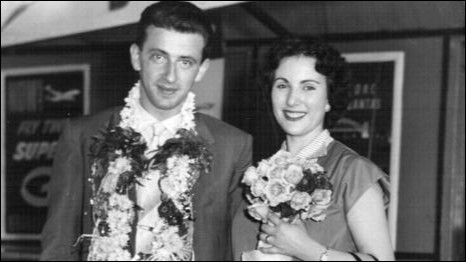
Rabbi Hugo and Jackie Gryn arrive in Bombay, August 1957.
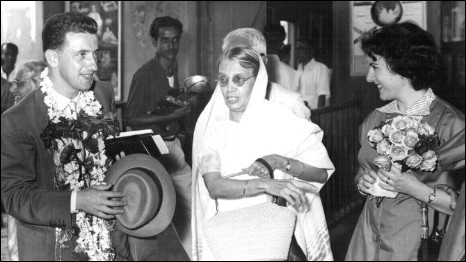
Bombay, August 1957. Rabbi Hugo and Jackie Gryn meet Dr Jhirad, founder of the Jewish Religious Union, India's only liberal Jewish congregation. Jackie Gryn is pregnant with her first baby, Gaby.
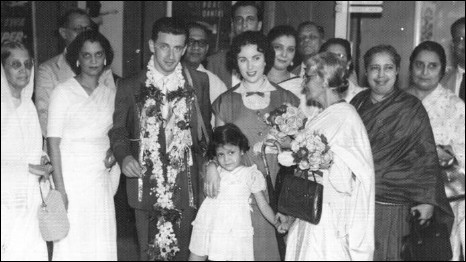
Bombay, August 1957. Rabbi Hugo and Jackie Gryn meet members of their congregation, the Jewish Religious Union. This was Hugo's first job after ordination as a rabbi.
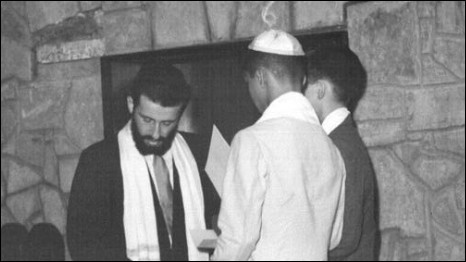
Rabbi Hugo Gryn at the Rodef Shalom Synagogue in Bombay in 1959.
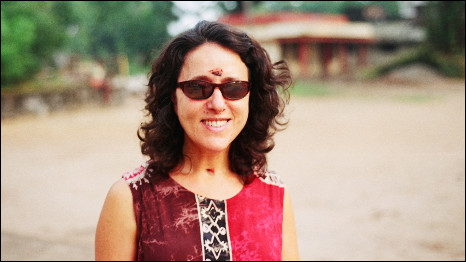
Naomi Gryn visiting a Hindu Temple in Kerala, in 2009.
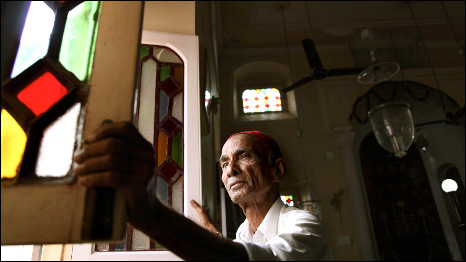
Jacob Dandekar has been a chazan, or cantor, at the Magen Avot Synagogue (meaning ‘Shield of the Fathers’) in Alibaug - a Konkan village - for four years, but has been in the service of various synagogues in Maharashtra for 40 years. In December 2010 this synagogue will turn 100 years old (Credit: Ashima Narain).
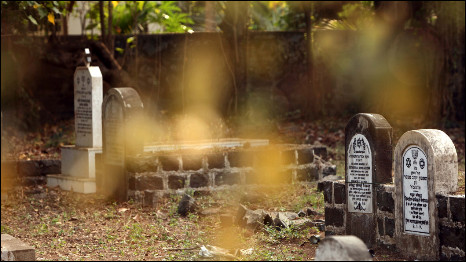
The Bene Israel (meaning ‘Sons of Israel’) believe that they are descended from seven men and seven women who survived a shipwreck about 2000 years ago and were washed up on India’s Konkan coast. They settled first in the village of Navgaon. Its Jewish cemetery includes a monument for all those who died in the shipwreck (Credit: Ashima Narain).
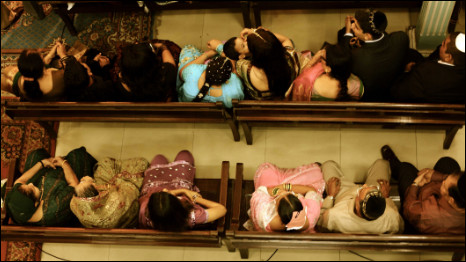
Guests at a wedding, at the Magen Hassidim Synagogue (meaning ‘Shield of the Pious’) in Jacob Circle, Mumbai. Despite many centuries of isolation, the Bene Israel have preserved a distinct Jewish identity (Credit: Ashima Narain).
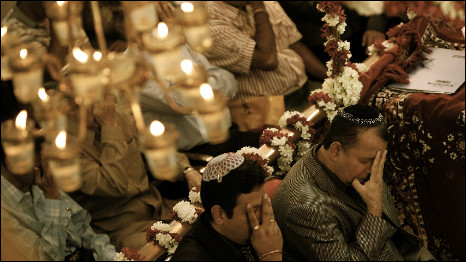
Shaar Hashamaim (‘Gate of Heaven’) Synagogue in Thane celebrates its 130th anniversary. The congregation recites the Shema, ‘Hear O Israel’, the watchword of Jewish faith, at the first service to be held after the renovation of the synagogue (Credit: Ashima Narain).
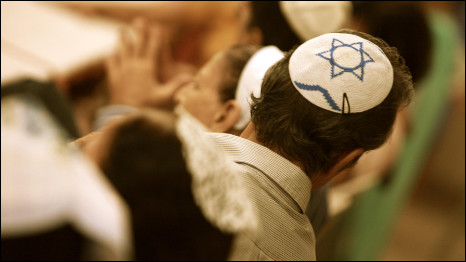
Members of the Jewish Religious Union - India’s only liberal Jewish community - gather at ORT India for a Havdalah service at the close of Shabbat. Their synagogue Rodef Shalom (‘Pursuers of Peace’), was burnt down in 1993 during Hindu-Muslim riots. Since then they have been without a meeting place of their own (Credit: Ashima Narain).
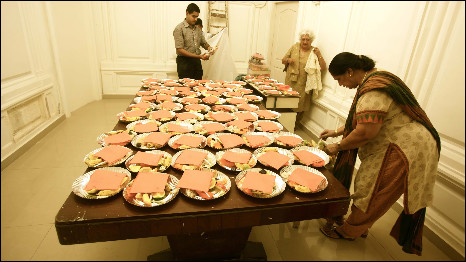
Dr Alice Isaac and Norma Suvarna prepare plates with seven different types of fruit for the Malida thanksgiving ceremony, a tradition unique to the Bene Israel community in India (Credit: Ashima Narain).
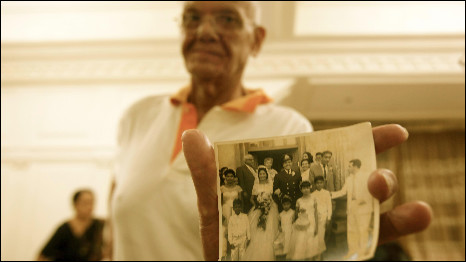
Joel Solomon holds up a picture of his wedding. He and his wife Zillah were married in 1959 by Rabbi Hugo Gryn who is standing on the far right of the photograph (Credit: Ashima Narain).
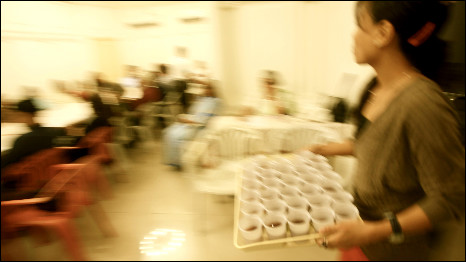
Ariella is studying early childhood education at ORT India (Organization for Rehabilitation through Training), which provides vocational training to young Jewish people in preparation for making aliyah, or emigration to Israel. Ariella is a member of the Bnei Menashe community (‘Children of Manasseh’) from Manipur and Mizoram in North East India who claim descent from the ‘lost’ tribes of Israel (Credit: Ashima Narain).
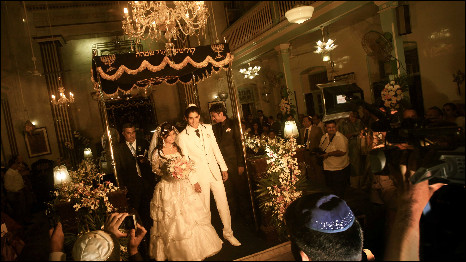
The wedding of Sharona Borgaonkar and Moses Shilcolkar at the Magen Hassidim Synagogue on 8 November 2009. Their surnames indicate from which village on the Konkan coast their families originate. Some Bene Israel still have arranged marriages (Credit: Ashima Narain).
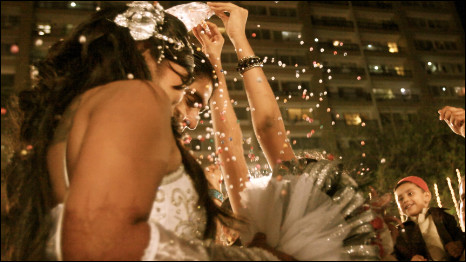
The tattoo on Sharona’s shoulder is complemented by the delicate henna design applied to her arms at a Mehndi ceremony a few days before her wedding, a Hindu custom adopted by Indian Jews. Throwing confetti, an ancient pagan fertility rite, is associated in India with Christianity (Credit: Ashima Narain).
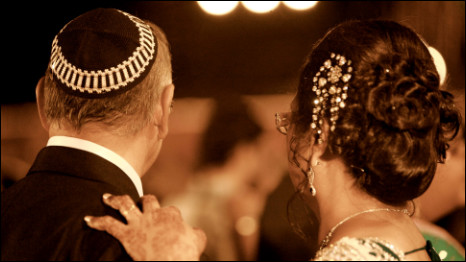
The bride’s aunt and uncle, Elizabeth and Shalom Judah, have come from Israel for Sharona and Moses’ wedding. Shalom wears a kippah, or skullcap. Elizabeth, along with all the bridal couple’s female relatives, has a henna tattoo on her arm. The reception was held in the grounds of the Sir Elly Kadoorie High School, one of Mumbai’s two Jewish schools (Credit: Ashima Narain).
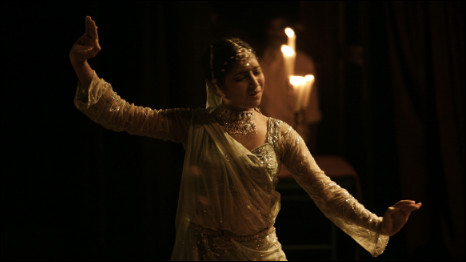
Maayan Sankar performs a Kathak dance at the Khai Fest, an annual Hanukkah tradition for Indian Jews held at the Jewish Community Center.
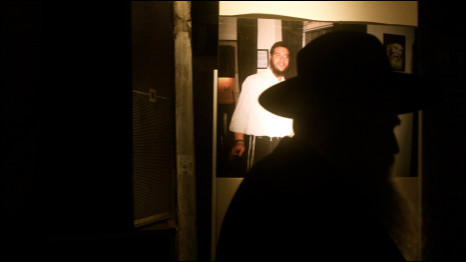
One year after the attacks on Mumbai in November 2008, a ceremony is held in memory of New Yorker Rabbi Gavriel Holtzberg, his pregnant wife Rivka and four other hostages who were killed in Chabad House by Muslim terrorists (Credit: Ashima Narain).
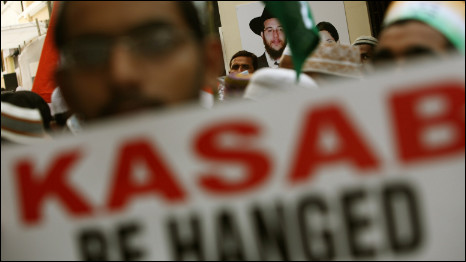
Protestors from the Muslim Raza Academy come to Chabad House one year after the terror attacks - known by Mumbaikers as 26/11 - to show their outrage and call for the execution of Ajmal Kasab, the only gunman captured alive after the attacks (Credit: Ashima Narain).
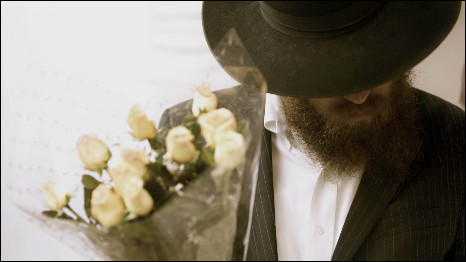
People hand flowers to one of the Lubavitch mourners who came from America for a memorial service at Chabad House that marked the anniversary of the terror attacks. Although the hostages killed at Chabad House were all visitors to India, Indian Jews have now become mindful of their vulnerability (Credit: Ashima Narain).
Naomi Gryn went to India, tracing the footsteps of her late father Hugo Gryn, whose first job as a rabbi was in Mumbai. Fifty years on, she found out how things have changed for the Jews of India.
Take a look at her personal journey in the gallery above. The archive images of Hugo and Jackie Gryn are from Naomi's personal collection and the others are by photographer Ashima Narain.
