May 2008Bluebells and Bank HolidaysHello everyone,
Yesterday was a Bank Holiday in the UK. Bank Holidays are so called because they are days when banks legally have to be closed. Until a few years ago, almost everything else was closed too: but now most shops, museums and tourist places are open on Bank Holidays. All Bank Holidays are public holidays, but not all public holidays are Bank Holidays! In England, Scotland, and Wales we have fewer public holidays than almost any other European country: 8 in total. Most are connected to religious celebrations, but I bet that if you asked people in the street, they wouldn't be able to name them all, and they certainly wouldn't celebrate them! The unusual thing about our public holidays is, that except for Christmas, New Year and Good Friday, they are always on a Monday, so the date changes each year.
New Year's Day: 1st January
Good Friday: the Friday before Easter Sunday
Easter Monday: the day after Easter Sunday
May Day Holiday: the first Monday in May (not necessarily 1st May)
Spring Bank Holiday: the last Monday in May (this used to be Whit Monday, another religious festival)
Summer Bank Holiday: the last Monday in August
Christmas Day & Boxing Day: 25th & 26th December
Confused? Well here's a link to a really good website created by a school in Kent (that's in south east England). It explains public holidays (and all sorts of other things) much better than I can! Woodlands Junior School.
So what do people do on a public holiday? Well, the first thing to say is that everyone always jokes that the weather will be bad. This probably explains why so many people plan to stay at home and do DIY. If the weather turns out to be fine after all, people jump in to their cars and head for the coast or the countryside. Can you guess what happens then? They get stuck in a huge traffic jam for hours, the children get bored and everyone gets hot and bothered! Yesterday was a beautiful sunny day and this morning I met a neighbour of mine who told me he had left London at lunchtime to drive the 60 miles to the seaside and arrived 5 hours later....just in time to turn round and drive home again! I felt very smug because I had a lovely day: in fact I had a lovely weekend! Let me tell you why. First of all, last week I celebrated my birthday (oh dear, James, another year older). The week before my oldest friend (I mean the friend I have known for the most amount of time - she's a little bit younger than me and I've known her since she was born) also had a birthday. She lives about 50 miles outside London with her husband and son (who is one of my Godchildren - I have 5!), but this weekend she left them to look after themselves, and came to stay with me so that we could celebrate our birthdays. On Saturday evening we went out with friends for a meal in a pub: it was a really nice place, but we had to wait an hour and a half to get a table! On Sunday afternoon we went to some local woods to see the wild bluebells. Here we are:
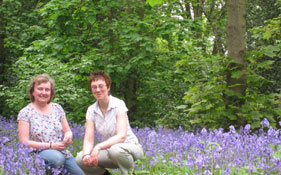
A wood full of bluebells is one of the most beautiful sights you can see. If you've never seen it, you'll just have to imagine a kind of blue-purple haze under the trees, stretching as far as you can see. The flowers only bloom for a couple of weeks in late April or early May. English bluebells are different from the Spanish bluebells and, a bit like the Exmoor pony, are under threat because the Spanish bluebell is invading! The individual flowers of the English bluebell don't look as if they are anything special
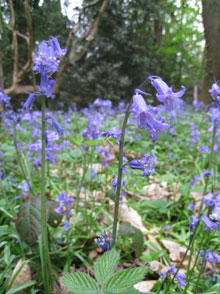
....but altogether they are simply beautiful (unfortunately, photos don't really do them justice)
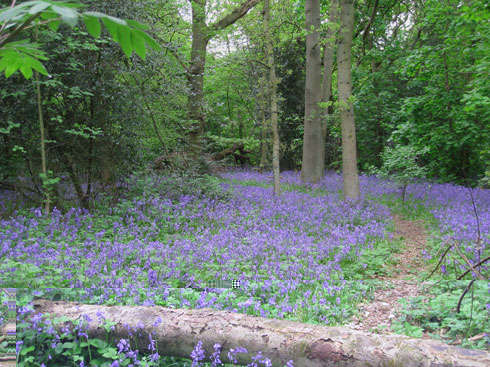
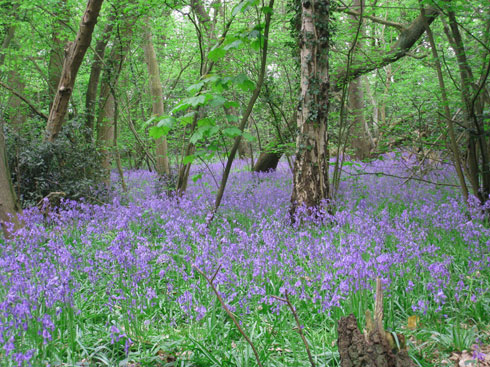
My mother was born in Germany and came to England in the late 1940s. She always says that it was her first sight of bluebell woods that made her decide to stay here! She used to do a lot of hiking, but now she's older, she can't do as much, so yesterday I drove her around the English country lanes so that she could see the bluebells. A much better idea than sitting for 5 hours in a traffic jam, don't you think?
Finally, a few other bits and pieces: when I was out on Sunday, I came across some gorse (the plants the Exmoor ponies eat) and took a better photo so that you can see how prickly it is:
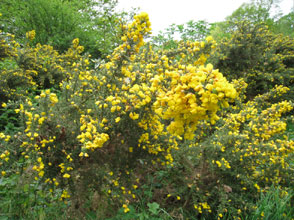
All the green bits around the yellow flowers are actually thorns, not leaves.
Ana Paula, I haven't forgotten about the books!
Naheed: It was Paul's idea to start the staff blog...but you'll notice he's only written one so far!
Cris: unfortunately the British don't often stop for tea, but when they do, it's usually sometime between 3 o'clock and 4 o'clock.
Kuldeep: thank you for the tea recipe: I'm going to try it!
Thank you for all your comments: I'm looking forward to hearing how your scones turned out and what your favourite cake recipes are. Filippo, as you like savoury more than sweet, would you like me to find the recipe for cheese scones?
Take care
Carrie
DIY: Do-it-yourself - repairing and decorating your home yourself
to turn out: in this case, to end up
to head for: to go towards
b>hot and bothered: agitated or worried
smug: pleased with yourself
haze: a kind of mist
to do something or someone justice: to be fair to something or someone
under threat: to be threatened by something
posted on Tuesday, 06 May 2008 | comment on this postLife at BBC Learning EnglishHello everyone!
Good to talk to you again! I had a brief stint as a teacher blogger last year as some of our regular readers might recall.
I thought you might like to hear a little bit about daily life here at BBC Learning English.
Our office is located right in the middle of London, very near the River Thames and not far from the Houses of Parliament, Big Ben and the London Eye. We're also quite near Fleet Street (where most British newspapers used to be based) and the Royal Courts of Justice (also known as the High Court).
It's a great location in a lot of ways, but it does mean that parking is very difficult, so most of us come to work by public transport - train, bus, or tube - and quite a few people come to work by bike. Cycling in Central London is not for the faint-hearted - but I take my hat off to Nuala, Callum and Paul who all cycle to work regularly. They all wear special clothes for cycling - high visibility jackets, shorts, and head protection, and warm, wind-proof jackets and gloves. So the mornings in our office sometimes look like a training camp for the Tour de France!!!
Here's a picture of Callum and Nuala in their cycling gear. The 'shiny hearts' they both appear to have are the special light reflectors on their jackets - which are glowing because of the camera flash. I don't know why they are located over their hearts...?
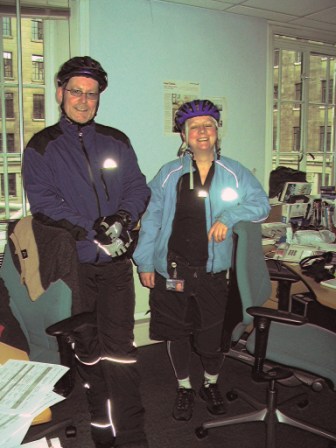
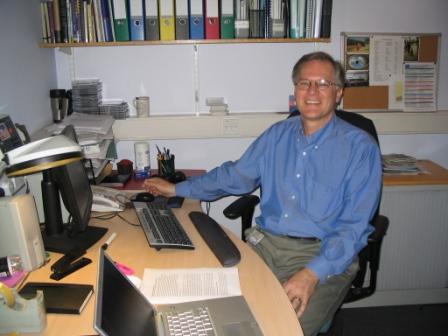
Luckily we have showers and lockers in our building so at some point in the morning, the cyclists nip off for a quick wash and brush up so by lunchtime everybody is looking normal (!) again. We don't have a dress code in our office and most of us wear casual clothes, except for Andrew, the head of BBC Learning English, who always looks very smart in his suit.
Here's a photo of Andrew at his desk. He's looking fairly relaxed without a jacket and tie...
We have an open-plan office so we can all see and talk to each other. It gets quite noisy at times... and at other times it is so quiet that you could hear a pin drop. Everybody has regular tasks to do - for example, Nuala and Elena are busy with the new episode of Flatmates every Tuesday, and Carrie checks the blog comments most mornings - but most of us get to work on new projects fairly reguarly too. Sometimes we work alone but a lot of what we do is collaborative: for example, Callum worked with an expert from the BBC pronunciation unit when he was developing the new pronunciation series, and I was lucky enough to work with the lovely William when we were developing Grammar Challenge.
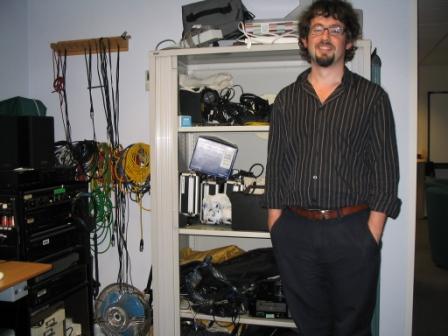
We have a lot of technical equipment in our office - cameras, recording equipment (including 2 very small studios) and various laptops, PCs and a lovely new Mac. Matt is our studio manager and he looks after most of the equipment - so if we need to set up any recording equipment, we ask him in advance and he makes sure we have everything we need. He's very friendly and co-operative and very patient and helpful with those of us who need technical support. He has to be very organised to make sure everything is where it should be, and that all the cameras etc. have the right cables, batteries etc.!!!
This is a photo of Matt and his very well organised equipment cupboard:
So I have probably given you the impression that our office is full of cyclists and cables. It's not quite like that! It's a great place to work and people are very friendly and relaxed (we do get a lot of work done, too). I'll tell you a bit more about some of the things we get up to the next time I write.
In the meantime, do write in and let us know a bit about your own working environment! You can pinch some of the vocabulary from this blog if you like - I won't mind!!!
All the best
Catherine
Vocabulary
I had a brief stint - I did a duty, task or job for a short time
not for the faint-hearted - difficult, tiring or dangerous
I take my hat off to (someone) – I have a lot of respect and admiration for someone
nip off – quickly go somewhere
to have a quick wash and brush up - to quickly wash your face, brush your hair, change your clothes etc. so that you look and feel clean and tidy.
a dress code – rules about what clothes people should wear in a particular situation or event
so quiet that you could hear a pin drop – this is a fixed expression that means 'very, very quiet'
collaborative – is the adjective form of collaborate: to work co-operatively with somebody
get up to - an informal way of saying 'do' - especially when the thing that you do is unusual, exciting or interesting
pinch – steal (informal) posted on Thursday, 08 May 2008 | comment on this postBooks, books books....Hi everyone!
As promised, today I'm blogging about books. Or, to be more specific, books written about the West Country. The West Country is a very popular place for authors to set their books. I guess it's because there's something special about this part of Britain: it's quite isolated and the landscape is beautiful, with rolling hills, bleak moors and a dramatic coastline.

Did you know that the most south western part of Britain - Cornwall - has its own language and it's own flag? In the picture below, it's the black flag on the right (the other two are the Union flag and the "Jolly Roger")
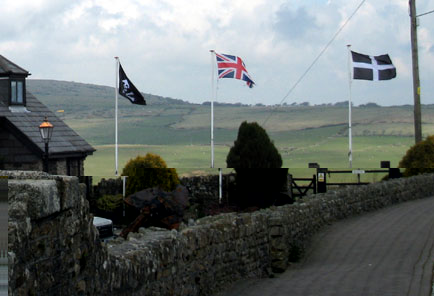
The Cornish language is probably only spoken fluently today by fewer than 500 people, but there is a revival happening and there are even some street signs written in English and Cornish.
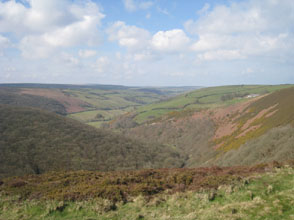
But what does this have to do with books? Actually, nothing at all - I just thought it was interesting! Anyway, back to the subject of books. There have been literally thousands of books written about the West Country. The majority are historical novels - books that are set in the past. It would be impossible to talk about them all, so I thought I'd just mention three authors in particular. First of all, there's R D Blackmore. He lived 150 years ago and his most famous novel "Lorna Doone: A Romance of Exmoor", is set in the 17th century and is the story of John Ridd and Lorna Doone. When John was a child, his father was killed by a band of thieves who lived in an isolated valley high on Exmoor. When he grows up he meets and falls in love with Lorna Doone....who is none other than the granddaughter of the leader of the band of thieves. Not only that, but she is also destined to marry someone else. Will John and Lorna ever find happiness? I'm not going to spoil it for you, but I will tell you that there are lots of twists and turns in the plot! Although it is a work of fiction, the places Blackmore describes are real. He wasn't born in the West Country, nor did he ever live there, but he must have visited Exmoor!
This is the Doone valley - even today you have to travel down a very steep, narrow road to get in to the valley:
and this is the church where Lorna got married:
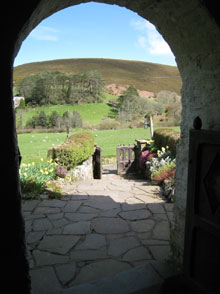
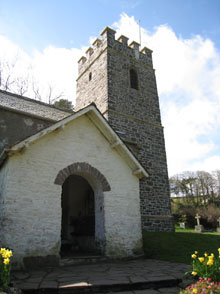
The second author I want to tell you about is Daphne Du Maurier. She was born in London in 1907, but lived most of her adult life in Cornwall. You may already have heard of her: she wrote a short story called "The Birds" which Alfred Hitchcock made in to a film. She also wrote "Rebecca" which was made in to a film and won an Oscar in 1940. I have to confess that I have read Rebecca and didn't like it all that much! However, I have read most of her other books and enjoyed them. Apart from Rebecca, probably the most famous book she wrote was "Jamaica Inn".
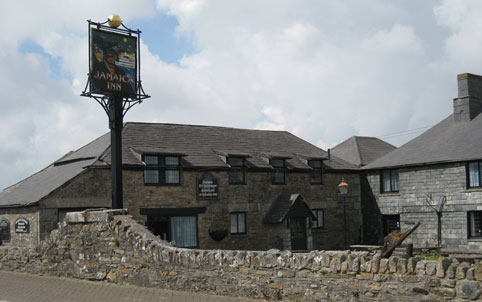
Jamaica Inn really exists - but the story that Du Maurier wrote is fictional. Today the inn stands above a busy road, and is a tourist attraction - but when it was built in 1750, it was very isolated. Travellers would break their journey there overnight - but some of them were up to no good, hiding brandy and tea at the inn to avoid paying taxes! Like the story of Lorna Doone, the book Jamaica Inn is a romance: it's set in 1820 and is about Mary Yellan, who, after the death of her mother, goes to live with her aunt at Jamaica Inn. She soon realises that something strange is going on at the inn and discovers that her uncle is part of a group of wreckers - men who lure ships on to dangerous rocks and then steal the cargo.
Of course, there is also a handsome man involved and a surprise villain!
The final author (gosh this is turning in to a long blog - sorry), is Winston Graham who wrote a series of 12 books about the Poldark family (you can tell a true Cornishman if his family names starts with Tre, Pen or Pol). Once again, these are historical novels and tell the tale of Ross Poldark, who returns home to Cornwall to find his house is falling down and his fiancée is engaged to his cousin! The story follows Ross as he repairs his house and reopens the tin mine which is on his land. Naturally there are all sorts of disasters on the way - after all, that's what makes a good story! Before Cornwall became a popular tourist destination, mining tin was the main occupation - it was very dangerous, as many mines were on the cliffs and flooded very easily. Today the ruined tin mines are rather spectacular don't you think?

In the 1970's some of the books were turned in to a hugely successful BBC TV series called Poldark - I can remember sitting glued to the TV every week, gripped by the story and the beautiful scenery. At the time, I had never been to Cornwall but as you can see from my photos, I now go there every year if I can!
I'm going to sign off now, but next week I'll reply to all your comments and post the recipe for cheese scones!
Have a great weekend
Carrie
rolling hills: hills which go gently up and down
dramatic: very exciting
Jolly Roger: the flag flown on a pirate ship, showing a skull and crossbones
band of thieves : a group of men and/or women who steal things
none other than: this phrase is used to emphasize the surprising identity of a person
twists and turns : unexpected developements
break a journey: to stop somewhere to rest and/or eat and drink something
to be up to no good: doing something bad
to be glued to something or someone: to give something all your attention
to be gripped by something: something that affects you strongly posted on Wednesday, 14 May 2008 | comment on this postTime waits for no man, especially me :-(Well, well, well, there's Carrie hassling me and twisting my arm (see The Teacher) to write my second blog and then what do I discover? Carrie has already stolen my thunder in a previous post by writing about exactly the thing that I was going to write about! How rude!
If I was the sort of person who gave up easily, I could say that Carrie shot herself in the foot (see The Teacher) and use that as an excuse to go off and do something else.
But I'm not that type of guy, I'm not going to give up on this blog (see Face Up To Phrasals). No, that wouldn't be right. And if I tried, Carrie would just put me in the dog house (see The Teacher) and I don't want that.
So sit back, put your feet up and get ready to enjoy, 'Bank Holidays and Camping - the photostory'.
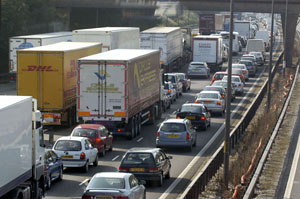
A typical bank holiday scene in the UK
I usually go camping on the second bank holiday in the UK (that's around the 1st May - see Carrie's blog for more details). Often, I find myself in traffic jams like the one above. The jams are to be expected along with another British custom on bank holidays - rain.
So, after I've fought my way through the traffic to the campsite I usually find something that looks like this:
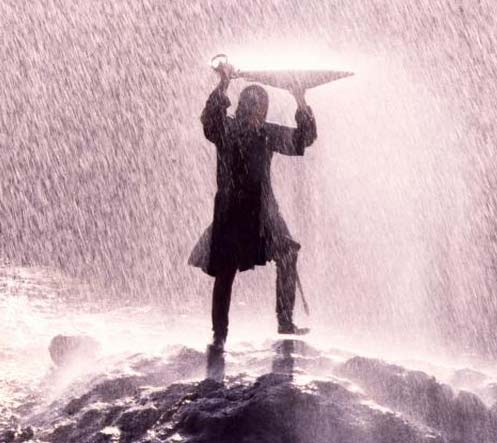
"Why do it?", you may ask and I'd have to answer, "I have no answer", which doesn't really get us anywhere. Perhaps it's just a British thing (you can tell us otherwise using the comments).
Wonderfully, this year it was different; the ninety minute car journey only took two hours and it never rained once on the journey or at the campsite :-) Occasionally though, it looked like it might:
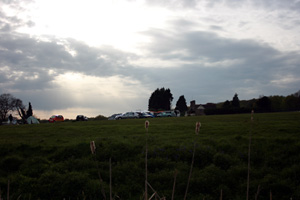
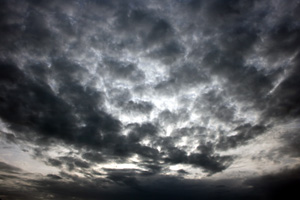
Instead we had hours and hours of sunshine, it was almost like being in Brazil or Japan or Italy or Argentina or Vietnam or Pakistan or Taiwan or any country other than England. All of the sunshine meant that I got very burnt (sorry no photos). Getting sunburn is a very typical experience for me and explains why I don't like beach holidays. Lying around on the beach going from white to red is just unpleasant (and a little dull).
The sunshine also meant that I could go out and take some pretty pictures and here they are:
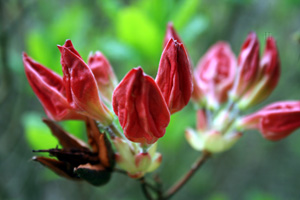
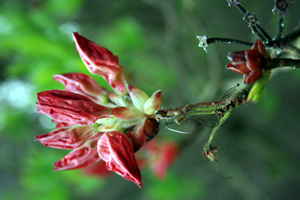
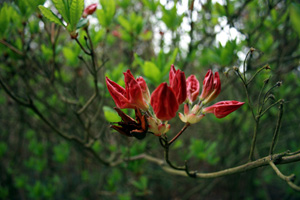
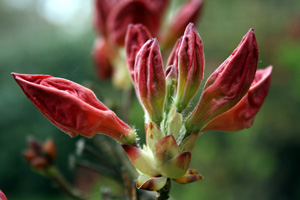
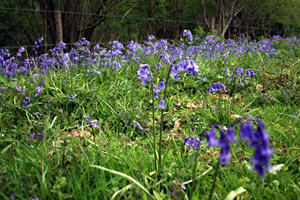
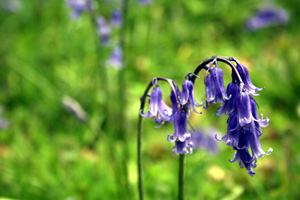
Finally, any good camping trip also requires a fire and some strange effects:

And that's it from me. I'll return soon with another photostory about my favourite hobby. In the meantime, do write and tell us about the worst traffic experiences in your country and what people do on national holidays.
bye for now,
 Paul Paul
PS: no help from me with the text. If there are words or phrases that you don't understand then send them in as a comment to see if someone on the blogs can help explain them. posted on Tuesday, 20 May 2008 | comment on this postA poor excuse!Hi everyone!
I'm going to start with an apology and an excuse!
I'm sorry that there's no picture of cheese scones in the blog. Last night was my only evening in this week and I had fully intended to bake some cheese scones to photograph for the blog. Instead I spent my evening watching football on TV - or perhaps it would be more honest to say not watching football on TV. Perhaps I should explain. Last night was the European Cup final played in Moscow between two English football clubs: Chelsea and Manchester United. I've been a Manchester United fan since 1968, when they also won the European Cup. I was very young at the time and honestly have no idea why I even knew about football. My father wasn't particularly a football fan and my mother doesn't really understand sport at all. I'm an only child so I didn't have any older brothers to get me interested in the game and we didn't have a TV until I was older - so why I started supporting MUFC is a complete mystery, but I did.
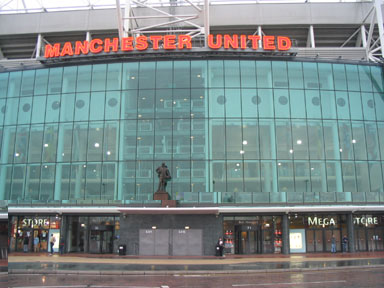
I didn't actually get to go and see Manchester United play until a few years ago. At the time, BBC English (that's what BBC Learning English used to be called) was full of Chelsea supporters who regularly went to see them play, as Chelsea are a London club. Eventually, after a lot of nagging (I'm good at nagging, as Paul will tell you), they agreed to take me to a match between Chelsea and Man U. Man U won. The second time they took me to a match between Chelsea and Man U, Man U won again. And the third time we went. After that they refused to take me to any more matches! I've never seen a match at Old Trafford (Manchester United's home ground), but I was lucky enough to visit the ground a few years ago when we were making a radio series.
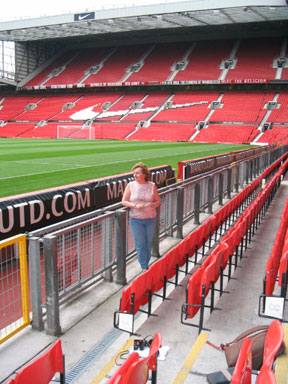
We were given a guided tour of the grounds and the museum and allowed to walk down the "tunnel" that the players use to get on to the pitch. This is the view they see:
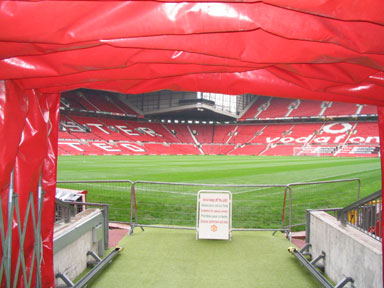 > >
Can you imagine what it must be like to come out of the tunnel and see the seats filled with more than 75,000 people and to hear the roar of the crowd?
You can take a virtual tour of Old Trafford here.
Anyway, back to my poor excuse for not baking any scones. The match between Chelsea and MUFC was on TV last night, but somehow I couldn't quite bring myself to watch it (how hopeless is that?). I sat down with a nice cup of tea and then spent the next two hours channel hopping - watching a bit of one programme and then switching to the football to see the score and then back to another channel. At half time the score was 1-1. At full time the score was 1-1, so they played 30 minutes of extra time. At the end of extra time the score was still 1-1, so it went to a penalty shoot out. By this time, I was hiding my head in the cushions. When Ronaldo, one of the United players, missed a penalty, I thought it was all over and went to get ready for bed....but I left the TV on just in case. Two minutes later one of the Chelsea players also missed a penalty and so it went to sudden death. Gulp! Finally, United won 6-5 on penalties. I think the entire neighbourhood must have heard me scream!
So there you have it. That's my poor excuse for why I didn't bake any cheese scones. Nevertheless, here's the recipe.
Ingredients
175g self raising flour (this is white flour that already contains a raising agent: if you can't find self raising flour, you can use all purpose or plain flour and add 2 teaspoons of baking powder (baking soda))
25g butter cut in to small pieces
75g of finely grated strong cheese - if you can find Cheddar, this is best!
1 large egg
2 to 2.5 tablespoons milk
Half a teaspoon salt
Half a teaspoon of mustard powder
A good pinch of cayenne pepper and a little extra milk
Method
1. Heat the oven to 220C/425F/Gas 7.
2. Rub a thin layer of butter over a baking sheet. (A baking sheet is a flat piece of metal)
3. Put the flour, mustard powder, salt and one really good pinch of pepper in to a bowl and mix them up.
4. Add the butter and use your fingertips to rub in the butter, so that the mixture looks like breadcrumbs. This has to be done quickly so that the butter doesn't melt.
5. Mix in nearly all the grated cheese (leave about 1 tablespoon)
6. Now beat the egg with 2 tablespoons of milk.
7. Add the milk and egg mixture to the flour.
8. When it is all mixed in, use your hands to knead everything together into a soft dough (if it is dry and crumbly, you can add a little more milk.)
9. Put the dough on to a floured surface and use a rolling pin (also with flour on it) to roll the dough. The dough needs to be about 2cm thick.
10. Use a round 6 cm cutter to cut out circles and put them on the baking sheet. Make sure they have plenty of space, as they will spread.
11. Brush the top of each scone with a little milk and then sprinkle the rest of the grated cheese over the top of the scones.
12. You should be able to make about 8 scones with these ingredients, but you can use a smaller cutter and make more.
13. Bake on a shelf near the top of the oven for 15-20 minutes.
14. Take the scones off the baking sheet and leave them to cool. You should eat the scones while they are still warm, because cheese scones taste best when they are fresh out of the oven. Cut them in half and spread with butter. If you can't eat them all, then you can freeze them when they are cold.
Thank you for all your comments - as I usually spend part of each day at work moderating your comments for the teacher and student blogs, it's great fun to be reading the comments that are for me! I'll try and answer them next time, but Naheed, you'll see that I passed on your message about doing a blog to Paul and he finally gave in and wrote one.
Take care!
Carrie
an evening in: an evening spent at home.
an only child: a child without any brothers or sisters
half time: the end of the first part of a football match, when the players go off the pitch
full time : the end of match after 90 minutes of playing time
extra time: 30 minutes added on to the end of some matches (like cup finals) when the score is drawn
sudden death: the game ends as soon as a goal is scored
pinch: the amount of pepper you can hold between your finger and thumb posted on Thursday, 22 May 2008 | comment on this postQuest for the white horseHi everyone,
I'm Elena and I'll start off by showing you a photo which was taken last Saturday.
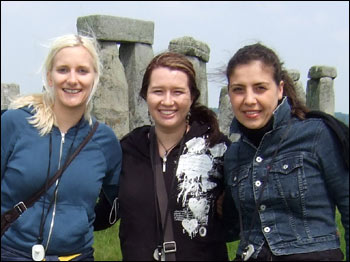
I’m on the left. Yolanda is in the middle, and Viviana is on the right.
How do I know them? Well, Yolanda is my Australian flatmate and Viviana is my ex-student and she’s Italian. I did my teacher training earlier this year and Viviana was a student in the first class I ever taught. I was very nervous and Viviana asked lots of difficult grammar questions to catch me out. It still makes me shudder thinking about it. I was being observed by my tutor at the time so I didn’t enjoy being put on the spot like that. Anyway, we look back and laugh about it now, and it was all good experience.
So anyway, back to the story. This weekend just gone was another bank holiday. Hurrah! May is a good month because we get two long weekends with the Monday off work. So, to get the most out of this one, my friends and I decided to jump in the car and have a day trip to the countryside.
First stop was … and you might have guessed from the background of the photo above… Stonehenge!
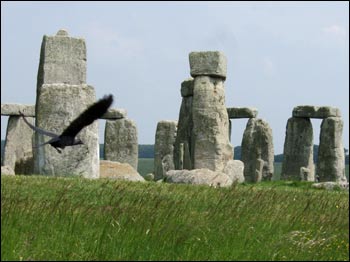
Stonehenge on Salisbury Plain, Wiltshire is a ring of monolithic stones and dates back to around 3000 BC.
Before we set off, lots of people had told me that Stonehenge wasn’t worth visiting, and that it was a let down. That it was smaller than you’d imagine and that it was spoilt because it was so close to a busy road. Yes, yes - but I still wanted to see it for myself, and I’m so glad I went. I thought it was brilliant! Don’t let anyone put you off going. I think it is definitely worth a visit.
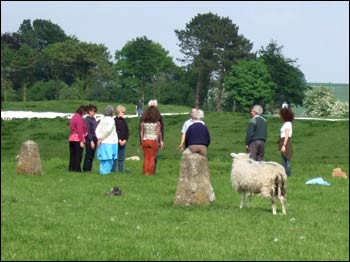
Afterwards, we thought we’d go and see another stone circle in the nearby town of Avebury. This one is even older than Stonehenge and has fewer tourists. When we got there, there were some people meditating (at least that’s what I think they were doing) by the stones. I took this picture (from quite far away) mainly because the sheep was really making me laugh. The sheep was glued to the spot watching the people with a baffled expression on its face. It stayed there for absolutely ages, fascinated by what these people were doing in its field. Admittedly we were quite fascinated ourselves.
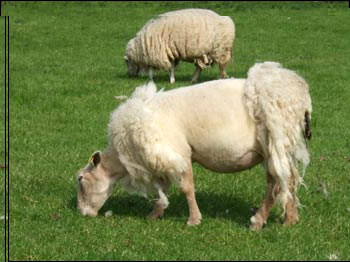
Talking of sheep, I have to share this photo with you. We think it was the sheep that got away – as in, ‘got away from the farmer’ when it was being sheared. Maybe it’s the latest in sheep fashion and will catch on. What do you think?
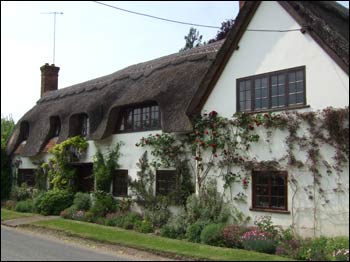
Anyway, this part of the country is really beautiful and if you get a chance to go then I would thoroughly recommend it. The villages are full of pretty cottages with thatched roofs and the countryside is beautiful at this time of year.
During the drive, Yolanda was my navigator. She did a very good job, but this was the first time she had ever looked at a British roadmap and she got a little bit confused. The motorways are coloured blue and she was convinced these were actually rivers. We had a good laugh at her expense when she told us. What colours are the roads in your countries?
The other confusing thing in the Wiltshire area is that there are lots of references on the map marked ‘white horse’. These turned out to be white horses made of chalk carved into the countryside. So there began our quest for the white horse (any white horse). We scoured the countryside, took a few wrong turns (blame the navigator) and quizzed the locals. And then, we found our first horse!
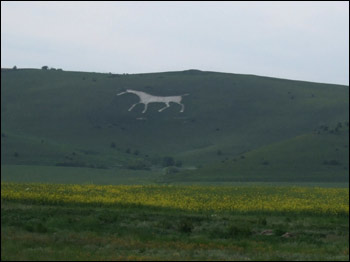
Most of the white horses date back 300 years or so. This one is known as the Alton Barnes horse.
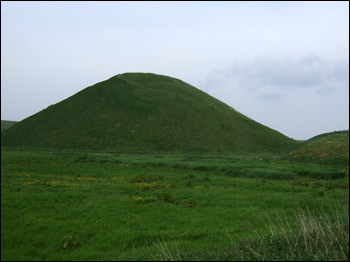
We stumbled across another horse on the way home but we didn’t consider it impressive enough to warrant a photo, but here is a photo of Silbury Hill, another famous landmark. It's more than 40 metres high and dates back from around 2500 BC. It's man-made but no one has ever found out why it was made.
This part of the country is also well known for crop circles. Sorry, no photos of them, but there are lots out there on the internet.
Crop circles are patterns in crops which are thought to be very mysterious and usually appear during the night. Some people believe they are linked to UFO’s (unidentified flying objects/aliens).
Viviana has a better theory and thinks that somewhere there is a man with a lawnmower who ventures out in the dead of night to make them. Do you have any crop circles in your countries? What are your theories on how they are made?
The rest of the weekend was a washout. It rained and rained and rained and then rained some more. In fact it only stopped raining on Tuesday morning – just in time for work! Isn’t that just typical?
Just before I left the house to go to work I checked the back door was locked and look who I found mooching about on the shed roof:
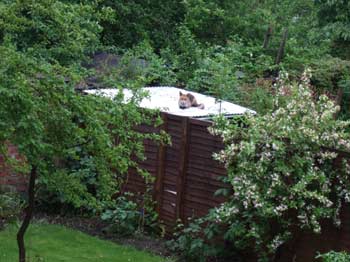
Can you see? Shall I zoom in a little closer?
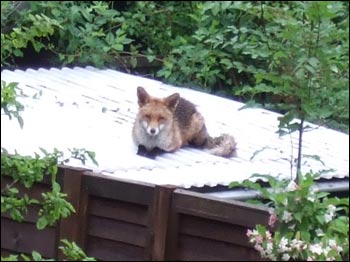
Yes, it’s a fox! You certainly don’t see one of those on your neighbours shed roof every day, so I just had to take a snap. What’s the strangest thing you’ve every come across in your garden? Write in and share your stories.
Bye for now,
Elena
Ps. Who would you like to write the next staff blog?
quest: a long and difficult search
start off: begin
catch me out: to show that someone has made a mistake
shudder: to shake
I shudder to think: used for saying that you do not want to think about something because it is unpleasant
observed: watched
put on the spot: put in a difficult situation (informal)
set off: begin a journey
let down: disappointing
put you off: delay doing something
glued to the spot: unable to move, usually due to interest or fear
baffled: a problem you cannot understand or solve/confused by something
sheared: to cut the wool from a sheep
catch on: to become popular or fashionable
navigator: map reader who plans the route of the journey
motorway: a wide road with several lanes
a good laugh at her expense: to laugh at someone
scoured: to look for something
stumbled across: to nearly fall over/to find
warrant a photo: a reason for taking a photo
found out: discovered
a washout: if heavy rain cancels an event
mooching about: to spend time in a place without any particular purpose (informal)
take a snap: take a photo
ventures: goes out
dead of night: very late at night when everything is very quiet
theories: ideas
posted on Tuesday, 27 May 2008 | comment on this post | May 2008
| Sun | Mon | Tue | Wed | Thu | Fri | Sat |
|---|
| | | | | 1 | 2 | 3 | | 4 | 5 | 6 | 7 | 8 | 9 | 10 | | 11 | 12 | 13 | 14 | 15 | 16 | 17 | | 18 | 19 | 20 | 21 | 22 | 23 | 24 | | 25 | 26 | 27 | 28 | 29 | 30 | 31 | | | | | | | | |
|


