 | | | | | | | ||||||||||||||
| | |||||||||||||||||||
From around the region | ||||||||||||||||||||
Focus on Africa's weekly tour of the best bits from the BBC's African language services.
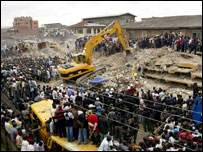
On Thursday, the SOS calls from the mobiles of people trapped in the rubble had all but ceased. Uwais Abubakar Idris's vivid eyewitness reports took listeners right to the scene, he gave a very powerful and moving commentary as rescuers were pulling the deceased from the disintegrated building. He has filed regular updates on the rescue operation and spoken to survivors and to those involved in getting people out of the devastation. Text messages and emails have been arriving in large numbers with people demanding that the authorities take some concrete action and fully enforce building regulations. BBC Portuguese for Africa is tracking the run up to the São Tomé and Príncipe presidential elections due on 30th July. While seeking to represent the full spectrum of political choice on the programme, producers wanted to get in touch with the three registered candidates for the post; the incumbent leader, Fradique de Menezes, Patrice Trovoada and a third candidate, Nilo de Guimarães. An interview with Patrice Trovoada about his campaign pledges went without a hitch. All things are in place for an interview with the sitting president - Fradique de Menezes - on the programme. However efforts to get Nilo de Guimarães to talk about his campaign have drawn a blank. Producer Luis Cardador-Pereira has been trying to track Guimarães down but it seems he is also missing from São Tomé itself, even his allocation of television campaign spots have been going out as dead air. Last heard of, he was heading for Angola. A fantastic pre-election mystery for the service to attempt to unravel together with their reporter on the ground Artur Pinto. A Kenyan family stranded in Beirut, Lebanon as the city came under Israeli fire have been sharing their experiences on the BBC Swahili service. Mrs Otula and her son Sammy Otula were both interviewed by Swahili presenters about the frightening situation that deteriorated around them. Their evacuation was uncertain for a few days, then on Thursday they were told to head to the harbour where, as Commonwealth citizens, they could join one of the ships taking foreigners to nearby Cyprus. Their current whereabouts is so far unknown.
Paul Rusesabagina appeared on the BBC Great Lakes service's Imvo N'imvano discussion programme this week. His life-saving actions and protection of over a thousand Tutsis, whilst working as a hotel manager during the Rwandan genocide of 1994, have made him an international hero and the subject of the Hollywood movie, Hotel Rwanda. This favourable perception of him is not shared by the Rwandan administration however. The listener response to this edition of Imvo N'imvano outstripped expectations and service head Ally Yusuf Mugenzi, anchoring the programme, had a range of listener questions for the ex-hotel chief. Some correspondents had praise for Paul, but there was also puzzlement about why there was such a disparity in opinion, even some suspicion over the source of funds for his resettlement in Belgium; how could he afford it? Where did the money come from? The response that the interview generated was so enthusiastic that BBC Great Lakes is planning to do a follow up discussion to investigate exactly why the government regards him with such suspicion. There are plans to invite a Rwandan government spokesperson and get them to debate the issue with one of the people who was actually in that hotel as the killing went on outside. | EXTERNAL LINKS The BBC is not responsible for the content of external internet sites | |||||||||||||||||||
| ||||||||||||||||||||
| ||||||||||||||||||||






 Click here to listen to Uwais Abubakar Idris's report (Hausa)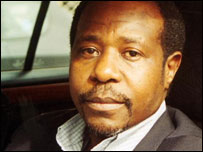
 Last week's highlights