| | | | | | | |||||||||||||||||||||||||||||||||
| | ||||||||||||||||||||||||||||||||||||||
Letters | |||||||||||||||||||||||||||||||||||||||
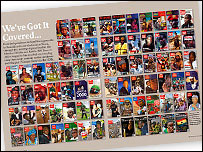
Holding a mirror to Africa Every face tells a story and so does every magazine cover. The colourful two-page photo-essay in the last issue took us down memory lane and I could not help but carry out my own simple analysis of your 75-issue journey. In war-related cover designs it is worrying that soldiers with arms and armoury dominate. Interestingly among the political personalities – Joseph Kabila, Muammar Gaddafi and Nelson Mandela have appeared twice in very different circumstances. Nigerian leaders seem to have made more news over the years than anyone else. This is self explanatory because the country itself has changed presidents more than any other. In sport, football has featured three times, with Kalusha Bwalya and Doctor Khumalo taking two of the slots. But why does athletics only appear once in spite of being Africa's most successful sport in medal haulage? Surprisingly religion with all its worldwide troublemaking has been given only one cover story and so have the arts which are Africa's pride. I also wonder why the continent's economic strides never make cover news. My choice for the most interesting design, however, is the 48th issue depicting Osama Bin Laden. Would I be wrong to guess that Barack Obama is likely to make the cover story of the 76th issue? Leonard Koloko, Kitwe, Zambia Divided language Mathias Muindi's article on the Swahili language in your last issue left out the attitudes East Africans hold towards Swahili. Although Swahili is considered ethnically 'neutral' because it is not associated with any ethnic community, it still attracts a variety of attitudes. For instance, it has been found that the residents of Mombasa, who are native speakers of one of the dialects of the language, do not respect the standard of Swahili taught and examined in Kenyan schools. There is a need to establish whether Africans have positive or negative attitudes towards the teaching and learning of African languages and how to make them have positive attitudes towards these languages. Mark Munialo Maloba, Oyugis, Kenya The woman's touch I want to commend Ellen Johnson Sirleaf for highlighting women's contributions to the development and success of our nation (October-December 2008 issue). I am grateful for the level of work she has introduced to improve Liberia's infrastructure, economy, cultural heritage, justice and democracy. As she celebrated her 70th birthday a few months ago, and just over a 1,000 days into her term, I am confident and hopeful that with the help of all Liberians we can develop our nation and regain our dignity as one of the oldest African nations. William Kokulo, Monrovia, Liberia Freedom fighter or war criminal? I have a firm belief that the cause of fighting in eastern DR Congo, which has led to the suffering of many innocent people, draws credible suspicion to General Laurent Nkunda's true objectives. In my assessment the general seems to be enjoying this spectacle which is obviously rooted in his own self interest. His line of defence that he is offering protection to 'his kindred' should be disregarded so he can plainly be seen for the war criminal he really is – not a freedom fighter. Tobias Oker, The Netherlands National disgrace I could not believe my eyes when I saw the photograph of President Paul Biya and his wife on page 23 of the latest issue of Focus on Africa magazine. Aha! No wonder the president has run wild in Cameroon. Just look at Chantal Biya's photo - she looks like a Calabar masquerade (Nigerian festival) or something the cat dragged in. Please note the rot she piled on her head, her eyelashes, heavy eyeshadow and lipstick. Look at her fingernails; they look like the talons of a tigress. Her dress and appearance is an insult to all African first ladies and every African-descended woman. Solomon Umaru, Jos, Nigeria Obama's African influence The irony about the jubilation in Africa over Obama's election, is that if Obama had grown up in Africa, and at his age with only two years in the senate, Africa's culture of over extended one-man rule would have hindered his rise to leadership. They would have said that he was too young, too inexperienced and not a full-blooded African. Tribalism would have set in and the African paternalistic culture would have prevailed. Let Africans take a page from Obama's rallying slogan, "Yes we can!" Let them mobilise to put an end to the culture of one-man rule. It is redundant and stifles our best leadership talents. John Mpagi, Washington, USA This is a selection of letters published in the January - March 2009 edition of Focus on Africa magazine. Write to 'Letters', BBC Focus on Africa magazine, Bush House, PO Box 76, Strand, London, WC2B 4PH; fill out the form on the top right hand side of this page; or email us at |
| ||||||||||||||||||||||||||||||||||||||
| |||||||||||||||||||||||||||||||||||||||
| |||||||||||||||||||||||||||||||||||||||