FACT FILE | Contact: Jo Sayers
Wiltshire Wildlife
01793 526229
jos@wiltshirewildlife.org
The next Balsam Bashing session is July 24th at Westlea stream. 1000 - 1500 BST. Meet at the end of Barnfield Road by Minety Fences (SU 131854). Wear suitable footwear and old clothes and bring lunch, refreshments provided. |
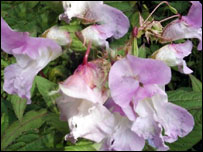
The Swindon Water for Wildlife Project is calling for volunteers to help it clear this aggressive garden escapee from a stretch of river over a series of events starting on Wednesday the 23rd June - before its too late. Himalayan Balsam (impatiens glandulifera) is also known as Policemans Helmet. It can grow up to four metres tall, and it is blessed with an extraordinary reproductive system that makes it virtually unstoppable once it has set seed," says Swindon Water for Wildlife Officer Jo Sayers. Once seed-pods have formed, any disturbance will cause them to burst open, hurling seeds with incredible force that can only be compared to projectile vomiting. If you are unfortunate enough to brush against one at eye-level, it could actually damage your eyesight." The seeds are spat out by a coiled spring mechanism within the seed-pod, which can be seen dangling from the pod afterwards. A bit like a Busy Lizzie on steroids, this native of the Nepalese mountains escaped from the sedate environment of the garden flowerbed. It may be a wonder of nature, but it is a real threat to the wildlife on Swindons riverbanks. 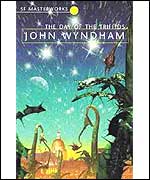 | | Sounds familar: John Wyndham's tale of spitting plants: "The Day of the Triffids". |
"Himalayan balsam crowds out native plants such as comfrey and willowherb, which are important food sources for insects (which are themselves a vital part of the river food-chain). Our local insects seem to find this brash intruder repulsive, and steer clear of it. An absence of insects means that the whole ecology of the river has been damaged." The race is on to clear a stretch of the River Mead, where a blanket of Himalayan balsam is about to flower, and just about to form the rocket-fuelled seed-pods. If seeds are produced, there is a real risk that they will get into the River Ray, one of the wildlife treasures of Swindon and home to otters. One (perhaps the only) piece of good news about the Himalayan balsam is that it is incredibly easy to pull up. | 





 More
More