

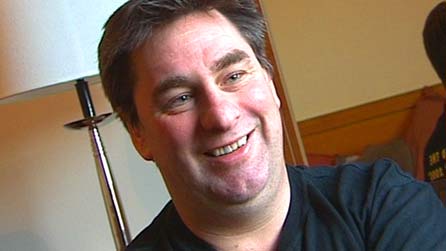
They say sport and politics should never mix. And in an ideal world they never would. By Brendan Gallagher.
We would all compete for the love of the game and the joy and glory of winning. Not to mention the money if you are good enough to compete professionally!
But throughout history sport and politics have become inextricably entwined. Sport has become so important and so much part of the emotional make-up and self image of a country that it has become a massive bargaining counter. Politicians - elected or simply self-made tyrants in one or two cases - recognise that and have exploited sport ruthlessly over the decades.
Just to kick-start a debate amongst yourselves consider - and do some of your own research to get a more detailed insight - the following five infamous cases in which sport either became politicised or inextricably linked up with politics. You will be amazed and shocked.
Profile
Name:
Brendan Gallagher
Born:
16 October 1958
From:
Sussex, England
Position:
Sports Journalist
Paper:
The Daily Telegraph
Previous papers:
South Wales Echo
Achievements:
- Sports Council Best Story Award (2000)
- Had reports printed from 48 countries around the world.
1: 1932 - 1933 Bodyline cricket series in Australia: Sport, and winning, being so important that nations and good friends fell out.
Donald Bradman was a cricketing phenomenon and bodyline was invented purely to negate him. What it actually did was to nearly sever diplomatic relations between Australia - an emerging new country - and the mother country Britain. Some argue things have never been the same since.
2: 1936 Olympics: Sport used for propaganda purposes - and one brave man turning that on its head.
Hitler was convinced of the supremacy of the Arian race and the Berlin Olympics were designed to showcase this. Many were uncomfortable attending what was seen as a Nazi showcase but black American athlete Jessie Owen attended and infuriated Hitler - and completely disproved his theory - by becoming the star of the Games and walking off with four gold medals - 100m, 200m, long jump and 4x100m relay.
3: Rugby and cricket's official boycott of South Africa from 1986 to 1992: Sport as a political lever.
These two sports were the badge of honour for white males in South Africa and to be denied international sporting competition hit harder than any international political sanctions. In fact many politicians who tried to ban any sporting contact made no effort to impose economic sanctions on South Africa which is another subject altogether. The flip side of this is that when South Africa won the 1995 World Cup and President Nelson Mandela wore Francois Pienaar's No 6 shirt it became the biggest symbol of peace and unity in modern day South Africa.
4: 1972 Munich Olympics Massacre: Sport as a target and a publicity vehicle.
Eleven Israeli athletes were gunned down by Palestinian Black September terrorists at Munich airport after being held hostage for 18 hours at the athlete's village. An extraordinarily callous and cowardly act but one designed to secure maximum world wide exposure to their cause. Ever since this date venues of global sporting events have been seen as targets and security is now stifling. The day innocence went out of the Olympics.
5: 1980 and 1984 Olympics: Sport being used as a pawn in a game for chess between the superpowers.
Many western countries - but not Britain - boycotted the 1980 Olympics in Moscow in protest at Russia's invasion of Afghanistan the previous year. Four years later Russian and the Eastern bloc nations retaliated by staying away from the 1984 Games in Los Angeles.
See also
Elsewhere on the BBC
Latest
Never give up, always be prepared to learn and, more importantly, always be prepared to listen.
Welsh rugby legend
Training ground

Work hard
Colin Jackson reveals more top tips on making exercise part of your lifestyle.