Last updated: 17 November 2008
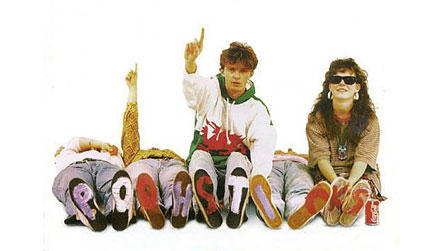
Swansea's Pooh Sticks were part of the late-1980s 'C86' indie scene.
The Pooh Sticks brought jangly bubblegum pop to the indie party, plus uncomplicated three-chord punk and a certain cutesy girlishness.
Debut single On Tape poked good-humoured fun at indieboy-fandom, released on the Fierce Records imprint (run by their own manager, but with a reputation in the indie leftfield second to none with such notorious releases as a recording of Jesus And Mary Chain's North London Polytechnic crowd bust-up from 1986, and a recording of various interviews and random noises from the Stone Roses' Spike Island show in 1990).
Fierce, in keeping with its tradition of bizarre publicity stunts, in 1988 released the box set of one-sided 7" singles featuring the infamous I Know Someone Who Knows Someone Who Knows Alan McGee Quite Well track.
These tracks ended up on their first, self-titled LP, around which they toured the UK. They slotted into an indie framework in which The Beach Boys were held in as much esteem as Sonic Youth and this nod towards Americana saw them tour the States in 1990.
A slew of albums, singles and collections were released on a number of labels, but they always made friends in good places: they had a relationship with top US indie Sympathy For The Record Industry for instance.
The Great White Wonder LP in 1991 was expansive and inventive, bringing together all sorts of genres from 70s AOR to punk. Times were tough, though, and although they appealed to late-night Radio 1, most of the world was choosing between The Stone Roses or Nirvana. Although they shared influences with both, The Pooh Sticks didn't share the success.
1993's ironically-titled LP Million Seller and 1995's sign-off Optimistic Fool, were both critically-acclaimed by those in the know, but most commentators agree with the benefit of hindsight that The Pooh Sticks were perpetually in the wrong place at the wrong time.
Their legacy, however, is a series of great pop records that are, as The Rough Guide To Rock puts it, "to be reassessed as... overlooked gem[s] sometime in the [21st] century."