Migration in WalesWales' population has undergone many waves of change and displacement over the centuries, with many inward and outward migrations of population. The turn of the 20th century saw lots of people coming into Wales to work in the new thriving industries.
This shifted to a predominantly outwards migration from around 1910-60, as these industries declined and people had to look further afield for work. The trend for outward migration reversed in the 60s and 70s, and has continued with an inward trend till today.
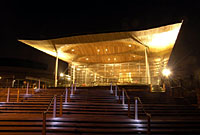 Devolution and the National Assembly
In 1997, the people of Wales were asked to vote in a referendum on plans for a devolved national assembly. Unlike the parliament being voted for in Scotland, it would not have primary law-making powers, or the power to raise taxes.
After much campaigning by both sides, the vote was held on 18 September 1997. The assembly was backed by the people by the narrowest of margins. The vote was 50.3% for the assembly, and 49.7% against.
It opened for business after elections held in May 1999 and has powers associated with administering the Welsh budget and making secondary legislation.
Find out more about the National Assembly For Wales.Industry in WalesWales' industry has changed drastically over the last hundred years. At the turn of the 20th century, the emphasis was on coal and steel in the south and slate in the north. The transport of these items gave rise to a strong maritime industry too.
Coal exports, manufacturing and heavy industry have declined nowadays and have been replaced by new industries. Tourism and public services have taken over as the main employers within Wales.
The shape of manufacturing has also changed. The traditional heavy industries have given way to lighter manufacturing such as electronics, parts and technology. Unemployment in Wales is higher than in both Scotland and England and wages are on average lower.