Is a lisp inevitable?
Absolutely not. A lisp is when your tongue comes forward of your teeth when you're trying to say an 's' sound, and that's often part of normal development.
An 's' should go like this: 'sss' and it often comes out as a 'th' for a lisp.
Quite often, children grow out of lisps as their teeth develop and as they start to tune into sounds more clearly. If you are concerned that your child lisps, don't directly correct them. So if it was the word 'scissors' and they say 'thissors' then you can model back 'yes, it's scissors' and really emphasise the 's' sound.
Long-term dummy or thumb sucking can contribute to lisps because it can alter the pattern of your teeth, so it's best to reduce that habit as much as you can.
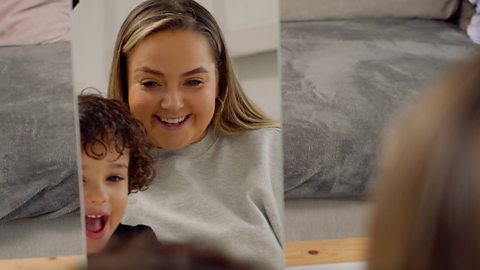
If your child's around 4 years of age or older, they may be more aware of their speech, and they might be able to alter the pattern if you raise their awareness by looking in a mirror together and showing them how the sounds are made. Talk to your child about how to make an 's' sound, so you can tell them to keep the tongue inside, close their teeth, smile and hiss.
Having a lisp is quite common in today's society, and if it's not causing a difficulty, we wouldn't look to solve it.
Lisps, where an 's' sound is pronounced more like a 'th' sound, are fairly common. But are they inevitable?
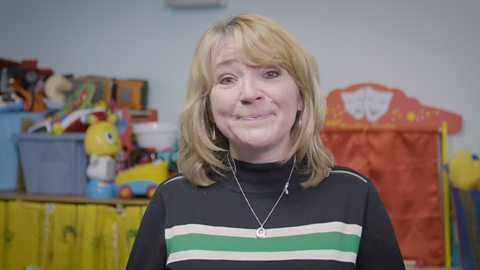
Speech and language therapist Janet Cooper has some advice about lisps in children.
The families shown in this film are not connected to the topic covered.