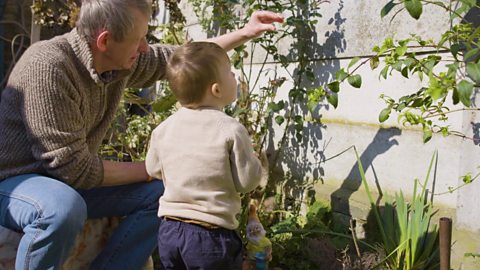
The garden can be a fun place for little ones to learn as it's full of colourful flowers, plants and maybe even a few friendly gnomes.
They'll love being allowed to play with water too, which can be much easier than in the house.
Have a watch of the video below for some ideas on how to talk through garden play.
The rabbits first. That's it. Oh, lots and lots and lots of water.
More?
Yes, more. Definitely need more.
What, more?
And that's a body bath. Boy's body.
That's the boy who's been in the bath.
Yeah.
The boy with a blue shirt is it?
And feet!
He's got feet. And can you see his hands? Where he can catch things.
Right last one, promise?
Last one.
Last one with the watering can.
That's yellow and purple and the red one. Can that one have some?
I'm going to wash my hands in your water.
Thank you.
Come on, let's go inside. You can bring the boat if you want to and I'll bring the seal.
Bring the seal.
Yes, I'll bring the seal. Thank you Arlo for helping with that.
What are the benefits of playing in the garden together?
- Following the things your grandchild takes notice of in your garden and naming and describing them helps teach how words go together.
- Flowers give you the chance to name all of the colours they see.
- Playing with water lets them learn sensory words, like describing how things feel.
- Watering flowers can also give chances to use words for amounts like 'more', 'less', 'a little' and 'a lot'.
- Talking about the things they play with, allows you to expand on their words.
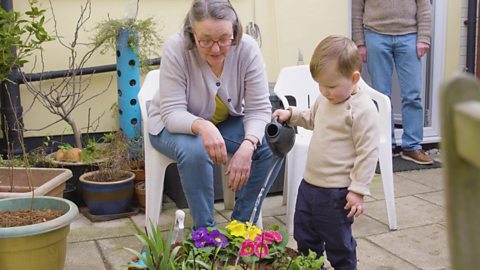
Ideas to involve your child in the garden
Fill up the watering can and then let them lead, watering whatever plants they want to, or maybe even giving the gnomes and toys a shower. Name the things they're watering with simple words like 'flower' and 'boy'.
If you notice them repeating patterns of play (for example, going back and forward with a watering can, watering flowers and gnomes), add language to explain what's going on: 'you're giving the gnome a wash'.
You could build on this by offering new ways to transport the water back and forth - for example, 'shall we use the bucket?'.
Ask them very simple questions like 'shall we wash our hands?' and 'are you getting wet?'.
Expand on anything they name - for example if they say 'flower', you could say 'yes, that's a blue flower'.
Language learning through hobbies and routines
Your hobbies and everyday activities offer perfect opportunities for toddlers to hear new words. Check out the list below for more ideas:
- How about a bit of sensory fun with food?
- Get your little one involved in sorting the laundry.
- Chat them through getting dressed for the day.