Whether it’s keeping their head upright as a baby, learning to sit up straight, taking their first steps or riding a bike, balance and coordination are key to so many milestones in your child’s development.
But have you ever stopped to consider what is involved in them developing a sense of balance and improving their coordination?
We spoke to Dr Sunil Sharma, an Ear, Nose and Throat Specialist from Alder Hey Children’s Hospital to find out all about balance and how to spot if there is an issue with your child’s coordination.
What affects balance and coordination?
It might seem strange talking to an ENT specialist about balance. However, Sunil explains that there’s a lot more to coordination than meets the eye. “Coordination involves using a mixture of different senses to work out your position in relation to the world around you. We use our eyes to visualise where we are - you're looking around and seeing different objects, which tells us where we are in relation to them. But it also involves your ears. There is a particular part of the inner ear which helps to coordinate balance.”
That’s not all, says Sunil. “There's another thing called proprioception, which is a fancy word for sensing where parts of your body are positioned when using your muscles. For example, knowing where your arms are positioned when you raise your hand. All of these things integrate, and your brain interprets the information it receives and tells you the position you’re in and whether you’re balanced.”
What is the vestibular system?
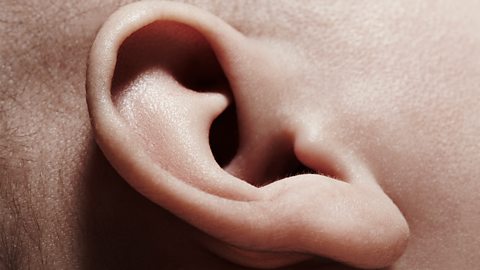
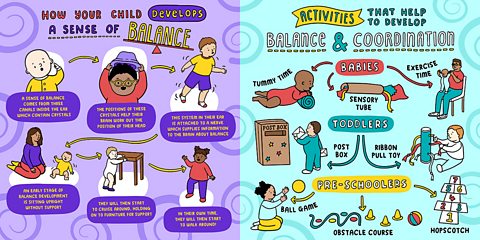
The part of your inner ear that helps to give your sense of balance is known as the vestibular system. It consists of three semicircular canals, each containing crystals. The position of these crystals helps your brain work out the position of your head. You can think of them as being like a system of spirit levels within the body.
“When fluid travels through those little canals it pushes the crystals in different directions, which gives you a sense of orientation. When you’re turning your head, those crystals move in one direction or another,” explains Sunil. This system in your inner ear is attached to a nerve called the vestibular nerve, which supplies information about balance to your brain and you are then able to get your body under control.
How does the balance system develop?
Sunil explains that you can see children’s sense of balance developing in different milestones. ”At about 6 months, most children are able to sit upright without support. At about 12 months they start to walk. Initially, they'll be cruising around, holding furniture before they’re able to walk by themselves.” However, he is keen to stress that all children develop at different rates. “It’s not the case that at 12 months, you should think ‘My child is not walking. What's wrong with them?’ And even within families, one sibling will be different to another. But usually, by about 18 months, you get into that phase of children being able to walk around.”
What can you do to help your child’s sense of balance to develop?
“It’s about supporting children to do activities that really make use of their coordination,” says Sunil. “Early on this could be any game involving spatial awareness, like putting toys into particular slots, encouraging children to sit up and move and eventually to walk. As they get older, it’s helpful to teach them to ride a bike because it really helps them to understand balance.”
Here are some Tiny Happy People activities to boost your child’s coordination at different ages:
Babies
Toddlers
Pre-schoolers
What can cause issues with children’s balance?
As balance involves different senses and different parts of the vestibular system, there are a few areas where children may experience issues, Sunil explains.
Here are some problems that can affect children’s balance:
- Glue ear – Sunil says this is the most common condition that affects children’s balance. “It can present itself as clumsiness and starting to lean over or fall over,” he says.
- Inflammation of the nerve - “Sometimes the vestibular nerve can get inflamed if you have an ear infection, which can travel further into your inner ear and cause balance problems because the nerve doesn’t work as well.”
- Benign paroxysmal vertigo – This is a common condition that causes dizziness in children. The precise cause of BPV is unknown, but most children grow out of it as the vestibular system develops, says Sunil.
- Vestibular migraines – some migraines can affect balance.
- Ménière’s disease – “This is quite rare in children, but it can be associated with balance problems as well as other symptoms involving the ears, like ringing noises and hearing loss.”
- Problems with the brain – Sunil doesn’t want to worry parents but says “It’s really important with balance issues to see a doctor as soon as possible to make sure there isn’t a problem with the nerves and the brain.”
How do balance issues feel and what can parents look out for?
“When something goes wrong with your balance, it can give you various feelings,” says Sunil. “It could be like when you’re on a boat and you feel like you’re going up and down or it could be a spinning sensation. It can be difficult to spot because toddlers won't be communicating things like ‘it feels like the world is spinning around me’, so keep an eye out for any behavioural clues. A key one is clumsiness and falling over an unusual amount. Of course, kids fall over all the time, but keep an eye out for if your child is falling over consistently.”
While Sunil doesn’t want parents to be anxious about their child’s development, “Be mindful if they're not meeting those developmental milestones,” he says. “If your baby is around 18 months to 2 years old and they’re not walking, it could be a sign there’s a balance problem.”
“Finally, as they get older and reach pre-school, keep an eye on them losing concentration and if they're quickly getting irritated. I know that’s very non-specific, but sometimes children may be getting frustrated because they can't really sit up straight but they’re not able to put it into words.”
If you have any concerns about your child’s coordination, then it’s important to speak to your health visitor or GP, who’ll be able to offer advice.