It can be surprising to learn that your child's limited motor skills can affect their speech and language.
But as early language is connected to everyday activities like getting ready for the day, movement can have an impact on speech development. What can parents do to help?
We spoke to speech and language therapist Ruth Crampton to find out how you can adapt their environment and activities to support their development…
Ruth: It may not be obvious that limited motor skills are affecting your child's speech and language, but as early words are often related to everyday events like getting dressed, there's a strong connection between their movements and language development.
Ruth (to mum): As children develop their motor skills, we're giving them the opportunity to explore the objects that encourages lots of language use, and it's just really good whenever children have got motor difficulties to ensure they're within reach.
Ruth (to child): Push the car, fast car.
Mum: So if she's struggling to reach them, am I able to go get them and bring them closer to her then?
Ruth: Yeah, a really good example of this is to bring things down to a lower shelf that are maybe placed up high.
Ruth: You can help your child make the most of lots of opportunities by generally making things a little bit easier for them to do.
Ruth (to mum): So you can make your own large puzzles with anything you've got sitting around. Look at Mummy cutting the puzzle!
Mum: I like the way you're trying.
Ruth: You may also find chunkier crayons are easier because it gives them an easier grip.
Ruth: If your child is struggling with something over and over again it's really good to demonstrate the actions to them so you could try it with an old newspaper ripping it up.
Ruth (to mum): What's lovely is that as you're doing this activity together you're repeating the new action that you're doing. So you're talking about ripping, you're pausing and then you're ripping again and it's giving Lucy the opportunity to hear that new language.
Mum: Lots of ripping! For me?
Ruth: If your child has limited motor skills, using these tips and adapting their surroundings can create more opportunities for them to develop their speech and language skills in a fun and enjoyable way.
Keep things within reach
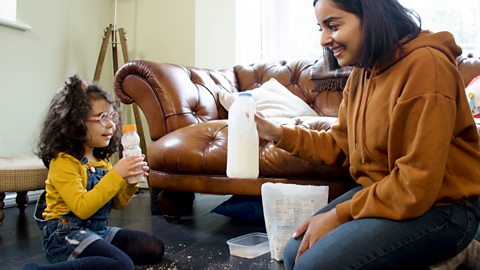
Exploring objects is crucial for language development, so ensure your child has easy access to their toys. If their attention is on an object out of reach for them, bring it closer!
Make activities more accessible for your child
This might mean simplifying, or catering a game to your child's abilities.
In the film above, a mum cuts out large cards from sheets of paper and uses chunkier crayons to help her little girl get a better grip.
Support new skills
"It might even be a bit of hand-over-hand support," Ruth says. "For example, children with limited motor skills often struggle with cutting, but we don't want them to shy away from that.
"If they learn the art of cutting, they associate that verb with the skill that they're learning.
"How can I still give my child the opportunity to experience skills? What adaptations do we need to make?"
Demonstrate and describe actions
If your child is struggling with a particular action, ripping newspaper for example, help them out by showing them how it's done.
Make sure to repeat the action and use words to describe it!