Did you know that babies are born with loads more bones than adults?
And those bones are a bit more flexible than ours too - which is great for bending and flexing!
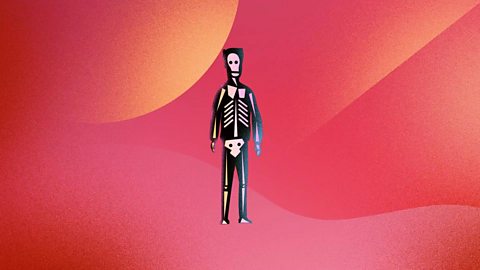
Did you know that even though your baby is really little, they've actually got more bones than you. In fact, they're born with around three hundred, that's ninety-four more than adults have.
So where do those extra bones go? For a baby to be born, the whole skeleton has to be squashy, so many of the bones are joined with flexible cartilage. And after birth, those bones start fusing together, a process that doesn't stop until young adulthood.
Having more smaller bones means that toddlers are very bendy, great for doing exercise, but be careful not to put too much stress on those little joints that are still forming.
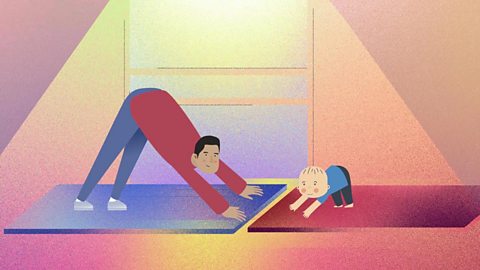
Exercising with them is great for improving the strength of their bones and muscles. And talking about all the bits of the body as you do it will get them learning loads of new words. Oh, and it's a great way for you to keep fit too!
How baby bones do babies have?
Babies are born with around 300 bones. That's 94 more than adults have.
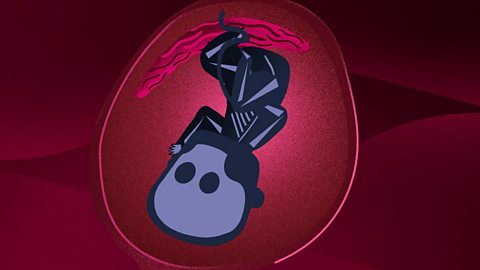
For a baby to be born, the whole skeleton has to be squashy, so many of the bones are joined with flexible cartilage. After birth, those bones start to fuse together, a process that doesn't stop until young adulthood.
Find out how babies build up to their first steps in this video.
Why are babies so flexible?
Having more smaller bones means that toddlers are very bendy.
This is great for doing exercise and playing, but be careful not to put too much stress on their joints. Everything is still forming, so be careful not to overextend them.
Exercising with them is a great way to improve the strength of their bones and muscles. Try talking about all the parts of their body as you do it together. This will get them learning loads of new words, while you're having fun.
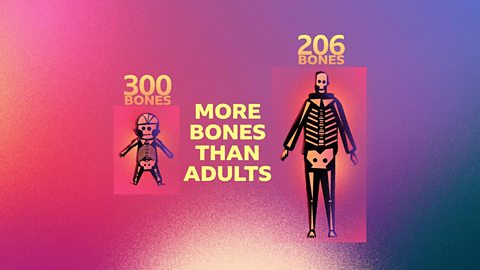
Image caption, Babies are born with around 300 bones - that's 94 more than adults normally have!
1 of 5