Spring is a great time to go outside and talk about everything you see with your child.
As flowers and trees begin to spring into life there are lots of new things to look at and name and repeating words will eventually help your child to name things for themselves. And if it’s rainy, the colours and wildlife of springtime can still inspire plenty of fun indoor games too.
Speech and language therapist Janet Cooper has given us all sorts of ideas for springtime fun for you to try with little ones and some ideas for how you can chat through playtime and help them to learn.
Treasure hunt
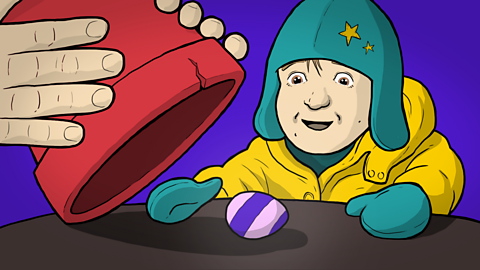
This classic activity is a great way to introduce words that describe places, like ‘over’, ‘under’ ‘next to’ and ‘on top of’.
- Take a selection of items to hide around the house or garden. If you’ve been on a nature walk you could use the items you collected, otherwise you could use chocolate Easter eggs or anything you like really.
- Show your child what you are going to hide. Talk about them, name them, and if they are starting to say words, encourage your child to name them too.
- When your child isn’t looking, hide your objects around the house or garden, then give them a bag to collect the different things in.
- Help them look for the hidden items. Use phrases like ‘look under the chair’ and offer plenty of encouragement, ‘wow you found it next to the flowers!’.
Egg box treasures
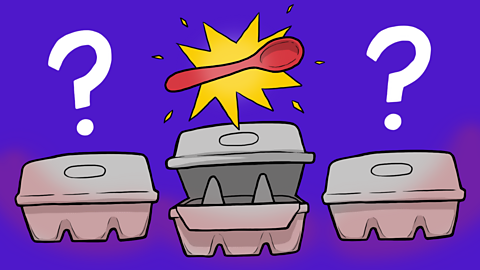
This is a springtime take on our 'What's in the bag?' game. You will need 3 empty egg boxes and some small toys or objects that can fit inside (but be careful to choose things big enough for your baby not to choke on them). You could use things like a small spoon, a toy car, a ball, or a balled up baby sock.
- Hide a toy or object in each egg box.
- Put the egg boxes in a row. Ask your baby to choose a box. Say the words ‘Ready, steady… go’ before you open the box together. This builds up anticipation and gets your child interested let them explore what is hidden in the box.
- Describe and name the item to your baby to help them learn the words.
- If your child is a little older, see if they can guess what is in each box. You could also try and make it into a memory game – try shuffling the boxes around and see if they can remember which item is in which.
Spring picture
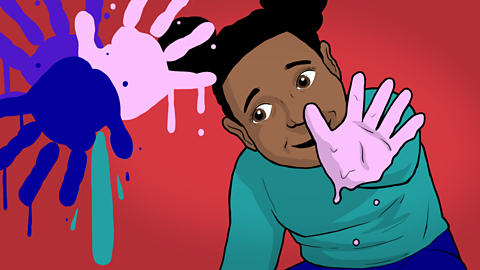
Why not create your own picture of spring? For this you will need some washable children’s paint and some paper (left over wall paper is great for this), as well as a plate or plastic tray (you could use a takeaway carton).
- Roll up baby’s sleeves and help them to dip their hand into the paint so that it covers the palm of their hand. Then help them to press their painted hand onto the paper. Talk about what you are both doing as you are printing- ‘ooh the paint is slimey! It feels cold. Which colour do you want - yellow or red?’. You might want to make your own prints too for different sized flowers.
- Wash your hands and let the pictures dry.
- Draw on stems to make the handprints look like flowers.
- You could cut out the flowers and stick them together to make a bunch of spring flowers. These will look great on the fridge and brighten up any rainy days.
Pictures like this are also lovely to keep as a reminder of how small your baby’s hands were when they were young.
Nature walk
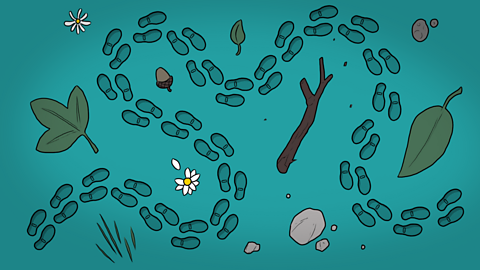
Try going on a nature walk in your garden or even just around the block:
- Take a small bag with you to collect things that you see - it might be a leaf, a flower, a colourful stone or anything natural you find as you are going along.
- Name the items as you find them - encourage your baby to put them into the bag. When you get home, sit together and look through all the items you’ve found.
- Help your baby feel the textures of the items and describe them , for example ‘wow, that’s a smooth stone’ or ‘that pink flower is really pretty!’.
- When you have finished, you can put them away in a ‘special treasure hunt box’ (this could be an empty cereal packet or a biscuit tin), so your child can look at them and feel the different textures again.