If you know a new dad with a social media account, there’s a good chance you’ll have seen him proudly holding his newborn child in the maternity ward.
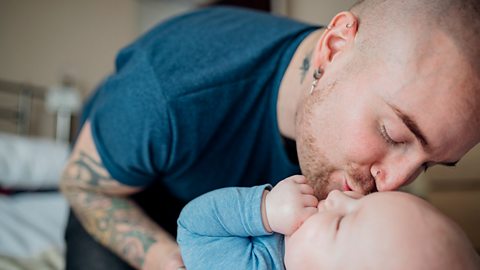
He may even be holding baby right next to his bare chest for skin-to-skin contact, which is perfect to build a paternal bond from the earliest possible stage.
But this is a relatively new experience, certainly in the UK, where a dad's presence during birth, and directly afterwards, has become more and more common in recent years. Not so long ago, dads weren’t even encouraged to be in the same room as their partner to witness babies arriving.
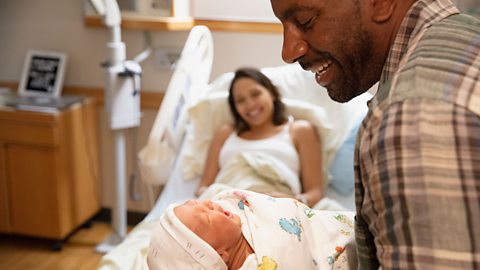
Elizabeth Duff, senior policy advisor for the National Childbirth Trust (NCT), says that these new arrangements are important in bringing dad and their new child closer together, both emotionally and physically. As well as providing warmth, baby can hear dad’s heartbeat in those early cuddles and that closeness increases levels of oxytocin - a hormone important in social bonding - in the two of them.
So why has that forging of a relationship between father and child changed so much? We spoke to evolutionary anthropologist, Dr Anna Machin, to find out more.
Introduction to risk
Before the 1970s, dads didn’t really bond with children in the same way as they do now, says Anna. “If you look into some more personal accounts of fathers and children at that time, dads certainly were building relationships and doing things with their children, but the overall message was that a dad had to be the breadwinner and the disciplinarian and that was their role. It wasn’t to play, or do any of the ‘touchy-feely’ type parenting roles that were very much thought of as a mother’s to do.”

Historically, dads have played a role in challenging their children to prepare them for later life, or “scaffolding their child’s entry into the world beyond the family”.
Anna explains: “This is being the parent who pushes the child’s developmental boundaries, stimulates them, and introduces them to risks and challenges. It gives them the resilience to deal with those and it’s a really, really important role in child development.”
Different types of families
Every family is different and many may not even recognise differing roles associated with different genders. This is especially true with single parents or same-sex parents. Anna says her research takes into account a whole spectrum of experiences.
“When you do research,” she explains, “You will get mums that are more involved in that 'dad role' of scaffolding the child’s entry into the world beyond the family, and you will get fathers who are much lighter on challenging their children.”
Dad's changing role
Anna says: “Fathers today are much more involved, partly because our culture is slowly changing.” She also says that research like hers can empower dads to realise their role is important: “Your brain does change when you become a dad. Your hormones change and you feel different.”
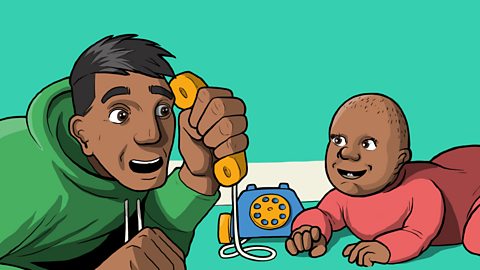
She also discusses dad’s role in play and how this is more important than you might think. “In the past that was sort of dismissed, but the ‘fun’ parent actually plays an incredibly critical role to their child’s development.”
Elizabeth from NCT notes how dads were no longer seen as being in the way or unable to cope when it came to delivering babies in the maternity ward but “a key part of the delivery team.”
Don't stress, dads
Anna continues: “Even compared to 10 years ago, dads are much more aware of wanting to be involved and why they should be involved.
“Dads can experience a delay in bonding, and the reason for that is because they don’t have the head start that all the hormones of childbirth gives to a woman. The young dads I speak with worry when they look at the bond their partner has with their baby and they feel theirs doesn’t measure up. It can cause mental health issues so what I always do is handle their expectations.
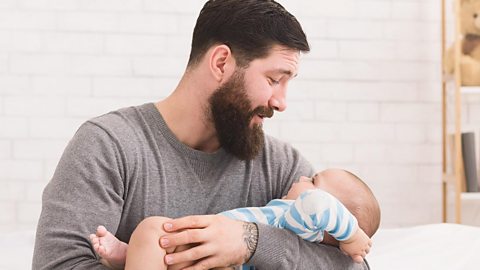
“Because you don’t have that head start, it takes you a bit more time because you have to build your relationship with your baby and do lots of interaction. But don’t panic. When I ask a dad at birth what their bond is like with baby, and then ask them six months later, it is categorically different.
“It will come. It might take you a bit longer, but that’s fine.”