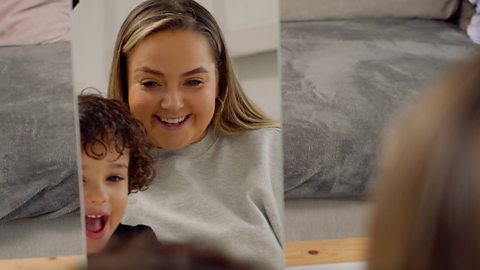
As your child starts school, they'll meet lots of new classmates and potential friends. A big part of building relationships at this age is having the ability to share.
So, what else makes a good friend? And what can parents do to support children in school?
Watch the Hey Duggee film below with your child to help them think about how they make friends, including sharing and playing together.
Evie, isn't it time for…
Duggee! Duggee! Duggee! Yes! Hey, Duggee! Hey, Duggee!
Duggee and the Making Friends badge.
Hello, squirrels. I wonder what Duggee has planned for us today.
A-woof!
Starting primary school, that's a big thing for a small person. It's exciting but there are so many new things to learn. One of the best things about school is making new friends because you'll meet lots and lots of other children. But how do you do that? What makes a good friend? Can you help Duggee?
Of course you can! Because you've got your Making Friends Badge and what a lot of friends you have. How do you do it? Well, you have to think about the other children. What do they want?
Sometimes you'll have to share things, like the toys in the playground, even when you want to play with them. Sometimes you'll have to take turns with a friend, and it can sometimes feel difficult to wait until your friend has finished before you can take your turn. But it's something that you can practice, and you'll get really good at being the friend.
A good way to make friends is to join in and do things together. These girls are playing a storytelling game. Each one has a part to play in the story and they all help each other. Watch them listening to the teacher and waiting for their turn. Nicely done! Didn't they do well, Duggee?
A-woof!
There are lots of ways you can practice being a friend, and taking turns when you play games at home. Watch how Meley and Ozzie wait for each other to have a go. And Ozzie even gives Meley a clap when she wins. Let's have another game! They're being really good at taking turns. What great friends! High five! She's a good sport, isn't she, Duggee?
A-woof-woof!
Sharing and taking turns isn't always easy, but practice makes perfect. What can you do to be a good friend? All the squirrels did well today, didn't they, Duggee?
A-woof! Well done, squirrels. You've earned your Making Friends badge, just like Duggee. So keep practicing so that when you get to school, you'll be the best friend ever. Well, that was fun, wasn't it, Duggee?
A-woof, woof, woof!
Thanks for the reminder! Yes, you can watch more videos on the CBeebies Learn app to help get you ready for school. Bye bye, everybody!
Activities to help my child learn to share
Kids often learn the self control required to share (without having a meltdown) between the ages of three and five years old.
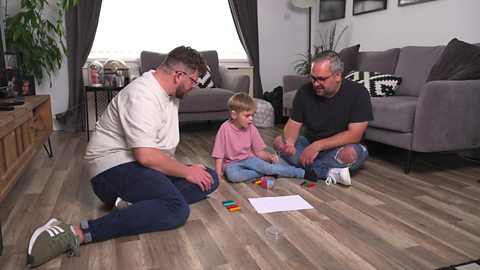
You can support them by playing games together that model sharing and taking turns.
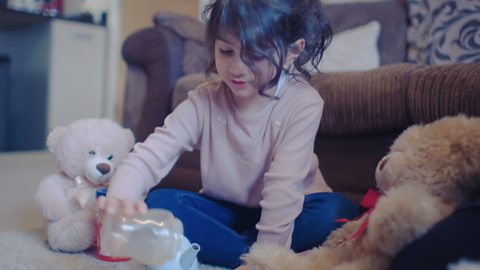
This might be a teddy bear's picnic, where your child shares out food and drink among their stuffed toys. Or you might set up a creative challenge for your child and their siblings or friends, like painting or building, and help them to share resources.
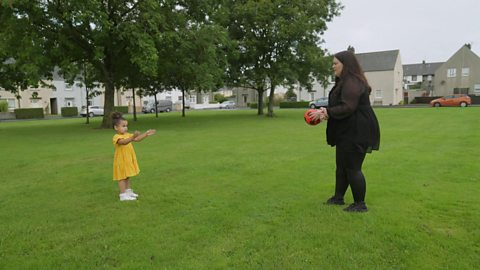
There are loads of games that model turn-taking for your child. I spy for example, or a simple ball game.
How can I talk to my child about sharing?
Don't worry if they don't get everything right at first. These things take time.
While you're doing an activity, or sat at a mealtime, talk to your child clearly about sharing and being fair. What's theirs? What belongs to Mum or Dad? What is shared?
Bear in mind, your children will look to you as a role model. Can you show them what good sharing looks like with the rest of the family? Maybe you could share snacks or food at mealtimes. They call it 'family style' for a reason!

Activities to help your child with turn taking and sharing
Does your child love Hey Duggee? interactive
Play games and earn your Hey Duggee badges on the CBeebies website.