Family mealtimes are a great opportunity to spend quality time with your child. But if it sometimes feels stressful trying to keep your little one entertained while you cook and clear away, you’re not alone!
Luckily, there are lots of simple activities you can play with your baby or toddler to include them in every part of your meal times… even the food shop. And not only will you be making your life easier (after all, a happy baby means a happy parent), you’ll be giving your little one a brain boost as well.
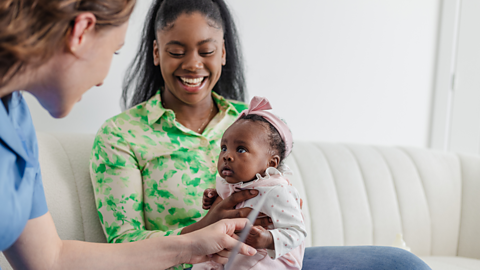
Speech and language therapist Janet Cooper says, “Talking to your child doesn’t have to take extra time. Build it into your daily routines, including your family meals, so it feels like a natural thing to do. It’s fantastic for a baby’s brain development.”
Janet shares her top games to try…
Supermarket hunt
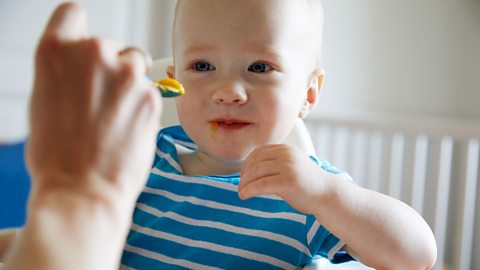
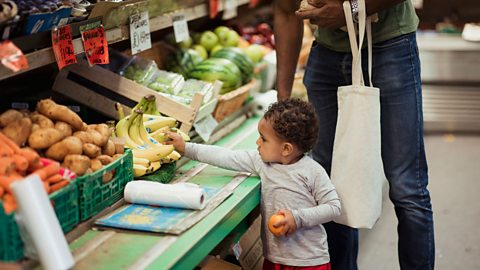
Make a shopping list by either drawing or sticking on pictures of what you need. Then show the list to your baby or toddler and, if they’re old enough, they can help you find each item.
“Children understand words well before they say them,” says Janet. “If you can get them finding things for you, this will encourage them to do the talking later on.”
If you’ve got a younger baby, give them the list to hold and talk to them about what you’re looking for.
“The first layer of speech and language development is interaction,” adds Janet. “This includes eye contact, taking turns and sharing an interest with someone else. You can involve even a young baby in your supermarket shop.”
Cooking peek-a-boo
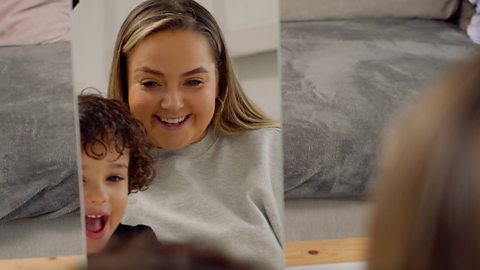
Put your baby in their high chair or another safe place and play a fun game of peekaboo while you get the food ready. Janet says, “Babies love peekaboo play, even if they don’t yet have object permanence (this is knowing something is there, even if you can’t see it). For little babies, seeing your face pop out from behind a tea towel will be exciting for them."
This will keep them engaged while you’re chopping or stirring.
For an older child, line up three plastic cups, upside down. Put an object under one of the cups and get them to guess which one to lift up. Janet adds, “Children are very sensory. If it’s safe, get them to find things that they can hold and put in their mouths, like a piece of cooked carrot. By tasting the carrot, they are getting extra feedback about the word you’re saying.”
Breakfast shaker
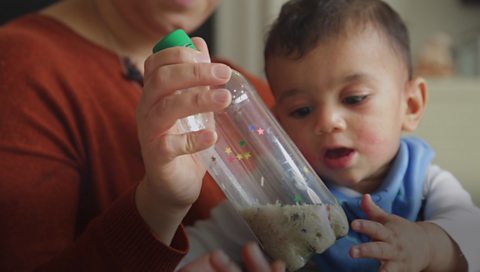
Breakfast can be a rush, especially if you need to leave for work or drop older children at school. So try this simple shaker game to encourage your little one to eat… and boost their development at the same time. Fill an old plastic bottle with rice and give it to your baby to shake while you make their breakfast. Janet says, “You could even make up a little song while they shake the bottle to signal the start of breakfast.”
Not only are the sounds fun for your little one, it’s a great way to teach them about ‘cause and effect’. By their action (shaking the bottle), they are making something happen (an exciting noise!)
Lunchtime funny faces
Make lunchtimes fun by making faces or animals out of their food. You could use cut up grapes for eyes, soft carrot sticks for hair and cheese or ham for the mouth.
Janet says, “If you have a toddler, ask them to guess what you’ve made. Or they can make their own funny face. Then say, ‘Can you eat the nose?’, ‘Can you eat the eyes?’. This helps with comprehension because you’re labelling things. Plus, it’s a fun way to get your child to eat their lunch.”
Picnic eye spy
If the sun is shining, why not take your child out for a picnic. And don’t let rain stop you – just put a towel on the floor and have a picnic in your lounge.
For the game, all you need is a cardboard tube from a kitchen roll or toilet roll. Ask your child to look through the tube to see what they can spot. You can also get them to find things, for example, ‘Can you see the bird?’.
“Take photos of what they see. You can then look at the pictures later on. This will help with memory and reinforces the language,” says Janet
Dinner time tickles
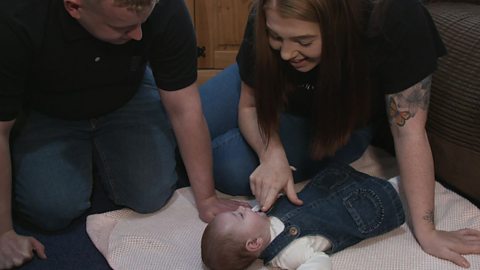
After a long day, make dinner a time to de-stress with this fun tickling game. Janet says, “A game where you’re rewarded with smiles and giggles from your baby is a great way to unwind. Try ‘round and round the garden’ but change the words to tell them about your day. For example, it could be, ‘Off I went to work today, my day was good to fair. One step, two step, tickly under there’."
Babies are fantastic listeners and it’s a great chance for you to offload and for them to hear all those language patterns.
If you’ve also got a toddler, get them to do the tickling on your baby and repeat some of the lines. “It’s interactive and your toddler will like trying to copy what you say,” adds Janet.
Eating out: your turn, my turn
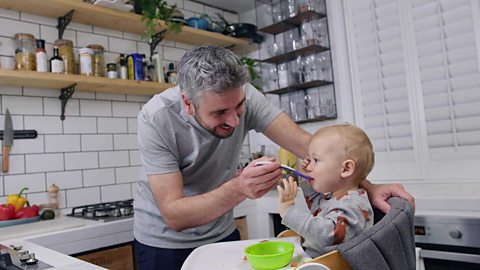
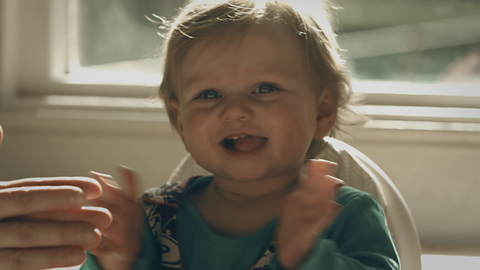
If you’re having a family meal out, you want to make sure you get to eat your food while it’s still hot. To do this, Janet suggests playing the ‘your turn, my turn’ game. "Feed your baby a mouthful while saying “weeeeeeeee, your turn. Then eat a mouthful of your meal saying, “weeeeeeee, my turn." Repeat this and involve your partner or other children so you all take turns.
Not only does this mean you get to enjoy your meal, your baby is learning about turn taking. This is a building block for conversation.
Family fun
Got the grandparents or friends over for lunch? 'What’s in the bag?' can be played at a table or if you’re all sitting down in your front room. Simply fill a bag with objects (make sure they’re safe for babies to hold) and pass the bag round. A bit like pass the parcel, play music on your phone: when the music stops, the person with the bag can feel for an object and take it out. It’s a great way of involving everyone and your child will love the surprise of seeing what comes out the bag.