Speech and language therapist Sinead Campbell explains how daily routines are a great time to build your child's language skills.
From eating breakfast to washing hands, make the most of every daily activity by chatting and introducing new words - check out Sinead's tips in the video below.
Breakfast can be a great time to encourage your little one to use more words. Get down to their eye level so it's easier for them to talk to you. You can talk about what the food feels, smells and tastes like. This gives your little one more opportunities to chat to you.
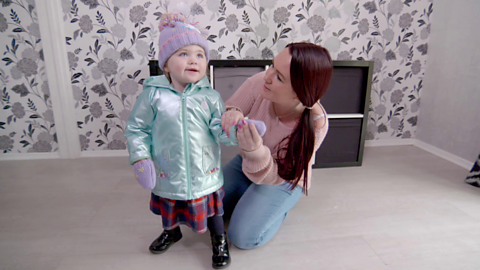
Everyday routines are the best time for children to learn new words because we're doing the same thing everyday. When you're getting your little one dressed, name the items of clothes and what you're doing.
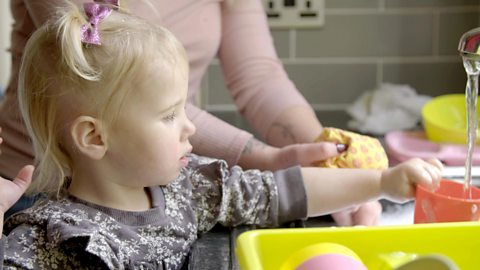
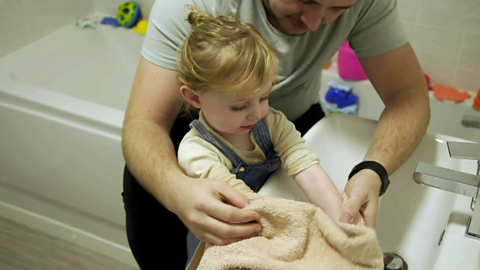
You and your little one can have lots of fun when you're washing your hands,and they can learn new actions words like 'tap on' and 'dry your hands.'
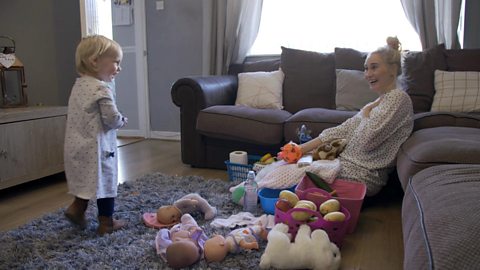
Pretend play is great fun and toddlers love to play shop at home. Call out the names of different items for them to buy and ask them to bring them back to you. Your little one will be learning to understand their world and follow everyday instructions.
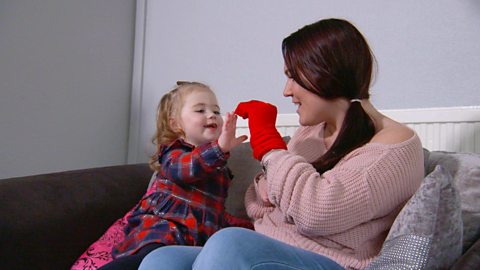
Children love puppets. Try making your own puppet using a sock and have a fun conversation between the puppet and your child. Your little one will love having fun with you and you're helping them with their social skills at the same time.
Speech and language tips 18-24 months
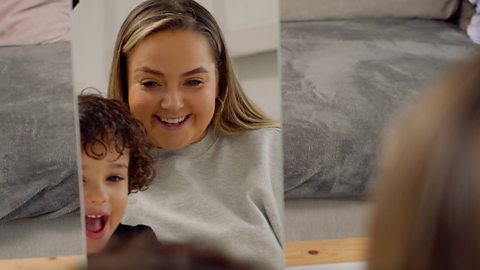
- Get down to their level and make eye contact as much as possible as you talk to your little one. That way they will be more engaged and can watch you as you form words and express yourself.
- Meal times are a great opportunity to chat to toddlers. You can talk about what the food feels, smells and tastes like using lots of describing words. With a bit of luck, your child might use more of these when they talk back to you.
- Routines are a great chance for children to learn. Talk them through everyday actions like getting dressed, saying the same things to them over and over. Repetition is the key to learning.
- Try giving simple instructions for different actions like 'turn the tap on' and 'wash your hands'. All sorts of everyday actions offer a chance for children to practise listening to and following instructions.
- At this age, children begin to take a lot of interest in pretend play. You can play all sorts of role play games with them like setting up a 'shop'. Ask your child for different items out of a range of objects spread out on the floor. As they get better at the game, try adding more than one thing at a time to your wish list.
- Playing with sock puppets is a great way of introducing characters and voices to your storytelling and children will love playing with you and building their social skills this way, as they chat to the sock puppet character.
Advice on routines with children
Check out our Routines advice collection for all sorts of tips on bedtimes, meal times, bath time and other parts of you and your child's every day life.
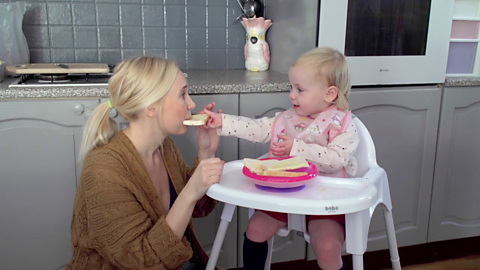
Image caption, Get down to their eye level and talk about the taste, texture and smell of the food.
1 of 3