Bees are an important part of our planet and ecosystem. They help flowers grow and produce flowers and fruits.
We’ve been chatting to Tiny Happy People Ambassador (and beekeeper extraordinaire!) JB Gill on how to help your child understand and protect the tiny creatures.
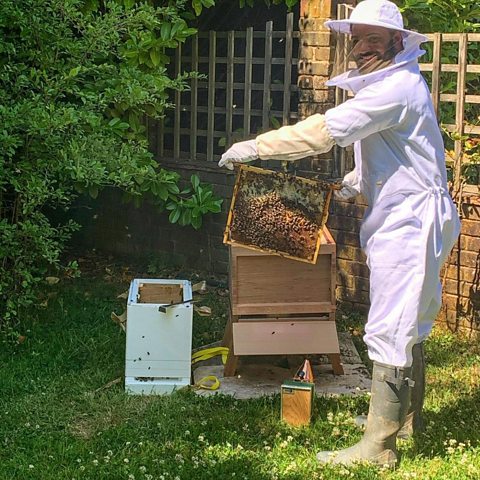
In his beekeeping suit and surrounded by buzzing hives, JLS star JB Gill is a world away from performing on stage. But he’s just as passionate about his new hobby.
“I first got into beekeeping last year during the lockdown”, he says. “It’s something I've been meaning to do for a while and it was the perfect time to get involved.”
JB, who lives on a farm in Kent with his family, says, “We all should know how important bees are for pollinating our flowers and crops. We must do whatever we can to protect bee populations.”
He’s teaching his children - Ace, 5 and Chiara, 2 - about bees and how important they are for our planet.
“My children always watch me handle our bees with care at a safe distance. They see me suited and booted and recognise that there is a safe way to handle them. They’re not yet old enough to handle and manage the bees themselves. But we want them to respect them and understand the process when it comes to looking after the bees and seeing how they make honey.”
My son loves to ask what the bees do. I explain the different types of bees within the colony and the jobs each of them does.
“I am just fascinated by how they operate and being able to sample just the tiniest snapshot of what they do up close is mind-blowingly brilliant!”
Five bee-friendly activities to try with your little one
Want to get your kids involved in caring for our bees? Here are some brilliant bee-themed activity ideas from the Royal Horticultural Society (RHS).
And we’ve got expert advice from Speech and Language Therapist Alys Mathers on how to use your outdoor time to build your little one’s communication skills.
1. Go on a bee hunt
Head out with your toddler and explore your garden or local park.
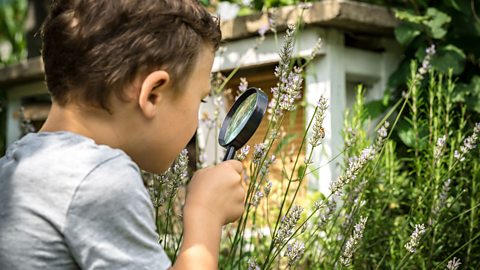
Helen Bostock, Senior Horticultural Advisor at the RHS says, “A nice activity is to go on a hunt for bee homes. Search for holes the size of 50p’s in the long grass. These are often old mouse holes used by several types of bumblebees to nest in. Or find little ‘volcanoes’ of crumbly soil with tiny holes in the top - these are the homes of small mining bees.”
You can also turn this into a learning activity. Alys says, “Hide bee toys or drawings of bees outside. Rather than saying ‘hotter’ or ‘colder’ as your little one hunts for them, make a loud buzzing noise when your child is close to them, and a quieter buzzing noise when they are further away. This is a great way to encourage listening.”
2. Put up a bee hotel
A lovely way to protect bees is to create a little home for them if you have a garden space.
“Putting up a bee hotel is a good way to encourage solitary bees to nest in a garden and fascinating for young children”, says Helen. “It should be one or two metres off the ground in a sunny spot, so have a step-stool handy to allow your child to see what’s going on.”
When you spot a bee, Alys suggests playing a movement-based language game. “Help reinforce action words for your child. You could say, ‘that bee is flying’, or ‘that bee is dancing’, and then get your child to have a go at doing that action.”
3. Plant some bee-friendly pots
Helen suggests helping your toddler plant some bee-friendly chives, snapdragons, dwarf cosmos and single dahlias in a garden or on a balcony.
You could also make a ‘bee garden’ sign together. “Involve them in caring for the plants such as watering”, she says. “A sunny spot will ensure the greatest number of bee visits.”
4. Make your own bee observatory
It can be tricky for small children to see what’s going on above them.
If you have a garden, Helen suggests turning your lawn into a bee observatory by letting a patch grow a little longer than the rest. This will let bee-friendly dandelions, clover and daisies to flower.
“You could even mow a sitting spot in the centre of an unmown area. That way there’s somewhere to plop down if legs get tired and it’s a lovely way to immerse children among the plants and insects.”
Get your toddler to close their eyes and concentrate on what they can hear.
Alys says, “If they have their eyes open, that’s too much for their senses all at once. By closing their eyes, it will help them hear things like the bees buzzing and the birds tweeting. This allows them to pick up on things they are hearing around them that they might not have concentrated on before.”
You can also encourage your toddler to copy the noises they hear. “For a child who is not yet talking, they’ll be able to make the sounds before they can say the name of the animal”, says Alys.
5. Draw your own bee family
Children love arts and crafts, so they’ll love this fun drawing activity.
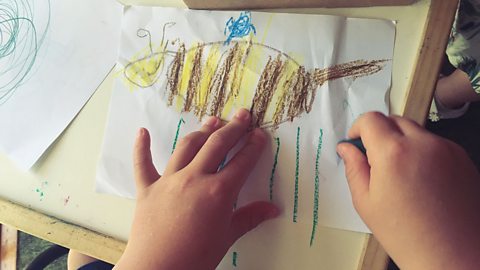
Helen says, “Drawing pictures of bees on flowers really helps to cement the association between them.”
When you’ve got your pens and paper out, why not play a fun ‘What’s missing’ game?
Alys says, “We often talk about what something looks like - a tiny, fluffy bee for example. But we don’t always talk about the different parts of something. You could draw a bee without any wings for example then ask your child, ‘what’s missing?’ This helps them learn more about bees and also understand the differences between bees and other insects.”
Drawing is a way of helping them to understand the roles bees play.