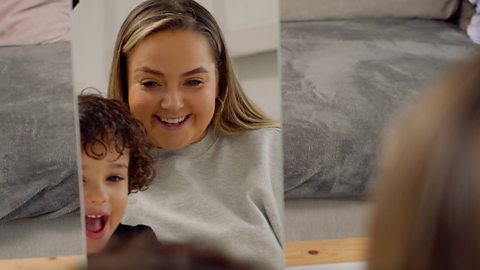
Just how much influence do you have on your child's language learning?
Dr Michelle Peter helps one mum find out, using a device that tracks the number of words her 21-month-old son hears and says over the course of a day.
Narrator:
So if more language is better, Michelle wants to know if you can influence the speed at which babies increase their word count by simply saying more words to them.
She's recruited a family in the Wirral to help her find out.
Elizabeth:
Look at that big tongue!
Narrator:
Michelle has given Percy an innovative word tracking device. It has an algorithm to log every word he hears and every word he says over the course of a day.
Elizabeth:
Mummy Pig is busy, she has lots of important work to do.
Michelle:
So this time, we're setting you a challenge and actually what we'd really like you to do is up your speech to Percy. We'd like you to really maximise on every opportunity that you can to engage in verbal interaction with him, so we want you to really talk as much as you can to Percy. We want to see if you respond back, don't we? Thank you. Ooh!
Elizabeth:
What can you see over there?
Narrator:
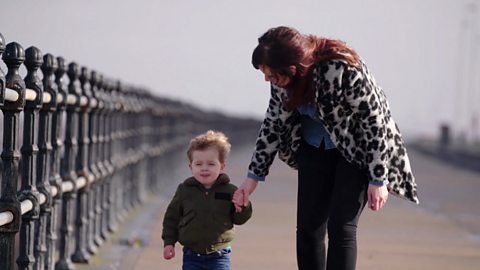
Getting out and about is an obvious way to stimulate conversation.
Elizabeth:
Hello doggies. What do the doggies do? Woof, woof. Woof, woof, woof. Can you do some running?
Percy:
No.
Elizabeth:
No, you don't want to run?
Percy:
I'm cold.
Elizabeth:
Are you cold?
What colour are the clouds?
Percy:
Blue.
Elizabeth:
Blue?
Are they spiky? Did you get wet?
Thank you.
This way.
Narrator:
After scrutinising the data, Michelle is back with the results.
Michelle:
Hi Elizabeth!
Elizabeth:
Come on in.
Michelle:
Thanks.
Elizabeth:
Hi Michelle.
Michelle:
Hi Percy!
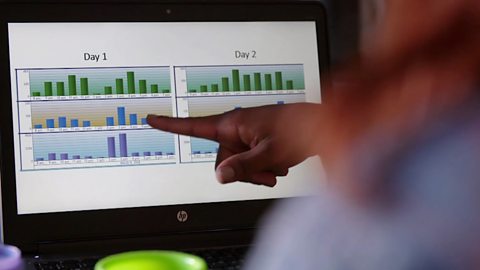
You increased your language and your talking to Percy from 13,000 words to just over 13,700. So that's about a five percent increase. And what's really nice to see here is that we wanted to know 'what would Percy do?'. Would he talk more if you did. And he did. What we can see here is that, on day one, he produced about 2,500 words. But on day two, when you were speaking more to him, he produced about 2,800. So that's an increase of about 13%. So even though you only spoke five percent more. You managed to get 13% more speech out of him.
Children who hear lots of language when they're younger tend to be those children who do better at school because those parents have set those foundations early on. So it's really important that parents are armed with the knowledge that, actually, they can make that difference really early on. And you don't need to be a specialist to do any of these things. All you need to do is be willing and eager to engage in conversation with young babies and children.
Elizabeth:
Apple.
Dad:
He's putting words together, which he wasn't doing a couple of weeks ago.Like 'I want this one' rather just saying 'banana' or…
Elizabeth:
'Daddy did a poo-poo'.
Dad:
Wow, yeah.
Percy:
Did a poo-poo.
Dad:
I thought we weren't going to mention that one.
Percy:
Daddy did a poo-poo.
Dad:
I don't know where he's got it from.
Percy:
Daddy, wee-wee!
Dad:
And he knows that we think it's funny. So he makes into a song and will smile.
Percy:
Wee-wee!
Dad:
Like that.
Percy:
Daddy did a poo-poo.
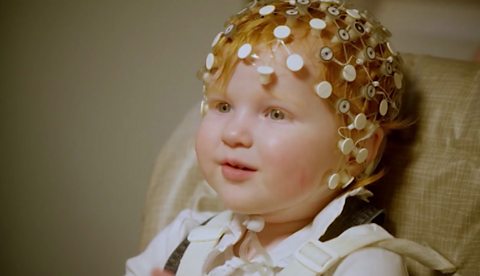
During the experiment Elizabeth from the Wirral was given a device to use with her son Percy, which kept a record of the amount of words she said to him throughout the day, as well as the number of words Percy said back to her.
She was challenged to increase the number of words she said to Percy to see how that affected the amount Percy spoke.
Elizabeth said 700 more words to Percy throughout the course of the day, 5% more than the previous day. To Elizabeth's surprise, Dr Michelle was able to reveal that Percy had said 300 more words back to her that day, an increase of 13% on the previous day.
Following on from the experiment, as Elizabeth and her husband began to think more about the amount they spoke to Percy each day, they noticed a change in his talking.
He's putting words together, which he wasn't doing a couple of weeks ago. Like 'I want this one' rather just saying 'banana'.
How much should I speak to my toddler?
It's simple really. As they're learning to speak, the more words your child hears from you, the more likely they are to respond themselves over time. Once your child starts saying words, they're more likely to say more as they hear more and more language.
In addition, children who hear lots of language when they're younger tend to be those children that do better at school.
When should I start speaking to my baby?
Even if it feels a bit silly at first, you can start speaking to babies before they're even born by chatting and singing to your baby bump during pregnancy.
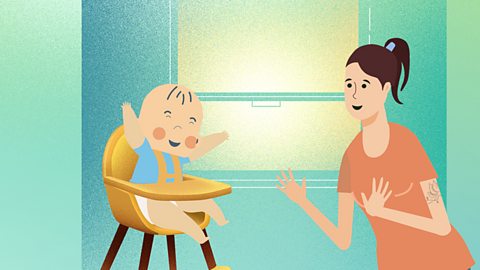
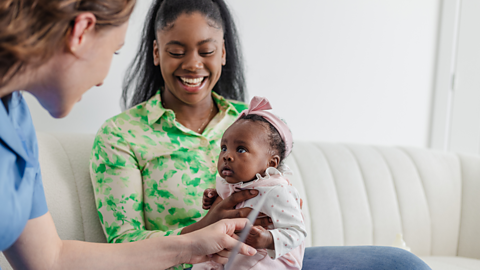
Then, when baby arrives, even though they're unable to respond, try and talk to them as much as you can about all of the things they see around them and that they take an interest in.
Talking them through all the things you do together throughout the day, as you do them, is a simple way to make sure they hear lots and lots of words.
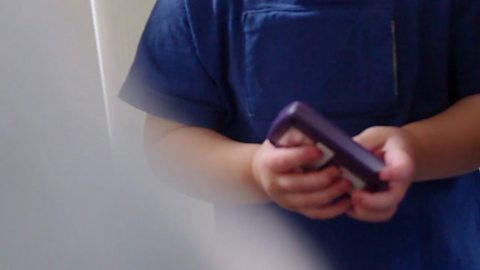
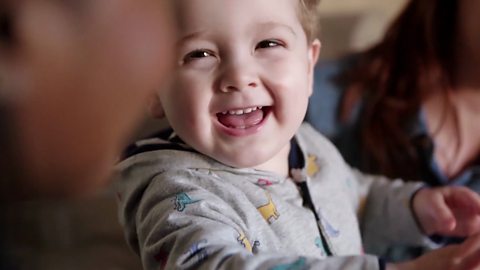
Image caption, A mum from the Wirral was given a device that recorded the amount of words she said to her son, Percy.
1 of 5