Home > Tips and advice > Play
Whether at nursery, chatting to a health visitor, or looking online for activity ideas - sensory play is one of those terms that you might hear quite a lot when you have a young child.
But what does sensory play actually mean? And why does everyone keep going on about it? We’ve been chatting to Specialist Speech and Language Therapist Alys Mathers to find out the benefits of sensory play.
What is sensory play?
Sensory play is any activity that stimulates at least one of your child’s senses. This could be hearing, sight, touch, smell or taste. It also includes play that involves movement or balance.
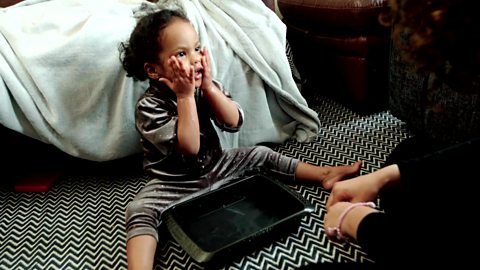
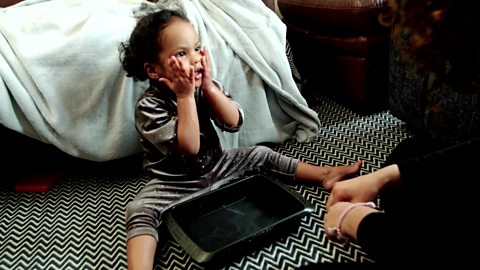
You might have seen other parents using play dough, cold pasta or making their own sensory box. But sensory play can be a lot simpler than that.
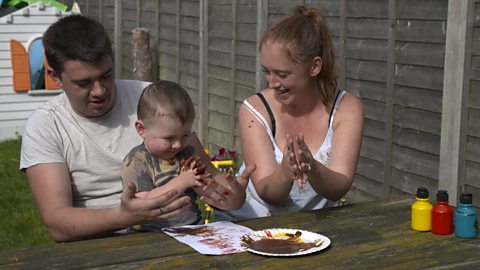
Painting with your fingers, splashing in the bath and even jumping in piles of leaves during a trip to the park are also examples of sensory play.

It doesn’t even have to be something that you need to think about too much. “Babies, from when they are very little, are already using all of their senses to investigate and explore their environment,” explains Alys.
“So it’s something that children naturally do without parents having to set it up. What we can do, is make sure we allow and encourage our children to keep exploring using all their senses.”
What age can you start sensory play?
From the moment they’re born, your baby is ready for sensory play.
Even in the womb, your baby uses their senses to understand the world. By the time they are born, they’ll already be able to recognise your voice and your smell.
With a newborn, sensory play can be as simple as blowing raspberries on their belly, gently tickling or massaging them, or just chatting about the world when you’re out for a walk. As babies get older, you will find that these activities develop naturally.
“Maybe you’ve been playing peek-a-boo with your baby, and they’ve enjoyed feeling the cloth on their face,” says Alys. “But now they’ve got a bit too old for that, so they might start doing something different with the cloth.
“They might start putting it over both of you at once, and you can change up the activity by letting different amounts of light in, lifting or lowering the cloth, so they experience dark and light.”
The more they grow, the more their sensory play will adapt. “So you want to keep following your child’s lead in the play,” Alys explains. “If they get bored of a certain type of sensory play, they’ll soon start exploring it differently.”
What are the benefits of sensory play?
“It’s through all of our senses that we make links between what we see, what we feel and what we hear,” explains Alys. “And this, ultimately, helps our children to make sense of the world.”
Exploring the world through their senses can help children understand lots of different things, such as “cause and effect” (how their actions affect the world) and to develop their emotional awareness.
“Through sensory play, some children will discover which senses are more calming for them,” says Alys. “For some, it’s music. For some, it’s a more tactile feeling, like being wrapped in a blanket. Then for others, it’s having certain smells around them.” Understanding what soothes you is a really useful skill for children to have as they grow up.
Sensory play also helps your little one’s attention span. When a child is hands-on with an experience, they’ll stay engaged with it for longer than if they just listen to someone talking.
How does sensory play help with language learning?
Sensory play helps your child’s language learning too, as linking experiences with their senses helps children to remember the words that went with them.
“If I asked you to think of a swimming pool,” Alys says. “You would probably think about the smell of the chlorine, the heat of the room and the sound reverberating around the place."
Adults immediately link to all of their senses when recalling a word. So you can see how giving children all of that sensory information helps them learn words more easily.
When your child experiences a word with more than one of their senses, their brain will create more connections to that word. “You want to incorporate the senses together,” Alys explains. “Engaging with as many senses as possible is going to give them a much clearer memory link to a word.”
Alys’s top tips for making the most of sensory play
1. Don’t expect your child to play in a set way
Children won’t always do the things you expect them to. “Let them do what they want with the activity,” Alys explains. “Because they will know which senses are going to help them learn the most and also what they’re ready for.”
2. Follow their lead
Letting your child take the lead in sensory play is important.
“Little children will want to touch, feel, smell and put things to their mouth,” Alys says. “They want to use all of their senses to learn, and this is something that we, as adults, might unconsciously try to interrupt.”
Similarly, when it comes to messy experiences, Alys says: “Let them get messy if that’s what they want. But some children will not want to get messy or hands-on, so it’s about letting your child go at their own pace.”
3. Try to link in other senses
“Parents can help with sensory play by talking about what they’re experiencing and labelling that,” Alys says.
“If you are doing some water play, for example and your child is focusing on the noise that the water makes, use words like ‘splash’, ‘drip’. You could also link in other senses, by putting your hand under the splashing or dripping water, which might encourage your child to touch too.”
“By using more than one of their senses in play, your child will make more brain connections. This will really boost their language learning.”
4. Keep it simple
Sometimes the simpler sensory activities can be the most beneficial for your child.
“Being out and about in real situations, where you can actually smell, hear and see things is the best kind of sensory play,” Alys says. “Getting out into nature is a great way for your child to experience new words in real life.”
“Water play is also really great fun. You can incorporate it into your everyday routine, like when you’re washing your hands. When you do that, you can feel the water, smell the soap and see the bubbles.”