As babies start to say a few words and point to the things they're interested in, it's a good idea to let them lead your chats with those things. Whatever they are focussing on, chat to them about those things.
We asked the experts why this was something they recommend. Watch the video to find out what they said.
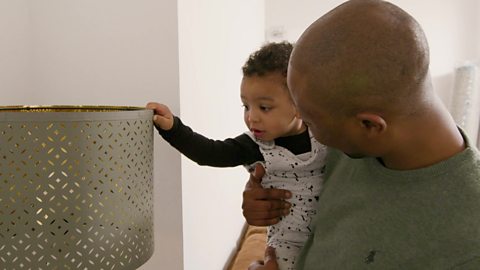
Do you know, babies are able to lead you to what's caught their attention and want to chat about it? They're putting their tools for talking into practice.
Some may be saying words, some may be pointing. They're getting the hang of being little communicators, thanks to you interacting with them.
So follow their lead to what's caught their interest and talk about it with them.
Use clear language as they connect your words with their focus. And start to introduce simple questions like 'what?' or 'where?' about their interests.
Remember, your baby's understanding more words, so wait for their lead, respond to their focus and keep doing it!
How should you follow your baby's lead in play?
- When babies are obviously interested in a particular thing - whether it's an object, an action, a sound - try and take notice and chat to them about it. Name the thing they're interested in and add detail.
- This helps them learn words more quickly, as the more interested they are in something, the more likely they are to pay attention to your words and make connections between your words and what they're seeing, hearing or feeling
- Once they're able to point at things, it's even easier for you to tell their focus of attention
- Introduce some simple 'what?' and 'where?' questions about the things they are focussed on
- This idea of both paying attention to the same thing is sometimes referred to as 'joint attention' or 'shared attention'
- As well as language learning, it also benefits children's social skills as they begin to share eye contact when they are engaged in joint attention
Ideas to build joint attention
There are lots of games and activities you can try with 12-18 month olds to help develop joint attention skills.
- You could go on a listening walk together, paying attention to all the sounds that catch their ears.
- You could give them a choice of items to explore while you're at the supermarket with your toddler
- You could have a go at following their lead during routines like bath time