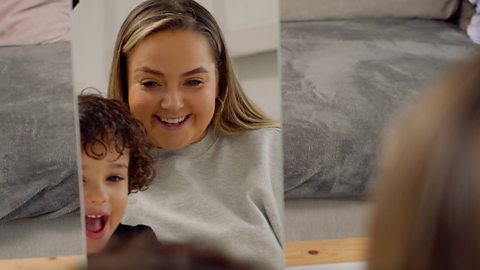
It doesn't have to be Pride Month to chat to your child about LGBTQ+ communities around the world.
Learning about different family units with your little one is a great way to show the importance embracing differences.
We’ve been chatting to some LGBTQ+ families to get some top tips on celebrating pride and talking about different types of families with a young child.
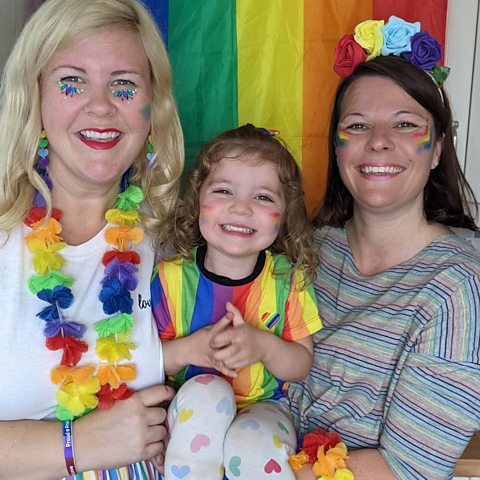
‘Pride is like Christmas in our house!’
Sarah and Laura Smith are parents to Annabelle and Matilda. Sarah says:
“We met at work in 2008 - I’m from Reading, and Laura is from Idaho in the US. We didn’t even like each other at first. But after five months of working together, we became friends and then started dating in March 2009. It was the first time either of us had been in a same-sex couple. Even though we loved each other, we didn’t think we’d have the life we do now. At the time, we didn’t know anyone like us or have any role models to show us what our life could be like together.
“But it feels like society has moved on at the same time as our relationship. In 2014 we were the first female couple to be legally married in Westminster borough. It was amazing to be part of history. In 2017 we decided to try for a family and, after our first round of IVF, got pregnant. We totally believe that the things that make people unique are their superpowers!”
‘It’s about celebrating our differences’
Laura says: “Pride is a bit like Christmas in our house. On 1 June, we get out all our rainbow decorations, headgear and clothes. Annabelle loves dressing up, and we dance around to Pride playlists. She’s too young to understand the history of Pride, but we’ve explained we’re supporting people just like us. She then brings down her books about having two mums and reads them all over again.
“Annabelle’s nursery have been very involved and have made rainbow cakes and done rainbow arts and crafts with the children. We’ve taken in a few books about LGBTQ+ families and other family units that they are reading to the kids too. It’s all about celebrating our differences.”
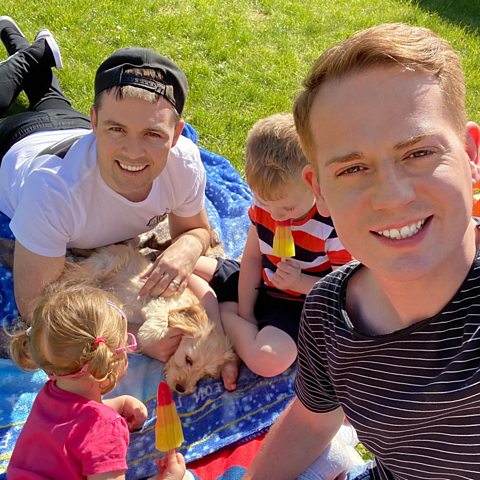
‘Having a different family dynamic isn’t an issue’
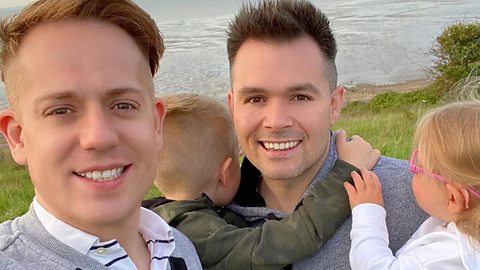
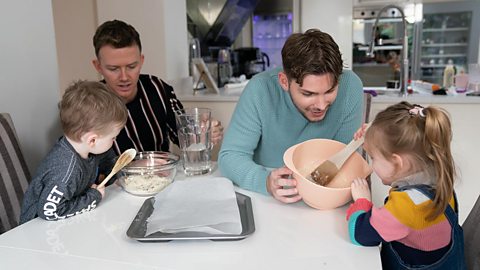
Rich and Lew are the adoptive parents of a six-year-old son and three-year-old daughter. Rich says:
“We met in a pub in 2013. At the time I wasn’t openly gay (the friends I was with didn’t know), so I gave Lew my number on a piece of paper. He called me a few days later, and we started dating. We’re very different - I’m a mortgage adviser and, at the time, Lew was a dancer on the Sesame Street Live tour - but we just clicked. After about 18 months, we started talking about having a family. We decided adoption was the best option for us and in 2015, after a long process, we adopted our son. We got married in 2017 and the year after we adopted our daughter.
We went away to Cornwall recently, and our son made friends with another boy. He had a moment of confusion when our son said he had two dads, but he didn’t question it. Instead, he said to our little boy, ‘can you ask your dad and father?’, like seeing two dads is normal. That’s testament to how far we’ve come.”
“We make it a really happy time”
Lew says: “The kids always wear rainbow colours and this year we’re planning a Pride picnic in the park with two mums, a mum and dad and a couple of other friends. Our son and daughter are both really excited - we don’t go into the history of Pride as they are a bit too young, but they’re looking forward to the games and celebrations. We make it a really happy time. We took them to Pride in London when they were younger, and they loved mixing with kids from lots of different families. For them, a normal family is one with two dads, so it was good for them to see families with two mums or other set ups. It makes it all feel normal and that having a different family dynamic isn’t an issue.”
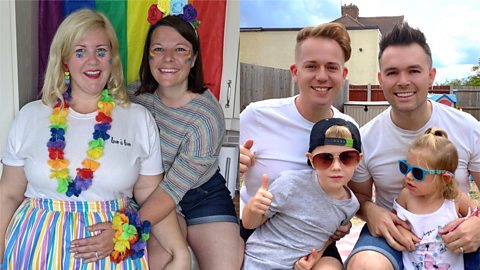
How to talk to your child about different family units
Here are ten top tips from Sarah and Laura and Rich and Lew…
1. Build the foundations
If your child asks, “Can two men get married?” Rich recommends answering the question simply - yes! “There’s no need to go into the law or the reasons why same-sex marriage is now allowed. That’s far too much for their little brains! Instead, simply say that yes, two men can get married, and so can two women, and so can a man and a woman. It’s who someone loves and that’s it. We also use craft activities to explain in an age-appropriate way. We get cutouts of different people and then use them to make little families. We explain all the different types of family setup you can have. It helps build a foundation for when they are a bit older and can understand more.”
2. Be prepared
Another question your child may ask is, ‘What does gay mean?’ You could say it means two men or two women love each other and that people love each other in different ways.
“If you try and explain to a child the term LGBTQ+ you’re setting yourself up for a difficult discussion with a young child”, says Rich.
“Get involved in what your school is teaching about diversity. If you know what your child is learning in school, you’ll be more prepared for the questions they might ask and have the answers.”
3. Keep it simple
There is a lot of history around Pride, but for now, Laura suggests keeping conversations with your child quite general. She says, “For preschool age or younger, talk about accepting everyone for who they are. Children aren’t born prejudiced, they are born curious. It’s important to answer them kindly and in a matter of fact way.”
Lew adds, “We say to our kids that families may be different but they all have one thing in common - they love each other.”
4. Use books
Whether it’s single parents, two mums, differently-abled parents, a mum and dad or grandparents raising the kids, there are lots of different family units. And a great way to start the conversation with your child is through children’s books.
Sarah says, “If you see an LGBTQ+ character or same-sex parents, make sure to point them out and use it as an opportunity to reiterate that families come in all shapes and sizes. If you don't have any books that show different family dynamics, buy a few, or borrow from a library - reading materials/pictures in books tend to have a big impact on kids.” She and Laura like to read Who's In My Family?: All About Our Families by Robbie H. Harris. This book shows all sorts of families, so is a great opportunity for parents to point out different family units with happy children.”
Rich and Lewis read Two Dads by Carolyn Robertson to their children. The book is about a boy who has been adopted and is raised by two fathers.
5. Don’t worry if you don’t have all the answers
Children have lots of questions about everything. And even if you don’t have the answers, that’s okay. Rich says, “It’s easy sometimes to say, ‘Oh don’t worry about that’ or ‘shush’ them, but that creates confusion and leaves the question unanswered. Sometimes you might shush them as you don’t want to have the conversation because you don’t know the answer or you’re worried you’ll say the wrong thing. But actually, there isn’t a 'wrong' thing. It’s better to have the conversation even if it leaves you as a parent thinking, ‘actually, I need to find out a bit more about this myself’.”
6. Keep the conversation going after Pride
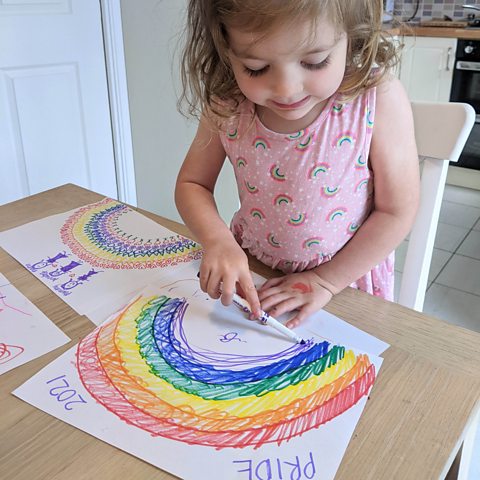
Sarah recommends talking to your child about families - and how every family set-up is different - all year round. “The celebrations and rainbow clothes spark conversations with your child which is great. But it’s important to celebrate our differences all the time.”
7. Involve your child’s nursery or school
Both sets of parents suggest involving your child’s nursery or school, and speaking to them about inclusiveness and ways to celebrate diversity.
Sarah and Laura’s nursery put the children’s family photos on the wall and talk about who is in each family. “These conversations are really important for Annabelle as she’s never felt any different”, says Sarah.
Rich and Lew’s school have also been really supportive and recently read their son’s favourite LGBTQ+ children’s book in the class storytime.
8. Start early
Your child is never too young to learn about different families. “Some people don’t know other gay people so their children won’t know people in same-sex relationships”, says Sarah. “It’s not intentional but it means their child might be in a situation where they’re not aware someone can have two mums or dads. The younger you can start that conversation the better.”
9. Avoid stereotypes
Sarah and Laura suggest avoiding stereotyping behaviours that are seen in a family, like mum cooks and dad builds things. Laura says, “This can set the expectation that a child in an LGBTQ+ family wouldn't have a parent that could do important roles in the house and can lead to conversations about who is the 'man/woman' in the relationship. In addition, everyone pitching in to help instead of sticking within traditional gender roles will give kids a well-rounded list of skills that will benefit them when they are older.”
10. Prepare your child for questions they might get asked
As your children get older, they might be asked questions by other children. “We’ve got to prepare Annabelle for someone saying, ‘You have two mums, they can’t both be your real mum’, says Laura. To help, they read Annabelle the book ‘Who’s Your Real Mum?’. “In it, the child explains her mums hold her when she’s scared and kiss her goodnight. ‘Don’t both your mums do that?’ asks the other child. And she replies, ‘Exactly’.”
Books that celebrate LGBTQ+ families
- The Great Big Book of Families by Mary Hoffman and Ros Asquith
- Kenny Lives with Erica and Martina by Olly Pike
- The Family Book by Todd Parr
- And Tango Makes Three by Justin Richardson and Peter Parnell
- Who's Your Real Mum? by Bernadette Green and Anna Zobel
Find out more
- Read more about Lew and Rich's experiences as adoptive parents on their blog Two Dads in London or by following them on Instagram - @twodadsinlondon
- Follow Sarah and Laura’s parenting journey on Instagram - @thesmithstory