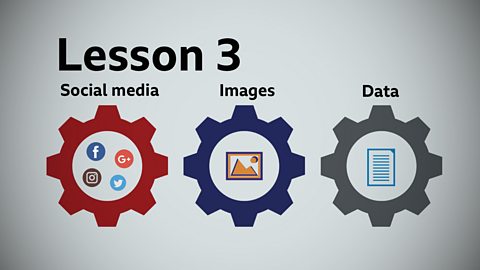
This lesson will demonstrate how to spot whether a social media feed is genuine or fake, to consider the manipulation of images and think carefully about how the addition of numbers to a story may not be a clear as it first seems.
Learning outcomes
- Young people will have more of an understanding of websites, providers and platforms
- They’ll increasingly question websites and social media feeds to see if they are genuine and true
- They’ll have a greater understanding of the dangers of sharing and forwarding items
- Young people will think more comprehensively about statements involving numbers or data to find the true meaning behind a story
Brief overview
It is hard to find a young person these days that does not have some experience of social media. In fact, the majority seem to have accounts from Year 7 (some anecdotal reports as young as 6) despite the official recommended age being 13 (Children’s Online Privacy Protection Act).
In this lesson young people will have the chance to:
- explore online stories
- compare the different ways they are told
- determine which stories are real and which are fake
The lesson also considers how we view numbers in stories. Are they as dramatic as they may seem? If they’re using computers young people could also search out some stories that involve numbers and see if they can write them in a different way.
Lesson 3: Social media, images and data - slideshow. document
Click here to download PDF

Preparation
- Students will need access to computers for exercises 1 and 2, and require paper and pen
- Download slideshow
- Watch the animation, as suggested in the slideshow
- Download exercise 1
- Download exercise 2
- Download exercise 3
- Download the helpsheet for students, if required
Helpsheet. document
Click here to download PDF

There is one animation video Looking at Numbers in Stories and should be watched during the data section in the slideshow.
Exercises
- Exercise 1 has students finding and questioning a variety of stories online as well as looking for stories that they’ve seen themselves that have turned out to be fake
- Exercise 2 works in a similar way but with images. Those in groups that already use a photo manipulation software may want to demonstrate how easy it can be to alter an image
- Exercise 3 looks at re-writing stories with data to see how the meaning of a story can change even if the data stays the same
Exercise 1: Is it all fake? document
Click here to download PDF

Exercise 2: Images. document
Click here to download PDF

Exercise 3: Data. document
Click here to download PDF



Knowing who to trust. video
In this video you'll hear from Amol Rajan, the BBC’s media editor, journalist Mukul Devichand and Rachel Schraer from BBC Reality Check.
Recognising fake news. video
In this video you'll hear from Amol Rajan, the BBC’s media editor, and journalists Natalie Miller, Mukul Devichand and Rachel Schraer from BBC Reality Check.
Checking the story. video
In this video you will hear from BBC journalists Natalie Miller, Alex Murray and Rachel Schraer from BBC Reality Check.
Numbers and the tricks they play. video
When you’re looking at news stories remember that it’s not just the words you need to take notice of but the numbers too.

Lesson 1: Real versus fake news. video
This lesson will give you a broad understanding of the term ‘fake news’ and the skills and techniques to distinguish between what’s false or fake and what’s real.
Lesson 2: Sources and who to trust. video
This lesson plan will give you an understanding of the importance and use of sources and ways to identify which ones are reliable and trustworthy and why it’s recommended to use more than one.