In short...
Themes: Celebrating World Book Day; the pleasures and benefits of reading.
Summary: World Book Day was created by UNESCO in 1995 as a celebration of books and reading. In the UK World Book Day is celebrated on the first Thursday in March. A number of studies have highlighted the benefits of reading - which range from physical well-being to increased vocabulary and increased empathy. The assembly is most suitable on, or immediately before, World Book Day.
Resources: The framework to download / print and an image of children reading.

The video
Every year people from over 100 countries around the world celebrate World Book Day.
In the UK, we celebrate on the first Thursday in March.
The first World Book Day happened in 1995 to bring people together to celebrate a love of books and reading.
No matter where you live, if you’re reading the same story as someone else, you can be transported into the same imagined world.
But the history of books goes a lot further back than 1995.
The first evidence of stories written down were symbols on clay tablets over five and a half thousand years ago!
Ancient scrolls made from papyrus; a type of pith from a plant, contain stories that date back nearly four and a half thousand years.
In 300 BCE, the library of Alexandria was founded in Egypt. It was the biggest library in the world and is thought to have contained half a million scrolls.
A few hundred years later, illustrations were seen in stories for the first time.
And in the mid-800s the first printed book was made by block printing in China.
The process of creating books took a leap forward with the invention of the printing press.
William Caxton was the first person from this country to use a printing press.
In 1473 he printed the very first book anywhere in the English language.
Today, books and reading have become a huge part of our lives.
On World Book Day we can all come together to share our favourite stories and what we love about reading.
One way we celebrate World Book Day is by dressing up as our favourite book character when we go to school.
They might be a character who is like us, or someone or something that inspires us.
Other people’s costumes can encourage us to read something new too.
It can be lots of fun deciding what to wear.
You can even get creative and celebrate books with music and dance.
“It’s hugely important. It’s rebooting that love of reading, that pleasure for reading, and also that purpose. You are a reader.”
What do you look for in a book?
“I like the imaginative words that people use.”
“Sometimes books don’t have pictures, so you read and you picture the picture in your mind.”
“I like reading because sometimes in books they put some little jokes that make you laugh.”
Studies show that reading can help us relax.
“How often I read is basically every night and every day.”
It also helps increase our vocabulary as well as helping us to understand others.
“I think it is good when you see all types of different people in the book, even people like you or people that are different.”
So, reading can help us to feel happy and relaxed, as well as use our imaginations.
“Mainly when I am sitting in my bed and in my room, it’s like I am being transported to different worlds, just by sitting in my little bedroom.”
World Book Day is a time to celebrate stories, and anyone can create their own one too!
It might start with a drawing, or a character, or an idea.
We can discover stories in our school or local library.
And share our own books with others.
Libraries can pop up in unusual places too!
What book will you be reading this World Book Day?
World Book Day was created in 1995 and is now celebrated each year in more than 100 countries around the world. The history of books goes back more than 5,000 years to the first symbols scratched on clay tablets. Other key events include the first book created by block printing in China in the mid-800s CE and the invention of the printing press in the fifteenth century. William Caxton printed the first book in the English language in 1473.
Studies show that reading can help us relax. Reading also increases vocabulary and helps us to understand others – it increases empathy. So there are plenty of reasons to join in and celebrate on World Book Day!
Duration: 4' 08"
Final words: '…will you be reading this World Book Day?'
Video questions
- When was the very first World Book Day? (1995)
- What were the very first books like? (Symbols on clay tablets)
- When was the printing press invented? (Around the mid-1400s)
- Who printed the first book in the English language? (William Caxton)
- What happens on World Book Day (Dressing up as favourite book characters; sharing stories; etc)
Key links
Assembly framework (pdf) document
Print out the assembly framework ready for use
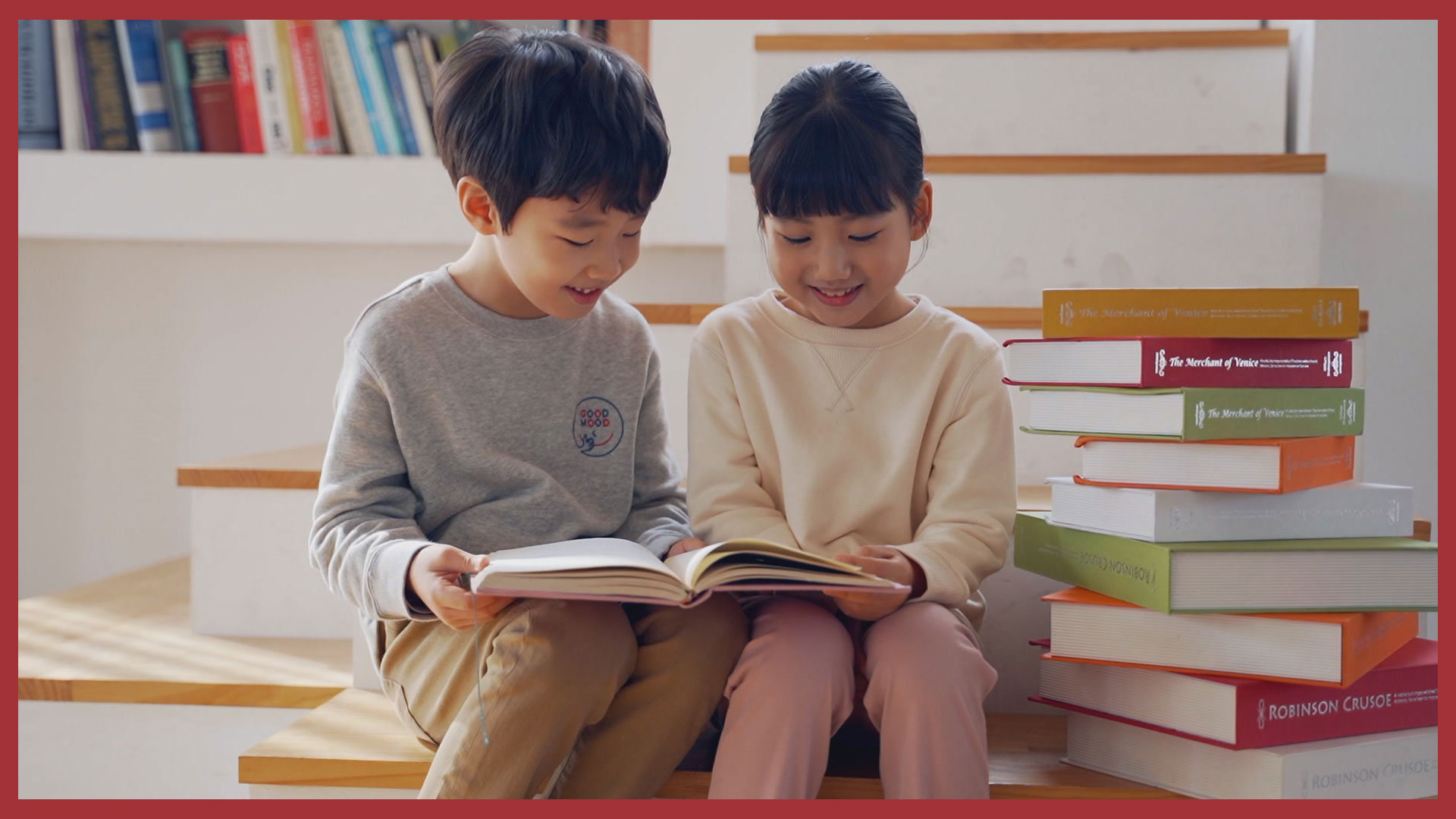
Image: Children reading surrounded by books. image
Click to display image full size
Suggested framework
1. Entry
Display the image of children reading and play your chosen music - you might opt for a song associated with a popular picture book, such as The Gruffalo or We’re Going on a Bear Hunt.
2. Introduction
Ask the children to name some of their favourite stories and to suggest why they like them. Ask them to describe what they have done to celebrate previous World Book Days.
Explain that World Book Day is an opportunity for everyone to have fun celebrating favourite books and stories. While they watch the video, ask them to think about the benefits of reading and books.
3. The video
Play the video. The duration is 4' 08'' and the final words are: ‘…will you be reading this World Book Day?’
4. After the video - Time to talk
You could begin by asking the Video questions above to aid children’s recall of the video. Then lead a discussion about books and reading by asking:
- How would you describe the purpose of World Book Day? What’s it for? (To bring people together to celebrate a love of books and reading)
- The printing press was invented about 600 years ago. What difference do you think it made to how people can enjoy books? (Books could be made much more quickly and easily - so they became cheaper, more popular and a greater variety was produced)
- How would you describe the benefits of reading books? (The children will have their own ideas, but the video refers to increasing vocabulary, helping with imagination and empathy, helping us to relax)
- Why do you think dressing up as a character on World Book Day helps us appreciate books more? (General ideas including: it brings the stories to life, makes it fun, inspires other people to read new things)Finally invite the children to: Turn to the person next to you and ask them what their favourite book is, and why.
5. Opportunity to sing
Suggestions from BBC collections below.
6. Opportunity to reflect
Focus your reflection on the way that stories have been shared over the years.
Sit quietly and think about what it might have been like in the past when books were rare, and children couldn’t read them for fun or as part of their education…
We are lucky today to have so many different types of books to suit everyone’s interests and abilities, and on World Book Day we can take time to appreciate the wonderful, imaginary worlds that books transport us to…
Think about the stories that you like… and how you might share your feelings about those stories with someone else…
7. Opportunity for prayer
Begin with your usual form of address ('Dear God', 'Dear Lord', 'Let us pray', etc) and:
Thank you for World Book Day, and the opportunity to read and share our favourite stories all year round.
Help us to appreciate the many benefits that reading books can bring, and share our love of books with everyone else.
Amen.
Suggested songs
Song: 'Got a bit better' (All about our school, no 11)
Got a bit better at reading,
Got a bit better at sums,
Got a bit better at writing,
Just like all my chums.
Got a bit better at music,
Got a bit better at sport,
Got a bit better at painting,
All the things we’re taught.
Chorus:
We’re learning to be kind like everybody should,
All of us are trying to be children who are good…oh yes!
Got a bit better at helping,
Got a bit better at care,
Got a bit better at friendship,
Learning how to share.
We will all grow a bit daily,
Can’t believe how the time flies,
See the change as we move onward,
When we really try.
Chorus:
We’re learning to be kind like everybody should
All of us are trying to be children who are good…oh yes!
Oh yes, we are!
'Our school' - All about our school, no 9 (© Kate Walker / BBC)
In our school
We work together,
Yes, in our school
We try to help each other
Make our school
A happy place to be.In our school
We think of others,
Yes, in our school
We try to help each other
Make our school
A happy place to be.In our school
We make good friends,
Yes, in our school
We try to help each other
Make our school
A happy place to be.In our school
We work together,
Yes, in our school
We try to help each other
Make our school
A happy place to be.
In our school
A happy place to be!
Song: 'While we live we learn' (All about our school, no 3. Vocal version)
While we live we learn, (while we live we learn,)
While we learn we grow, (while we learn we grow,)
And the more we grow, (and the more we grow,)
So the more we know, (so the more we know,)
And the more we know, (and the more we know,)
Then the readier we will be
For all life's big adventures
And all life's mysteries.
While we live we learn, (while we live we learn,)
While we learn we grow, (while we learn we grow,)
And the more we grow, (and the more we grow,)
So the more we know, (so the more we know,)
And the more we know, (and the more we know,)
Then the readier we will be
For all life's big adventures
And all life's mysteries.
For all life's big adventures
And all life's mysteries.