In short...
Themes: Remembrance Day (11 November); Remembrance Sunday; remembering the sacrifice of those people who have fought to preserve our freedoms.
Summary: On Remembrance Day we remember all those whose lives have been affected by conflict since World War 1, and those who have died in particular. This assembly is an opportunity for pupils to find out about the events of Remembrance Day and to make their own act of remembrance should they wish.
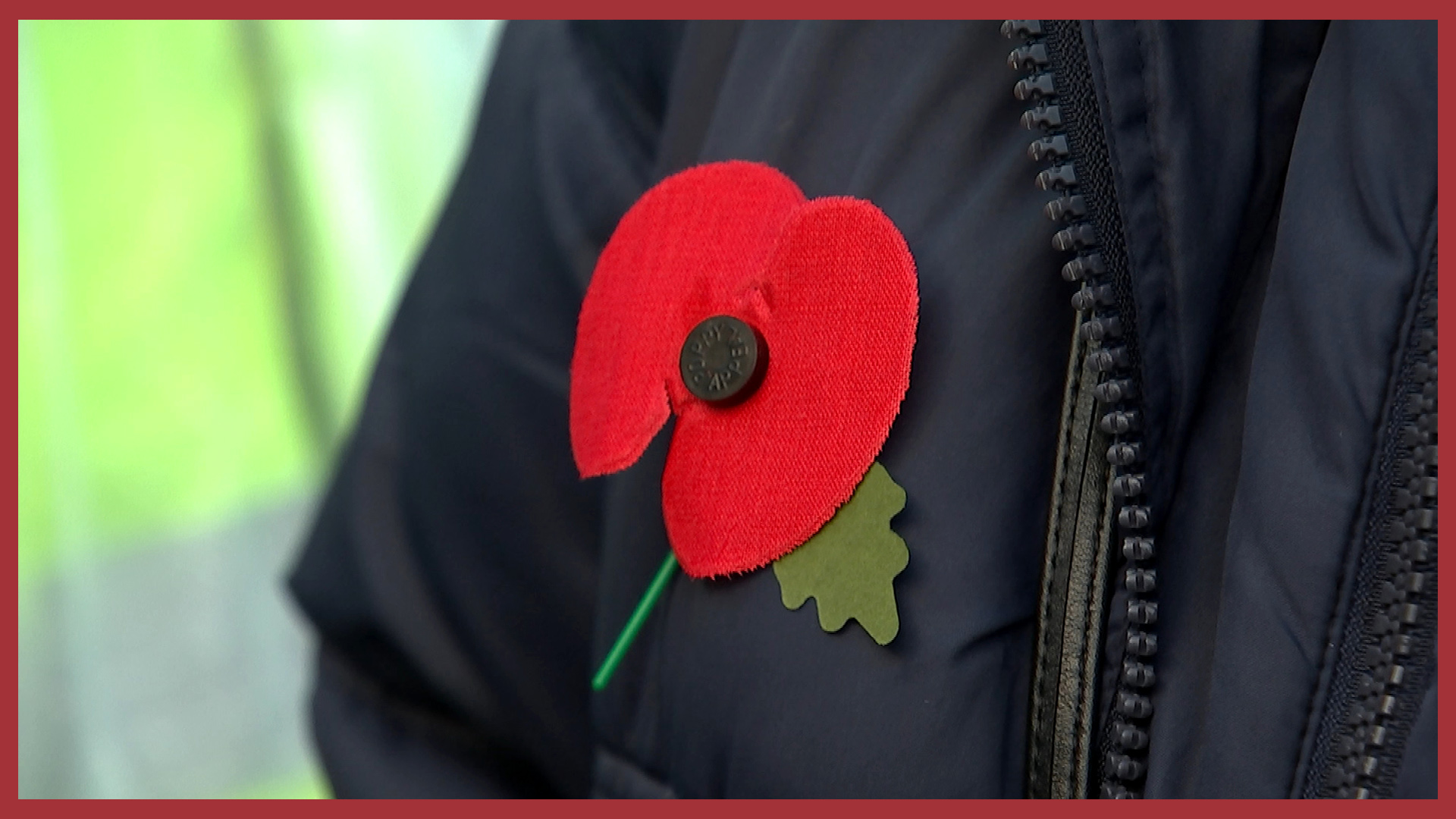
Resources: the framework to download / print (pdf) and an image of someone wearing a poppy.

The video
The video serves as an introduction to the acts of remembrance on Remembrance Day (11 November) and Remembrance Sunday (second Sunday of November).
The video includes parades at The Cenotaph in central London on Remembrance Sunday and interviews with members of the Armed Forces and the general public on why they think it is important to remember the sacrifice made by others to preserve our freedoms.
The video ends with a solemn reminder that Remembrance isn't just about the past - it's also about learning from history so that we can continue to preserve peace for future generations.
Duration: 4' 12"
Final words: '…so that we can continue to live in peace in the future.'
Video questions
- When was the first Remembrance Day held? (11 November 1919 - the year after WW1 ended)
- Who are we honouring on Remembrance Day (the Armed Forces and all those whose lives have been affected by war and conflict)
- When is Remembrance Sunday (second Sunday in November)
- What happens on Remembrance Sunday (There are parades, a two-minute silence, wreaths are placed at The Cenotaph, etc)
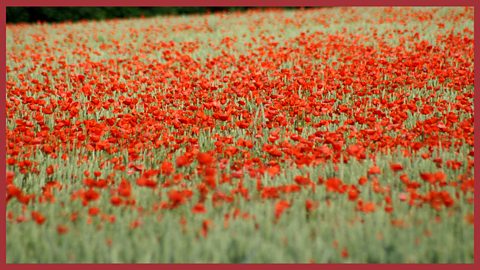
- Why do we see lots of poppies at Remembrance time? (Poppies were one of the only flowers that grew on the battlefields of WW1 and became adopted as a symbol for veterans' organisations - such as the Royal British Legion)
Key links
Assembly framework (pdf) document
Download / print the assembly framework ready for use
Image: someone wearing a poppy. image
Click to display the image full-size
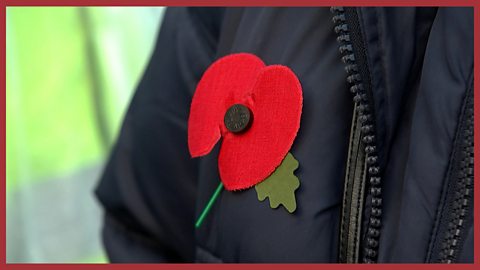
Image: a field of poppies. image
Click to display the image full-size
Suggested framework
1. Entry music
'Nimrod' from the 'Enigma Variations' Op 36 by Elgar features in many formal acts of Remembrance. See 'Related links' below for an audio file of 'The Last Post' and a link to our collection of WW1 song medleys, which also provide instrumental versions.
2. Introduction
Tell the assembly:
Today, we will be learning about Remembrance Day. Remembrance Day is a special day that takes place on 11 November every year. We're going to watch a short video about the meaning of Remembrance Day. While you're watching the video, think about the history of Remembrance Day and why it is so important…
3. The video
Play the video. The duration is 4' 12" and the final words are '…so that we can continue to live in peace in the future.'
4. After the video
Ask pupils to sit in silence for one minute to show their respect for those who have sacrificed their lives for us all.
5. Time to talk
Use the Video questions (above) to help pupils recall the details of the ceremonies:
- Can anyone tell us what year the first Remembrance Day was held?
- Who are we honouring on Remembrance Day?
- Can anyone remember when Remembrance Sunday is?
- What happens on Remembrance Sunday?
- Why do we see lots of poppies around Remembrance time of year?Tell the children that Remembrance Day is an important time and taking part in the acts of Remembrance is a way of showing respect for those who have sacrificed and have fought for our freedom.
6. Opportunity to sing
If your assembly is to include a song this would be a good for it. Suggestions from BBC collections below.
7. Opportunity for reflection
The focus is on respect, reflection and peace. Ask the children to sit quietly and think while you say:
Remembrance Day and the time of Remembrance is about honouring and respecting all of the people that have been involved in war and conflict…
It is also a time to reflect and think about the past generations of people like our grandparents and great-grandparents and the sacrifices they have made for us…
Think about anyone you may know who has made sacrifices for you…
And also think about the men and women who work to keep us safe such as the Army, Police, Firefighters, Air force and Navy.
8. Opportunity for prayer
Begin with your usual form of address ('Dear God', 'Lord Jesus', 'Let us pray', etc) and:
We want to say thank you for all of those who have protected our freedom and sacrificed their lives in wars and conflict, and all those who continue to protect us today.
Help us to remember them and honour what they have done by respecting them and never forgetting them.
Amen.
Suggested songs
Song: 'Peace is flowing' (Come and Praise, no 144. Vocal version)
Peace is flowing like a river,
Flowing out through you and me,
Spreading out into the desert,
Setting all the people free.Love is flowing like a river,
Flowing out through you and me,
Spreading out into the desert,
Setting all the people free.Joy is flowing like a river,
Flowing out through you and me,
Spreading out into the desert,
Setting all the people free.Hope is flowing like a river,
Flowing out through you and me,
Spreading out into the desert,
Setting all the people free.
Song: 'Chain of love' (All about our school, no 14. Vocal version)
- For the children of tomorrow
We’ve got to make it a better place,
Fill the world with love and laughter,
Make a fresh start for the human race.
(Chorus)
Chain of love, chain of love,
Circle the world with a chain of love,
Chain of love, chain of love,
Circle the world with a chain of love.
- No more war and no more hunger,
No more jealousy and hate,
Say goodbye to greed and sadness,
Make a change now or it will be too late.
(Chorus)
(Middle eight)
Circle the world, circle the world,
Circle the world, circle the world.
- Doesn’t matter where you come from,
Doesn’t matter where you’ve been,
Different race or creed or colour,
We are the same underneath our skin.
(Chorus)
Chain of love, chain of love,
Circle the world with a chain of love,
Chain of love, chain of love,
Circle the world with a chain of love.
Circle the world with a chain of love.
Song: 'Down by the riverside' (Come and Praise, no 142. Vocal version)
1. I’m gonna lay down my sword and shield,
Down by the riverside,
Down by the riverside,
Down by the riverside,
I’m gonna lay down my sword and shield,
Down by the riverside,
Down by the riverside.
I ain’t gonna study war no more,
I ain’t gonna study war no more,
I ain’t gonna study war no more.
(Repeat)
- I’m gonna talk with the Prince of peace,
Down by the riverside,
Down by the riverside,
Down by the riverside,
I’m gonna talk with the Prince of peace,
Down by the riverside,
Down by the riverside.
Chorus
- I’m gonna shake hands with everyone,
Down by the riverside,
Down by the riverside,
Down by the riverside,
I’m gonna shake hands with everyone,
Down by the riverside,
Down by the riverside.
Chorus
- I’m gonna walk with my friends in peace,
Down by the riverside,
Down by the riverside,
Down by the riverside,
I’m gonna walk with my friends in peace,
Down by the riverside,
Down by the riverside.
Chorus
Related links
- 'Nimrod' from 'Enigma Variations' by Elgar played by the BBC Philharmonic.
- BBC Teach: School Radio - WW1 song medleys with backing track versions
- Audio: 'The Last Post' (duration 28 seconds)
- Poem: 'In Flanders Fields' by John McCrae.
- CBBC Newsround: Remembrance Day
- BBC Teach: School Radio - WW1 Performance Pack: Archie Dobson's War