Themes: the coronation of King Charles III on 6 May 2023; community; tradition and change; the history of the UK.
Summary: King Charles succeeded to the throne on the death of his mother - Queen Elizabeth II - on 8 September 2022. The coronation is the ceremony at which Charles was crowned king. The traditions of the coronation date back hundreds of years and every coronation has taken place in Westminster Abbey in London since 1066. However, ahead of the ceremony, Buckingham Palace emphasised that although the coronation would be rooted in long-standing traditions, it would also reflect the monarch's role today and look towards the future.
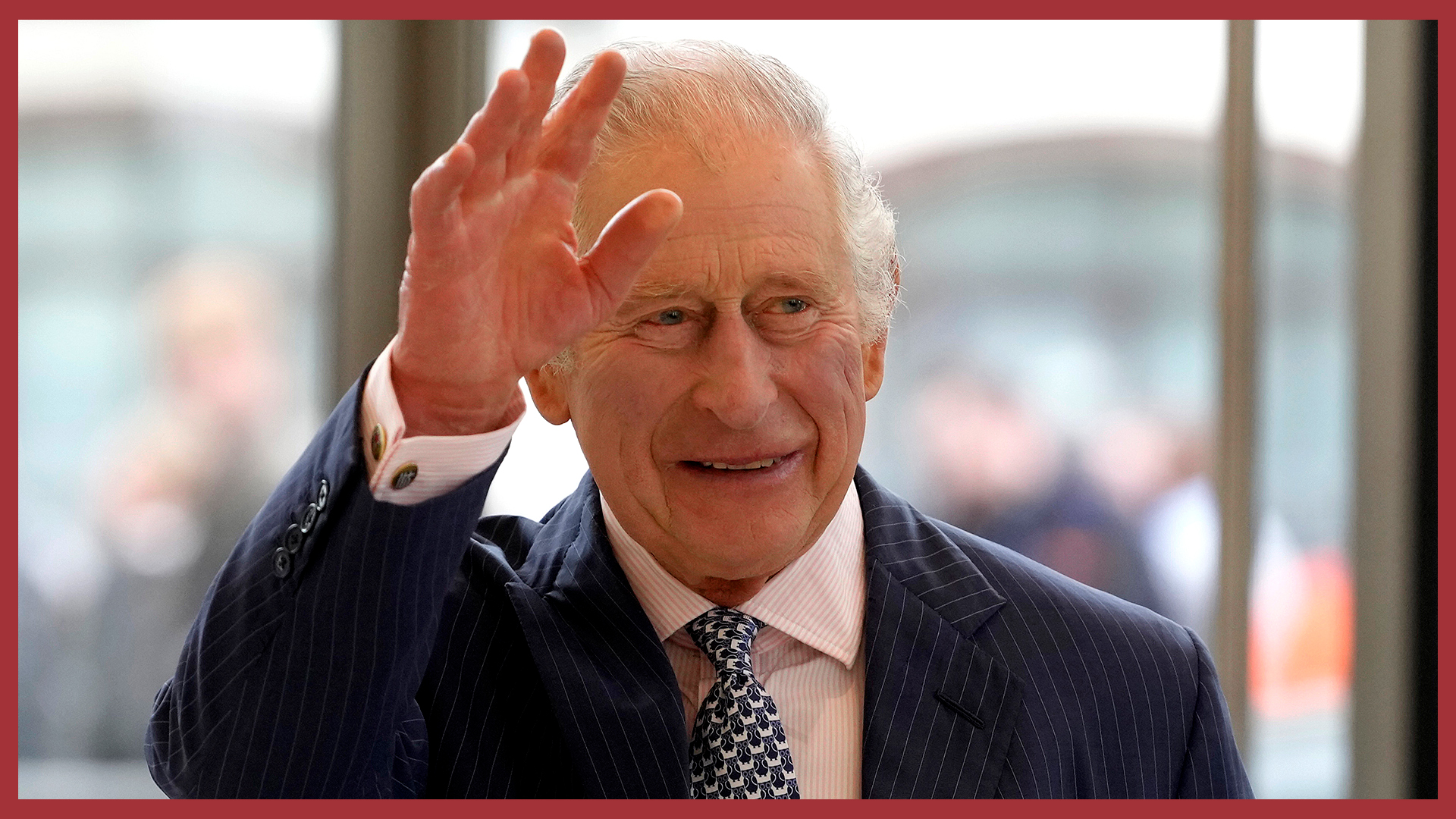
Resources: the assembly framework to download/print (pdf); a photo of King Charles; the coronation anthem Zadok the Priest to download as an mp3.

The video
On the 6 of May 2023 flags were flying up and down the country to mark the Coronation of his Majesty King Charles III.
Charles was born in 1948 to Queen Elizabeth the Second - then Princess Elizabeth - and Prince Philip. Being the first-born child meant that one day Charles would become King.
In 1958, Charles became the Prince of Wales, his new role was marked at a ceremony in 1969.
As a young man Charles served in the Royal Navy and the Royal Air Force.
In 1981, he married Diana Spencer. They had two children: Prince William and Prince Harry.
Charles and Diana separated in 1992 and divorced four years later.
In 2005 Charles married Camilla Parker-Bowles - now Queen Camilla.
Throughout his life, Charles has shown he is passionate about environmental issues.
And he has led many charities including his own - The Prince’s Trust - which works to support young people around the world.
Charles became King following the death of his mother, Queen Elizabeth II, in September 2022. After he was proclaimed King, Charles went on a tour to meet with people across the UK.
(Boy) It was pretty emotional and exciting to see the King. I got photos of him and waved at him.
The coronation took place at Westminster Abbey in London on 6 May 2023. Coronations have taken place here for nearly one thousand years - since 1066.
When Queen Elizabeth’s coronation took place in 1953, it was the first coronation that everyone could watch because of the recent invention of television.
The rituals of the coronation date back hundreds of years and many of them remained the same for King Charles’s coronation.
The ceremony to crown King Charles was conducted by the Archbishop of Canterbury.
The new monarch sits on a special coronation chair that is over 700 years old.
The coronation chair was surrounded by screens, and then Charles was anointed by the Archbishop with holy oil.
After this, Charles was dressed in robes and presented with special objects known as the coronation regalia.
These include the orb and sceptre, symbols of the monarch’s power and responsibilities.
The St Edward’s Crown was placed on Charles’s head. Its solid gold frame weighs well over two kilograms!
His wife Camilla was crowned Queen shortly after, during the same ceremony.
After the coronation the King and Queen, travelled in a procession back to Buckingham Palace…where the crowds watched eagerly for a glimpse of the Royal Family on the famous balcony.
But the celebrations didn’t stop there…
There were events throughout the weekend to mark this special occasion.
On Sunday, 7 May, a concert took place at Windsor Castle with music celebrating the diversity of the UK.
People shared lunches with their friends and communities, joining together for food and fun!
The following Monday was a public holiday and everyone was encouraged to volunteer in their local community. As there was no school, lots of children helped out in their local communities too.
The coronation marked a special day full of excitement and joy. But it also marks the beginning of a new era for us all.
(King Charles) Whatever may be your background or beliefs, I shall endeavour to serve you with loyalty, respect, and love, as I have throughout my life.
The coronation of King Charles III took take place at Westminster Abbey in London on 6 May 2023. His wife, Camilla, was crowned Queen Camilla shortly after as part of the same ceremony.
Coronations have taken place at the Abbey since 1066, the first known for sure to have taken place there being that of William the Conqueror. The ceremony is steeped in tradition: King Charles sat on the coronation chair, which is over 700 years old; the St Edward's Crown was placed on his head; he was anointed with holy oil by the Archbishop of Canterbury; the coronation anthem Zadok the Priest was sung, just as it has at every coronation since 1727. After the ceremony King Charles and Queen Camilla returned to Buckingham Palace, where crowds were waiting for them to appear on the royal balcony.
Celebrations continued across the coronation weekend. On Sunday 7 May there was a concert at Windsor Castle. Also on Sunday communities were invited to come together to share food and fun as part of the Coronation Big Lunch. Monday 8 May was an additional bank holiday, when everyone was encouraged to help out in their local community as part of the Big Help Out.
Video questions
- When did the coronation of King Charles happen? (6 May 2023)
- How old is the special coronation chair? (Over 700 years old)
- What is included in the coronation regalia? (The orb and sceptre…and the crown is also part of the regalia)
- How much does the St Edward's Crown weigh? (Over 2kg)
- What role did the Archbishop of Canterbury play in the ceremony? (He anointed King Charles with holy oil; he placed the crown on the monarch's head)
- What events happened across the coronation weekend? (Concert at Windsor Castle; sharing food as part of the Coronation Big Lunch; helping in local communities for the Big Help Out)
Key links
Assembly framework (pdf) document
Download / print the assembly framework ready for use
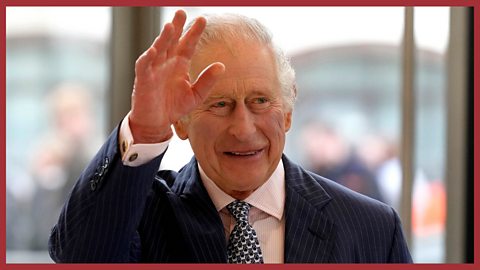
Image: King Charles III. image
Click to display the image full-size
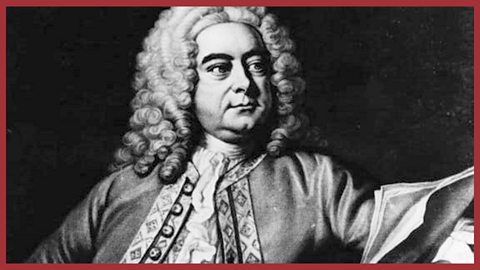
Music: 'Zadok the Priest' video
Play 'Zadok the Priest' (from BBC Teach: Ten Pieces)
Suggested framework
1. Entry
Play Zadok the Priest, written by George Frideric Handel for the coronation of George II in 1727. It has been performed at every coronation since. Download an mp3 of the music here.
2. Introduction
Tell pupils that today they will be finding out about the coronation of King Charles III, which happened on 6 May 2023. The coronation is the special event at which Charles was crowned king. It is a ceremony rooted in long-standing traditions that has great significance for the history of the UK. As they watch the video, ask pupils to remember any facts and to consider why they think the coronation is important.
3. The video
Play the video. The duration is 4' 26" and the final words are: '…as I have throughout my life.'
4. After the video - time to talk
You could begin with some factual questions about the coronation to aid pupils' recall of the video and their understanding of it:
- When did the coronation happen? (6 May 2023)
- How old is the coronation chair? (Over 700 years old)
- How heavy is the St Edward's Crown? (Over 2kg - over two bags of sugar!)
- What did the Archbishop of Canterbury do during the ceremony? (He anointed King Charles and placed the crown on his head)
- What does the coronation regalia include? (The orb and sceptre)
- What events happened to celebrate the coronation? (A concert at Windsor Castle; the Coronation Big Lunch; the Big Help Out)
You could then invite a broader consideration of the significance of the coronation by asking:
- What are the monarch's responsibilities? Why is the monarch important? (Look for an awareness that the monarch has a role in government, both in the UK and in some other commonwealth countries around the world, but also serves as a figurehead; pupils may also suggest things specific to King Charles, such as doing important work with charities or raising awareness of environmental issues or meeting people across the UK)
- Why do you think the coronation followed traditions that stretch back several hundred years?
- Why do you think the importance of 'community' was celebrated across the coronation weekend? (You could use this as an opportunity to recall any events that happened at your school or in the local community)
5. Opportunity to sing
Suggestions from BBC collections below.
6. Opportunity to reflect
Focus your reflection on the long traditions of the coronation and how traditions evolve over time.
Sit quietly now as we think about the coronation of King Charles III…
Much about the coronation was the same as previous coronations, because so much of the ceremony followed ancient traditions…
But much about King Charles's coronation was quite different…not least because technology allowed more people to share in the event than ever before…
The coronation was an opportunity to celebrate and connect with our local community…
Think how you might like to help in your our community if you have the opportunity…
For Charles the coronation marked the day when he was crowned king…
But it also marked a new chapter in the history of our country, a new era for us all.
7. Opportunity for prayer
Begin with your usual form of address (‘Dear God’, ‘Dear Lord’, ‘Let us pray,’ etc and):
We thank you for King Charles III.
As we remember his coronation in May 2023, help us appreciate both the traditions of our communities and the new ways we can connect with each other.
We thank you for the opportunity to spend time with our families and communities in this new era for our country.
Amen.
Suggested songs
'Celebration rap' (Come and Praise Beginning, no 7).
(1) Come and shout for joy!
(2) Come and shout for joy!
(1) Come and shout for joy
and clap your hands!
(2) Come and shout for joy
and clap your hands!
(1) Come and shout for joy
and clap your hands
and stamp your feet!
(2) Come and shout for joy
and clap your hands
and stamp your feet!
(1) Come and shout for joy
and clap your hands
and stamp your feet
and turn around!
(2) Come and shout for joy
and clap your hands
and stamp your feet
and turn around!
'Together' (All about our school, no 13).
- Work together, not alone,
Gather round and share a problem.
Work together, hand in hand,
Gather round and work things out.
Chorus
‘Cos together, we can work it out together,
We can ride the stormy weather,
As long as we’re together we’re strong!
- There’s a setback, don’t despair,
Gather round and share your feelings.
Why just worry on your own?
Gather round and work things out.
Chorus
- If there’s trouble big or small,
Gather round and find an answer.
If you stumble there’s a friend,
Gather round and work things out.
Chorus
'All together as a family' (All about our school, no 15).
Some can dance and some can sing,
Some can fiddle on a violin.
Some can bat and some can bowl,
Some can tackle and score a goal.
Some can paint and some can sew,
Some can juggle and some can throw.
Some can throw, some can throw.
All that we can do or be
All together as a family.
All together as a family.
All together as a family.
All together as a family.
Some can run and some can swim,
Some do somersaults in the gym.
Some can ride or climb a tree,
Some are good at technology.
Some can teach and some can guide,
Some get everybody organised.
Organised, organised.
All that we can do or be
All together as a family.
All together as a family.
One for all and all for one,
All together we get things done.
We get things done.
All that we can do or be…
spoken 1, 2, 3, 4, 5, 6, 7, 8
All together as a family.
Links
- Audio: download an mp3 of the coronation anthem Zadok the Priest
- Information about the Coronation - from The Royal Family website
- The Big Help Out
- Prince's Trust