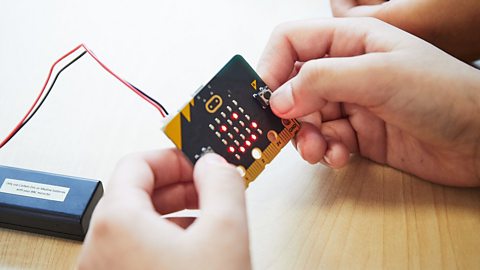
As part of our BBC micro:bit – the next gen campaign, we spoke to disabled people about their experiences in the world of tech. Moudud, Josh and Mollie told us why it’s important for young people to learn to code, how the industry is becoming more inclusive – and how disabled people are driving change.

Moudud Abu, a software engineer at the LEGO Group, was inspired to code at sixth form. ‘To be honest, when I was younger, I had no clue about engineering or design. Our ICT lessons were quite basic,’ he says. This was disappointing, as it’s the hands-on nature of computer science that he loves most. ‘There’s a lot of logical thinking, so if you’re a critical thinker and you like solving problems, it’s great.’
Moudud is dyslexic and has a hearing impairment. Have his disabilities enhanced his skills as a software engineer? ‘Absolutely. Problem-solving as an engineer is really satisfying. And as a disabled person, you become adaptable, and pick up different skill sets to solve problems.’
He believes more disabled people have started to speak up in the workplace over recent years. However, according to the British Computing Society an additional 63,000 disabled IT specialists are needed in the UK to match the percentage of disabled people in the wider workforce.
Cari Watterton, Senior Accessibility Designer at games company Rebellion, agrees that things are changing. ‘A huge amount of work is going in to developing more accessible tech.’
Moudud himself uses software in creative ways to make his job accessible. He uses Grammarly, because his dyslexia means he sometimes misses out words or doesn’t know how to spell them, and speech-to-text software to dictate code.
Pair programming – when coders work together – is also popular in the tech industry, despite the fact that artificial intelligence can now replicate it by providing feedback while code is written. ‘I still believe in working with other engineers, that’s how I learned,’ says Moudud.
"Problem-solving as an engineer is really satisfying”

For Josh Nonet-Black, a Senior Consultant at Deloitte, technology has improved accessibility in a number of ways. ‘There’s a lot of great open source stuff. You can create audio charts, so that when the data value increases, the frequency tone does, too.’
Josh is blind, and learned to code at university. ‘I had a fascination for space, and that led me to do a physics degree,’ he says.
‘For my final-year project, I used artificial intelligence to classify different types of star.’ Since then, he has built up a software package involving AI from scratch.
He thinks his disability often helps him to think laterally. ‘I tend to approach problems in a slightly different way. I think sometimes, when you’re dealing with big abstract data sets, the visual stimuli can be quite overwhelming. What’s nice is that I can cut through the noise.’
It’s this diversity that Josh thinks is vital in the tech sector. ‘The nice thing about coding is that you can really make it yours – not everyone will code something in the same way.’
He agrees with Moudud and Cari that the tech industry is becoming more inclusive, as companies do more to appeal to disabled users.
‘Big companies are now actively building accessibility software into their main operating systems. We’re definitely moving in the right direction, though there’s still a way to go. It’s a work in progress.’
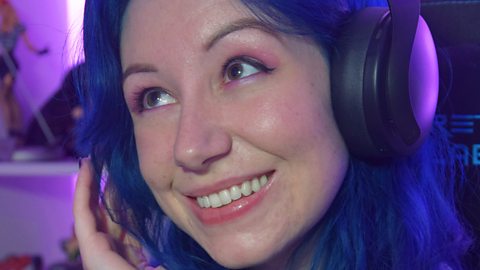
Content creator and accessibility advocate Mollie Evans would like to see this progress furthered in the world of gaming.
‘Accessibility is huge at the moment,’ she explains. ‘I’d say it’s one of the most talked-about things when a new game comes out – what accessibility options does it have? But in terms of employees or characters in games, I think inclusion is still quite low.’
According to estimates by Xbox, there are more than 400 million disabled gamers globally. Mollie, who has the connective tissue disorder Ehlers-Danlos Syndrome, began gaming at age six. But the springboard was when she discovered comic books as a teenager. ‘I was like, I get to play as Batman? It was so cool.’
Mollie’s interest in gaming was spurred on at university, where most of her friends studied game design. ‘I basically became too ill to do the job I was doing – it was too many hours, and my body just couldn’t handle it. I’d already started streaming on Twitch and making gaming content, so I pursued that.’
"It’s such a nice thing when you find people like you in games”
What has been the highlight of her gaming experiences so far? ‘This is going to sound so cheesy, but it’s really the friends I’ve made along the way.’ She believes that a sense of community is especially important for disabled gamers. ‘It’s such a nice thing when you find people like you in games. It’s so wonderful.’
Yet a report by the charity Scope in 2020 found that 66% of disabled gamers in the UK faced barriers, including 40% having spent money on inaccessible games.
Cari agrees with Mollie that involving more disabled developers will have a positive impact. ‘Having people with varying capabilities involved in the development of tech allows them to bring their own perspective to the process, and build tools that can solve accessibility barriers,’ she says.
Mollie would also like to see game demos for new releases, allowing disabled consumers to trial accessibility features rather than simply reading about them. ‘Then people will know they can play it, and not waste their money.’
"Young people should believe in themselves and what they can achieve”
Moudud, Josh and Mollie believe it’s never been more important for young people to learn to code.
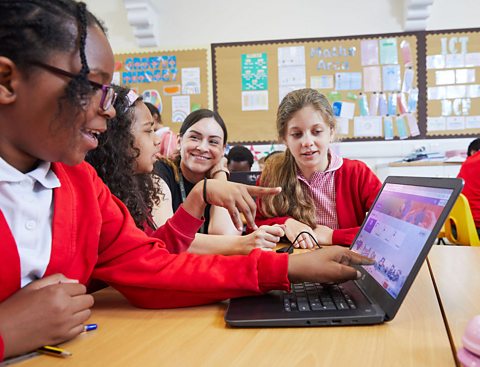
‘Tech is a constantly growing industry. Coding is something I wish I’d learnt at school,’ says Mollie. ‘I think as we grow up, we’re so affected by our environments that we don’t all get an equal footing. The micro:bit campaign will help level the playing field for everyone.’
Josh believes that the campaign will help to diversify the tech industry in the future. ‘We all code in a slightly different way, and the more diverse we can make the pick of coders going forward, the better. It only serves to make things better for everyone.’
For Moudud, who has written blogs about his experiences of disability in the tech industry, it’s important that disability isn’t seen negatively.
‘Sometimes people think disability is a hindrance to their career, but it’s not. You think in different ways, outside the box, and that’s what companies need. Young people should believe in themselves and what they can achieve.’
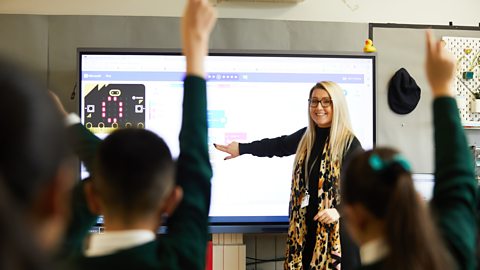
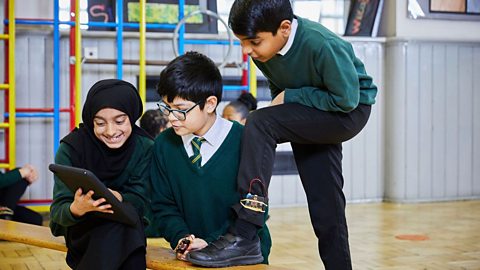
Primary school teachers can find more information on free training and classroom resources on the BBC micro:bit - the next gen website.
This article was written in November 2023.

More from BBC micro:bit - the next gen
What's inside the micro:bit box? video
Watch an unboxing video and find out how to get coding in less than 60 seconds.
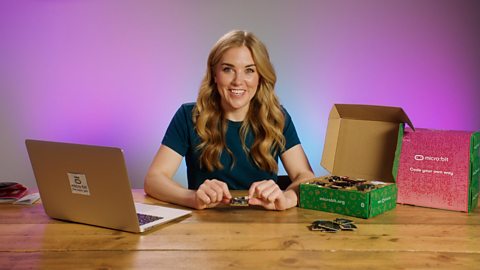
Training resources for teachers
Find out about the free courses - both online and in-person - to help primary schools teach about the micro:bit.
Classroom resources
Check out resources that will help you get ready once you receive your micro:bits.
'We need computer scientists and coders from all backgrounds'
TV presenter and EduTuber Maddie Moate on inspiring the next generation of coders.

DanTDM on why coding is an important skill for young people
YouTuber DanTDM tells us why he wanted to take part in the BBC micro:bit - the next gen campaign.
Quiz: Is your coding knowledge better than a primary school pupil's? quiz
See how you score in our fun quiz that's based around the primary school curriculum and beyond.
FAQs
Get the answers to all of your questions about the micro:bit.
About the micro:bit
Find out everything you need to know about the BBC micro:bit.
Our partners
Find out more about the organisations supporting our micro:bit initiative.