MICHAEL ROSEN:
Little Mary, Mary Anne, was really quite fantastic. She wasn’t like her friends ‘cause she was made of elastic.
She’d roll herself up…
I’m Michael Rosen and I’m an author. To be able to write fiction there are a few tricks which help to make your writing more exciting for the reader, and easy to follow.
One type of writing is ‘Recount’. When you write a recount, you reconstruct a past experience, and tell the reader what happened.
It’s always written in the past tense, as if you are remembering what took place.
Recounts are written from one view point, usually the author. So this means that anybody can write a recount, because you have the freedom to write about your own personal thoughts.
A recount can retell a real life experience of something that actually happened, for example telling a story about the last time you went on holiday. Or we can put ourselves into somebody else’s shoes and imagine what might have happened. For example, a day in the life of a pop star.
One of the easiest ways to start thinking about a recount story is to draw a diagram, to help you to plan your writing. For example, draw a map and imagine a place you could have visited. Or write a timeline of events in an imaginary day.
Your recount story should be written in ‘chronological order’, which means sequencing the events in the order that they happened.
Recounts also need to be structured, so that they include a beginning, a middle, and an end.
During your recount story, you must use ‘emotive words’ to set the scene. If you wrote “I went to the park and it rained” that’s telling the reader what you did, but by using more emotive language, it makes a more exciting read and helps your reader visualise the story.
For example, “‘I woke early when the sun had just risen, and as I walked to the park the rains started to drizzle like a summery waterfall’”.
During your recount story, try to focus on a few key events to give your writing structure. Try to think of three things that happened that you’d like to describe.
To link your recount together try to use ‘time connectives’ like ‘Firstly’, ‘Secondly’, ‘Finally’, ‘Afterwards’, and ‘Meanwhile’, ‘Eventually’, ‘Minutes later’, ‘Before I knew it’, ‘Without warning’, ‘As quick as a flash’.
Here’s my example, “‘Finally, when the rain eventually stopped, I was able to enjoy the park, and find my next adventure’”.
Always try to end with a closing statement. Reflect on what happened and what might happen next.
When you’ve written down your first draft, read it through and see if you like it. Are there parts that you would change, or could you think of a better name for someone? I like to read my writing out loud so that I can hear what my readers might hear…
“‘I wrote some letters to many different people, friends, relations, work people. Some of them answered me, that was good. What they said was interesting. Some of the letters got no answer…’”
When you write your second draft, keep the sections that you like, then add in new sentences that you like more.
As an author I’m constantly editing my writing, so that it’s the best that I can make it.
Video summary
Michael Rosen explains how writing a recount requires an understanding of chronological order or sequencing, and how to structure a piece of writing.
Michael outlines that recount writing should have a beginning, middle and ending.
He also describes how pupils can use emotive language to make their writing more interesting.
This short film is from the BBC series, The Facts About Non-Fiction.
Teacher Notes
In this short film two different planning skeletons are presented – a timeline and a picture to sequence events.
You could use one or both of these planning skeletons in a shared/guided writing session to demonstrate how to plan a recount.
Pupils could then choose which skeleton they prefer.
You could read a picture book to your pupils and ask them to sequence key events from the story using either the timeline or the picture diagram. Pupils may use these skeletons as their own planning skeletons.
This short film will be relevant for teaching English at KS1 and KS2 in England, Wales and Northern Ireland and 1st and 2nd Level in Scotland.
How to write clear instructions. video
Stefan Gates explains how writing a set of instructions requires use of simple, precise language, and an understanding of chronological order and imperative verbs.
How to write a persuasive text. video
Actors Shannon Flynn and Richard Wisker talk about using emotive language, the difference between facts and opinions, and how to use evidence to support persuasive writing.
How to write a discussion text. video
Newsround presenter Leah Boleto explains how discursive writing requires an understanding of the difference between facts and opinions, and how to use connecting phrases and statistics.
How to write a non-chronological report. video
BBC journalist Sonali Shah explains how writing non-chronological reports requires an understanding of the planning, writing and drafting process.
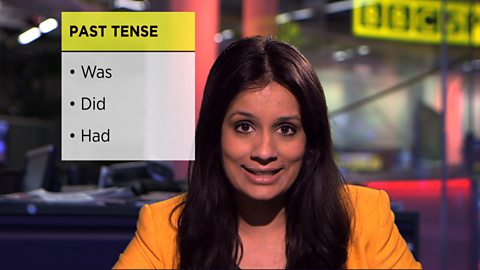
How to write an explanation. video
Chris Packham explains how writing an explanation requires an understanding of chronological order or sequencing, how to use technical language and how to write succinctly.