SHANNON FLYNN: Hi I’m Shannon…
RICHARD WISKER:… And I’m Richard
And action!
When we’re not busy chatting to pop stars on Friday Download, we are busy discussing the latest tracks and trying to convince each other to have a listen to the track or download the album.
SHANNON FLYNN:Hey have you heard this one? I really, really like it!
RICHARD WISKER:Cool… have a little listen.
Critics that are a type of journalist will always try and get you to try something, or buy something when they have a positive review in either a newspaper or a magazine.
This is called ‘persuasive writing’; a type of writing that changes or influences somebody else’s opinion, like getting the new album or having the latest mobile phone.
SHANNON FLYNN:Ok, so I’m going to have a go at writing my own review, to see if I can persuade Richard to buy… the latest Michael Bublé album.
RICHARD WISKER:Ha, Michael Bublé?! No way, my mum listens to Michael Bublé.
SHANNON FLYNN:Well I bet I can convince you to at least listen to it.
RICHARD WISKER:Alright, you’re on!
SHANNON FLYNN:Ok what language will I need to persuade Richard, and how do critics organise their writing?
Well I know that the first thing I’m going to need is an eye-catching and snappy title, which explains to the reader what the topic of the review is going to be.
So I’m going to say “‘The new Michael Bublé album; the best thing since sliced bread!’”.
RICHARD WISKER:Hahaha, that’s quite a funny title, I wonder what she’s going to write next?
SHANNON FLYNN:So the next section is the introduction. Now this would be a short parargraph that explains to the reader what the review’s going to be about, and what my point of view is.
So here I’m going to start with “‘The new Michael Bublé album is released this week, and I for one can’t wait.’”
Now the main part of your review should be split into clear paragraphs, and each paragraph should introduce and explain a different reason why I think Richard should buy the album.
You should make a list of all your reasons and organise them by putting the most important one at the top.
Now the reasons can be a mixture of ‘fact’ and ‘opinion’. So in my first paragraph I’m going explain how Michael Bublé has sold millions of records, this is a fact, and I can use this as evidence to support my argument that I think the next album will also be very popular.
RICHARD WISKER:Just ‘cause he’s popular with grandmas, doesn’t mean I’d buy it.
SHANNON FLYNN:Ok so we obviously have different opinions, and in this case Richard’s opinion is known as a ‘counter-argument’. Now a good piece of persuasive writing addresses possible counter-arguments to create a more balanced review.
Now in the next paragraph I’m going to explain how lots of cool people like Michael Bublé too, not just grandmas. In fact Olly Murs actually said that he was inspired by Michael, so I can use this quote from Olly to support my argument.
RICHARD WISKER:Oh! Well if Olly Murs likes him…
SHANNON FLYNN:So you can see how I’m slowly building up a persuasive argument with different reasons.
Now in my final paragraph I’m going to explain why I personally like Bublé’s music. This is me giving my opinion, so I’m going to explain how my mum always plays Michael Bublé at Christmas, so hearing him again makes me feel nostalgic and very happy.
Notice how I’ve used emotive and positive language, like ‘best’, ‘popular’ and ‘inspired’ to try and influence Richard’s opinion.
I’ve also spoken in the present tense and the first person, speaking directly to Richard, to make it feel more personal to him.
RICHARD WISKER:Ahh, I remember when my mum used to play Michael Bublé at Christmas, haha!
SHANNON FLYNN:And finally you should finish your persuasive writing with a conclusion. This should be a short paragraph that repeats your original point of view, and ends with a snappy sentence.
So I might write “‘In summary I think the album’s great, why would you not want to buy it?!’”
So that’s a ‘rhetorical question’, this is a question that makes a point and doesn’t require an answer.
Ok so that’s my review finished, let’s go and see Richard and see if I’ve persuaded him.
SHANNON FLYNN:So I guess I persuaded him then!
Video summary
This short film, first published in 2015, is for teachers and review is recommended before use in class.
Actors Shannon Flynn and Richard Wisker talk about using emotive language, the difference between facts and opinions, and how to use evidence to support persuasive writing.
Shannon demonstrates various techniques - like using a snappy title, reasoning, counter arguments, rhetorical questions and a conclusion - to build a strong persuasive piece.
But, will Richard be convinced that listening to the latest Michael Bublé album really is worth doing?!
This short film is from the BBC series, The Facts About Non-Fiction.
Teacher Notes
Whilst writing persuasive texts, pupils often fall into the trap of being too informal and chatty.
You could select some of the vocabulary that is explained in this resource and ask your pupils, in pairs, to write definitions. For example: counter argument, emotive language, first person, rhetorical question, fact, opinion, balanced review.
Then pupils could watch this short film to check if their definitions are correct.
This short film will be relevant for teaching English at KS1 and KS2 in England, Wales and Northern Ireland and 1st and 2nd Level in Scotland.
How to write clear instructions. video
Stefan Gates explains how writing a set of instructions requires use of simple, precise language, and an understanding of chronological order and imperative verbs.
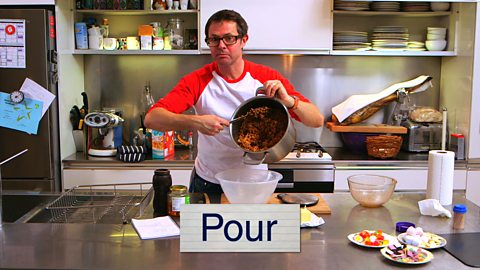
How to write a discussion text. video
Newsround presenter Leah Boleto explains how discursive writing requires an understanding of the difference between facts and opinions, and how to use connecting phrases and statistics.
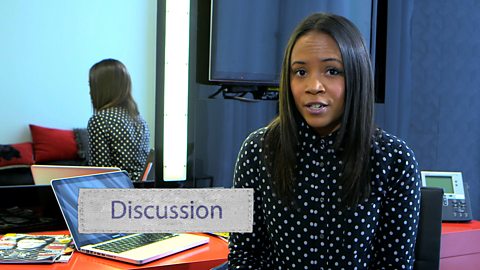
How to write a recount. video
Michael Rosen explains how writing a recount requires an understanding of chronological order or sequencing, and how to structure a piece of writing.

How to write a non-chronological report. video
BBC journalist Sonali Shah explains how writing non-chronological reports requires an understanding of the planning, writing and drafting process.
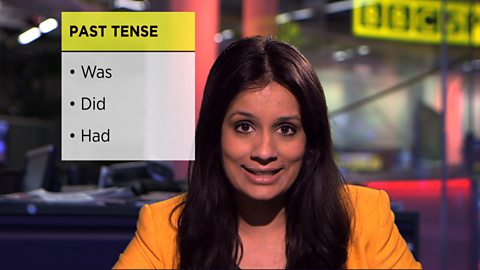
How to write an explanation. video
Chris Packham explains how writing an explanation requires an understanding of chronological order or sequencing, how to use technical language and how to write succinctly.