If I asked you to name your favourite animal.
You probably wouldn't pick a worm or a beetle or an earwig and that's a shame because minibeasts are amazing.
Caterpillars can be plain or patterned, hairy or smooth, but one thing they all have in common is they eat lots.
These small green ones will keep munching until all the leaves have gone.
Spiders don't eat leaves.
Instead, they eat creatures they catch in their webs.
With eight legs they can move quickly to reach the insects they've caught.
An animal that eats other animals is called a carnivore. Centipedes are carnivores too.
They have two fangs which release poison and they use these to stop their dinner from getting away.
Each tiny section or segment of a centipede's body has two legs.
So it has lots and lots of legs along the length of its body.
Millipedes also have lots of legs, four on each body segment.
They can move really fast, but they don't need to hunt because millipedes only eat plants and leaves.
They are herbivores.
Earthworms stretch and pull themselves forward through soil.
The tiny tunnels they leave behind makes the soil crumbly and good for growing things in.
Gardeners love earthworms, but not slugs!
With thousands of tiny teeth, slugs eat the gardener's favourite plants, slugs are covered in slime to help them move across dry things.
Inside its hard shell, a snail is slimy too.
These stripy shells belong to banded snails.
The stripes help the snails to hide in the grass and stay safe.
But these beetles want to be seen! Their bright red wings warn hungry birds that ladybirds won't taste good.
Earwigs help to keep a garden tidy by eating dead leaves and plants.
They have tiny wings, but hardly ever fly.
Stag beetles look fierce, but they only eat nectar and rotting fruit.
They buzz loudly when they fly on summer evenings, but they won't hurt you.
Minibeasts are amazing.
And many are really useful.
Video summary
A brief audio slideshow showing the characteristics of minibeasts.
Teacher Notes
- This clip could be used as an introduction to minibeasts.
- Pupils could be asked to list the characteristics of minibeasts and compare them to characteristics of other animal groups.
This short film is relevant for teaching Science at KS1 in England and Wales, Foundation and KS1 in Northern Ireland and Early level and first level in Scotland.
Minibeasts. video
Learn about lots of different animals without a backbone. Some minibeasts use camouflage, and some have different defences to avoid being eaten.
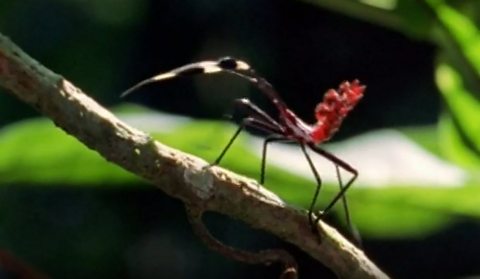
Characteristics of insects. video
What is an insect? A look at the characteristics of an insect, including their legs, wings and their lifestyles.
Animals. collection
A collection of KS1 science clips about animal classification. Watch simple introductions to fish, amphibians, marine life, egg-laying animals, spiders, animals with patterns and nocturnal wildlife.