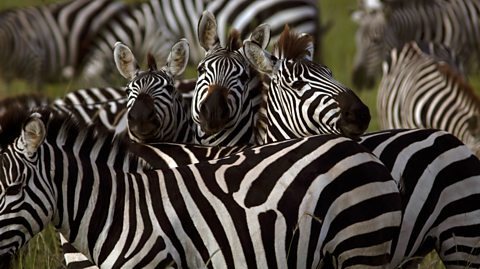
Just have a look at these creatures.
Some of them are very strange-looking, aren't they?
These bugs are called insects.
Insects come in all different shapes and sizes.
They live everywhere and there are millions and millions of them on our planet.
If you look closely at any insect, they all have six legs.
Insects also have wings which some of them use to fly with.
Look at this pretty butterfly flapping its wings and flying along.
Butterflies and moths are some of the most colourful insects of all.
Can you think of another insect which can fly?
Another insect which can fly is a fly!
Flies can be pests because they get into your house and try to eat any scraps of food that are left lying around.
Here is another insect, which is a bit of a pest in houses which are not very clean.
This is a cockroach and it can live just about anywhere, especially if there are scraps of food or rubbish for it to munch on.
Beetles are insects too and they have wings and can fly as well.
This is a type of beetle called a dung beetle because it likes to eat dung, which is another word for poo!
It makes the dung into balls and then rolls them away.
Now here is an insect you will have seen and heard.
This insect is a bee.
Bees love to fly around from flower to flower to gather nectar to make into honey.
In a garden with lots of flowers, you will see bees flying around them, especially when it's warm and sunny.
This insect is called a rhino beetle.
Rhino beetles have big horns and look quite fierce but they only use their horns to fight with other rhino beetles.
There are so many different types of insects.
Video summary
What is an insect? A look at the characteristics of an insect, including their legs, wings and their lifestyles.
This short film comes from the BBC series, Our Planet.
Teacher Notes
- This clip could be used to inspire simple acrostic poetry in Literacy, linking with how insects look, move and feel.
- Alternatively it links to symmetry in Mathematics using the butterfly wings, where children could be asked to follow the pattern from one wing onto a blank wing.
- Making sure they are symmetrical, or in music, by choosing and playing appropriate instruments relating to how the animals are moving, eg beating drums for elephants moving or tambourines symbolising butterflies fluttering.
This short film is relevant for teaching Science at KS1 in England and Wales, Foundation and KS1 in Northern Ireland and Early level and first level in Scotland.
Characteristics of minibeasts. video
A brief audio slideshow that shows what the features of minibeasts are and explains why they are so magnificent.
Minibeasts. video
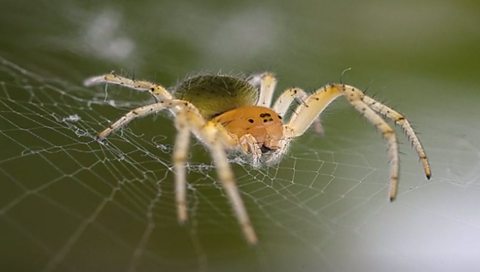
Learn about lots of different animals without a backbone. Some minibeasts use camouflage, and some have different defences to avoid being eaten.
Animals. collection
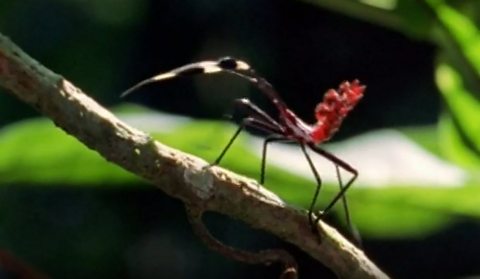
A collection of KS1 science clips about animal classification. Watch simple introductions to fish, amphibians, marine life, egg-laying animals, spiders, animals with patterns and nocturnal wildlife.