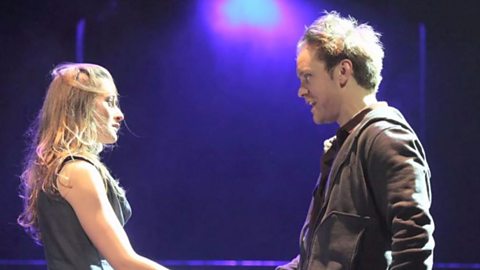
ROMEO:'It is my lady. It is my love.'
MICHAEL FENTIMAN:Well, why has she come out on the balcony?
MARIAH GALE:She's found something with Romeo that she's never experienced before or felt before you know? I think she's probably going somewhere private.
MICHAEL FENTIMAN:Because she can't talk about it to anybody in her family.
MARIAH GALE:No.
MARIAH GALE:It's sexual as well so I think she's come out for air.
ROMEO:She speaks yet she says nothing. What of that?
MARIAH GALE:'The last thing that's happened is she's kissed him 'and then she's found out that' she is not allowed to be with him. That's the information she's carrying onto the balcony.
JULIET:Ay me!
MARIAH GALE:"Ay me" is a really open sound. I mean, it's about as open as you can get.
MICHAEL FENTIMAN:Yeah.
MARIAH GALE:And it's kind of like a sigh. 'It's debateable what she's thinking in her head 'during that time when she's not speaking,' but when she does start to speak,it's all to an imaginary Romeo.
MICHAEL FENTIMAN:So Juliet's on her own?
MARIAH GALE:Yeah, she thinks she's on her own.
MARIAH GALE:Yeah.
MICHAEL FENTIMAN:She thinks she's on her own.
MARIAH GALE:Yeah.
JULIET:Romeo. Romeo. Wherefore art thou Romeo?
MARIAH GALE:Wherefore is 'why' - 'Why are you Romeo?'
MICHAEL FENTIMAN:In the modern ear, as soon as I hear 'wherefore' I hear 'where is Romeo?' so it's interesting that when she comes out it doesn't mean 'where is Romeo?' she's saying "Why?"
MARIAH GALE:Why are you attached to that name?
JULIET:Deny thy father and refuse thy name. Or if thou wilt not, be but sworn my love and I'll no longer be a Capulet.
MARIAH GALE:She's saying, "Marry me and then I won't be a Capulet."
MICHAEL FENTIMAN:So either you do it or if…
MARIAH GALE:Either you disown your name…
SAM TROUGHTON:I suppose it dawns, doesn't it? 'cause if she's saying, "Oh, just get rid of your name." and then–
SAM TROUGHTON:You could actually get rid of your name by marrying him I suppose. It's, kind of, "[GASP] Or do that…"
JULIET:Tis but thy name that is my enemy, Thou art thyself though not a Montague. What's Montague? It is nor hand, nor foot, nor arm, nor face, nor any other part belonging to a man. [LAUGHS] Be some other name.
SAM TROUGHTON:'He hears sex, he hears desire.' I mean she's already talked about parts of man.
MARIAH GALE:That's there. It's all body parts–
SAM TROUGHTON:"Or any other part belonging to a man." I mean she's talking about his… You know.
MARIAH GALE:[GIGGLING]
SAM TROUGHTON:But you know, there's a real sort of, peeping tom element to this bit which is quite funny, because he really is like, "Oh my god." You know, if he stays longer he's like, "Oh no." He's like really hearing loads of stuff now.
JULIET:What's in a name? That which we call a rose by any other word would smell as sweet. So Romeo would, were he not Romeo called, retain that dear perfection which he owns without that title.
MARIAH GALE:What is the real root of this problem?
MARIAH GALE:It's just your name, that's the only problem. And what is a name? And then she unpacks what's in a name. Well, you know if you called a rose a tulip it would smell just as good. And she has this, kind of… forensic examination of what that is.
MICHAEL FENTIMAN:She's trying to explode it.
MARIAH GALE:And then by the end of it she's come up with a very good argument, she thinks, and says, "Romeo, doff thy name."
JULIET:Romeo, doff thy name and for thy name, which is no part of thee, take all myself.
MICHAEL FENTIMAN:So even though Juliet is thinking she's alone, imaginatively it's all to him.
MARIAH GALE:To him, yeah.
MICHAEL FENTIMAN:So let's try something, and we're just gonna let Juliet play her argument right through but now you can do it to Romeo.
JULIET:O Romeo. Romeo. Wherefore art thou Romeo? Deny thy father and refuse thy name. Or if thou wilt not, be but sworn my love and I'll no longer be a Capulet. 'Tis but thy name that is my enemy. Thou art thyself though not a Montague. What's Montague? It is nor hand, nor foot, nor arm, nor face, nor any other part belonging to a man. [LAUGHS] Be some other name.
MICHAEL FENTIMAN:What did that do?
SAM TROUGHTON:It was really interesting hearing those lines and that argument as if Romeo was meant to be hearing it. Because I don't think he has the answers. And she's really leading him through the reasons that it's not impossible. Which was really interesting.
MARIAH GALE:Yeah, I've not realised before how much… It's all geared towards persuading him to throw caution to the wind. I'd not really seen that side of it before.
MARIAH GALE:It's always been sort of, you know, if you're wrestling with an abstract idea of, "What is in a name?" and the name is the problem and-- But actually I'd never really heard it so clearly before that it's sort of-- That it's to him saying, "What is the problem?" You know. "It's nothing."
SAM TROUGHTON:Yeah.
MARIAH GALE:I don't know, I'd not really seen that angle of it before. But I also think that that's the challenge for an actress doing this, always, is that in her mind, he has to be as vivid as the real person.
Mariah Gale and Sam Troughton explore the problem of Romeo’s name and Juliet’s solution
Should Romeo change his name, or marry her so that she can change hers?
This short film is from the BBC series, Shakespeare Unlocked.
Teacher Notes
This short film contains a useful dissection of Juliet's soliloquy, examining the language used and how she comes up with her logical solution.
In the workshop the actor playing Juliet tries delivering her speech directly to Romeo. Ask students to consider how this would change what Juliet says;
- Why does Shakespeare write the speech as a soliloquy?
- What does it allow Juliet to say?
- Juliet analyses the idea of what Romeo's name represents. How does this forensic examination add to our sense of her character?
- She seems very far from simply a love-struck girl, and is thinking through the consequences of her feelings carefully. How does this contrast with Romeo's words and actions later in the same scene?
- What changed when Juliet delivered her speech directly to Romeo? How did it differ from speaking out to the night? What changed in the meaning?
This short film is suitable for teaching GCSE English literature and drama in England, Wales and Northern Ireland and National 4/ 5 in Scotland.
More from Shakespeare Unlocked - Romeo and Juliet
Act 2, Scene 2 - Lovers unite (workshop) video
Romeo puts his life in danger by entering the Capulet orchard. Mariah Gale and Sam Troughton explore differing ways of playing the scene.
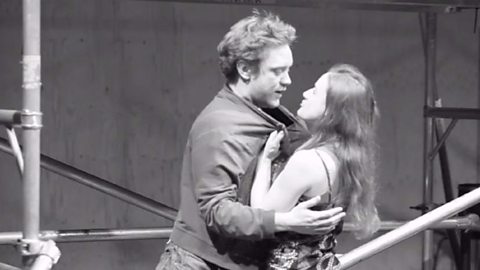
Act 2, Scene 2 - Romeo's soliloquy (workshop) video
Sam Troughton discusses how Romeo has no plan once he is discovered in the Capulet garden.
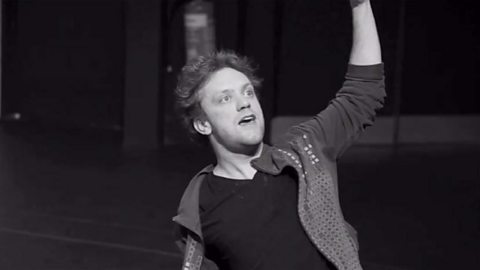
Act 2, Scene 2 - The Balcony. video
Romeo steals into the Capulet garden to find Juliet on her balcony, talking to herself.
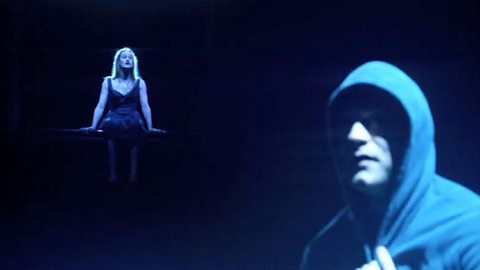
Act 3, Scene 1 - Death of Mercutio (workshop) video
Michael Fentiman discusses ambiguity in Shakespeare’s text. Does Tybalt intend to kill Mercutio?

Act 3, Scene 1 - Spoiling for a fight (workshop) video
The company discuss Shakespeare’s language and the reason for the fight.
Act 3, Scene 1 - The Fight. video
Young men from the Montague and Capulet families fight with tragic consequences.
Act 3, Scene 5 - Juliet is abandoned (workshop) video
The actors look at how Juliet becomes isolated from her mother, her father and her nurse.
About the 2011 RSC production. video
The cast discuss acting, directing and prop choices for this production.