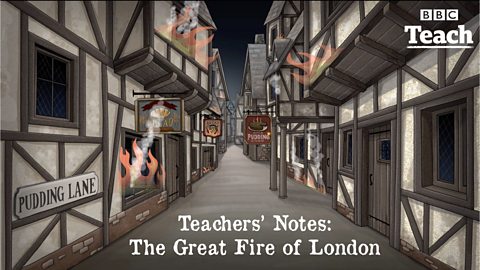
The causes of The Great Fire of London in 1666.
Video
Something's burning,something's burning…fetch the ketchup,fetch the ketchup…BBQ! BBQ!It's burnt and it's crispyBefore ovens were invented,all food had to be cooked on fires.My grandma told me that, and hergrandma told her ?all the way back to a rat wholived over 350 years ago,in the time of the Great Fire of London.This is her story.
It all began in London -the country's capital city.
There she is!
The story starts on Pudding Lane,Lane, in the the the homeof Thomas Farriner,a baker who lived with hisfamily above the bakery.
Electricity and gas centralheating hadn't been invented yet.Thomas Farriner used firefor light, heating andof course - baking.
(YAWN)
The bread's ready - let's put out allthe candles beforewe go upstairs?
Aw dad - it takes aaaagesto snuff out the flames.
(BEAT)
If only somebody wouldinvent electric lights,it would be a lot quicker.
Well, c'mon hurry up then.The oven fire is already out.
(BEAT)
If onlysomebody would invent electric ovens,it would be safer too.
But while they slept, a sparkmust have jumped out of the oven…the fire spread acrossthe kitchen before anyone woke up.
Thomas Farriner and his familyclimbed out of the window, to theroof, and escaped to the neighbour'shouse all except their maid.
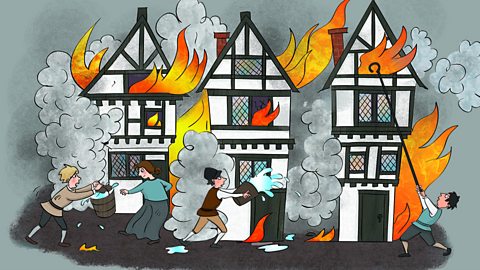
All the houses in Londonwere so close together,which is a very goodthing for escaping…But it also helped the fire tospread. The houses were made ofwood, so the fire gobbled up onehouse and moved quickly to the next.
Fire! Fire! We need totell somebody about this…I wish someone would inventthe telephone.
(BEAT)
And the fire brigade…
Let's get The Lord Mayor.
Lord Mayor, Lord Mayor, wake up!There's a fire on Pudding Lane! Bah.
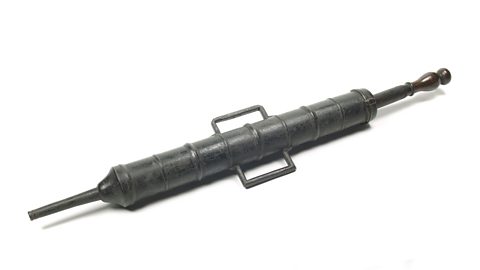
I was having a lovelydream about bread.London is always on fire…why are you bothering me?Just put it out. They trieddesperately to put the fire out.As well as pouring water frombuckets, they used water squirters,which were a bit likegiant water pistols.They also used very basic tools.People had to pump,really hard to spray the water out
- and they didn't work very well.Luckily there was one way to put outthe fire that nobody had tried yet.It meant using somethingcalled a 'fire hook'.People used fire hooks to pull down thewooden houses in the path of the fire.If you did that, the fire would run out ofthings to burn and eventually fizzle out.
But before they could use fire hooks,the people of Pudding Lane needed toask the Lord Mayor if they wereallowed to - and he had to say 'yes'.
Ah, the LORD MAYOR is here.He looks hungry…
Hello everyone. Good work, carry on!
Lord Mayor we needyou to say yes to something.
Is someone toastingfresh bread? mmmm
We want…
Yes. Something with the toast?
To use…
Yes butter?
Fire hooks?
Yes! Butter!
Er, but no. No, no.Definitely not the fire hooks.
If only the Lord Mayor hadlet them use fire hooks!
With nothing to stop it,the fire raged on and on.The wooden houses werefuel to the fire.It was a windy day, whichblew the fire along.It had been a very hotsummer in London,so the wooden houses weredry and burned easily.It looked like nothing could stop it.What do you think happened next?
1. Why did The Great Fire of London happen?
The episode begins in the present at a barbecue where we meet a rat called Maureen.
Maureen then takes us back through time to introduce one of her ancestors, a rat living in London in 1666 at the time of The Great Fire of London.
Pupils will learn about the causes of The Fire, meet key individuals involved and witness how Londoners responded to The Fire.
Further resources
Teacher's Notes. document
Download / print the notes including activities templates and worksheets (pdf)
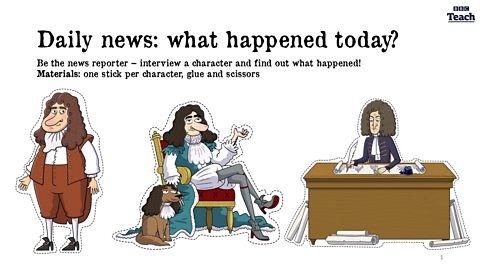
Daily news: what happened today? document
Be the news reporter – interview a character and find out what happened! (pdf)
Redesigning London: my city. document
Design your own dream city on this London map (pdf)
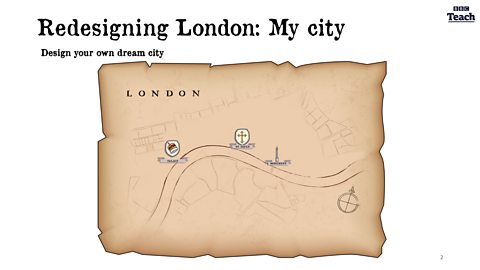
Image gallery. image
A gallery of images showing artefacts and paintings connected to The Great Fire of London
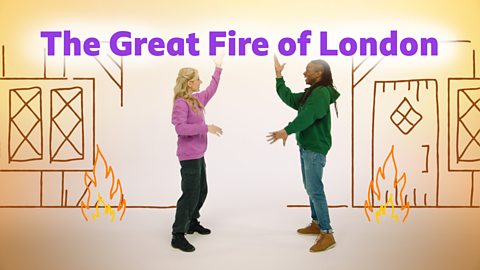
Let's Move with Naomi and Nigel - The Great Fire of London
A fun dance session that's ideal for consolidating work on The Great Fire of London.
Teacher notes
Before the video
Discuss the dangers of fire and the impact fires can have. You could make links with relevant new stories, for example Australian fires and their impact on wildlife and homes. Ask children where they have experienced fires and flames.
Look at images and artefacts from the mid-17th century - eg buildings and clothes - to give children a ‘sense of period’. Dates are not vital for teaching chronology at KS1, but by using artefacts we can help children understand what life was like at this time.
Look at paintings of The Great Fire and explain we will learn about it. Ask children – How do you think it started? How long do you think it lasted? How did they put it out?
During the video
How long ago was The Great Fire of London? (1666 - over 350 years ago.)
Who do we think started The Fire? (Thomas Farriner)
Why did the people of London not call for the fire brigade? (There was no fire brigade in London or elsewhere.)
Why was the Lord Mayor not concerned about the fire? (Fires were very common during this period and normally weren’t as big as The Great Fire. Lots of people wouldn’t have panicked at first- they were used to fires.)
Why were the houses so close together? (Many houses in London at the time had been built in the Tudor era and used ‘overhangs’ to gain more room on the upper floors. The cost of a house was based on the size of its plot, so the overhang was a way of gaining more space without paying for it. Consequently houses were very close together.)
Why did fire spread so quickly? (Most buildings were made from wood so the fire spread easily. The dry summer and direction of the wind made the fire spread even quicker. There were some buildings made of stone, but stone was expensive.)
How did the people of London try to stop the fire? (They used water 'squirters' and other basic tools, such as buckets of water. Every parish kept resources for this in their churches and people worked together to put out fires as they happened.)
After the video
Answer the question at the end of the video - What happens next? How long do you think The Fire lasted? What was the impact on London?
Should Thomas Farriner have been punished? Discuss the enquiry question as a class or debate it by putting the class in teams - for and against.
Songs
Consolidate pupils' learning about The Great Fire of London with these three catchy songs from our Music pages.
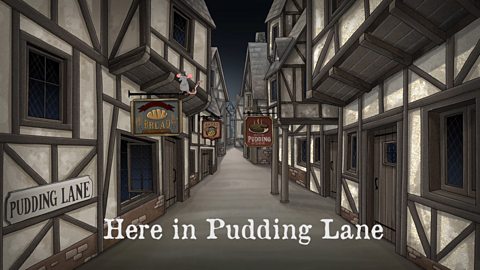
1. Here in Pudding Lane
Life in the busy streets of London before The Great Fire.
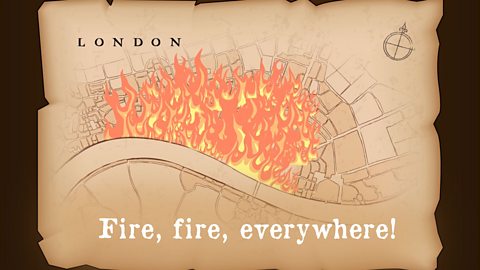
2. Fire, fire, everywhere!
A fast tempo song as The Great Fire rages through London.
3. Let’s get building!
A song about rebuilding London following The Great Fire.
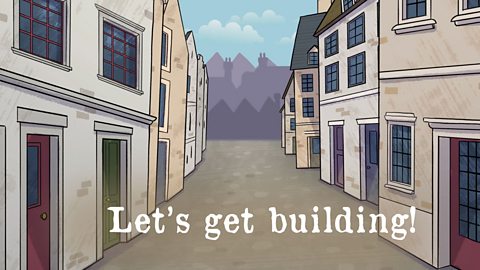
Additional songs about The Great Fire of London - including 'London's burning!' sung as a round.
More videos from this series
2. What happened during The Great Fire of London?
We learn how the fire spread across the city and how the Lord Mayor, Samuel Pepys and King Charles II were involved alongside ordinary citizens.
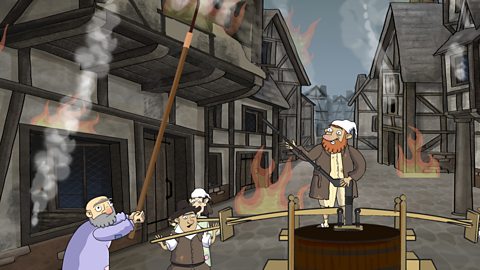
3. What happened after The Great Fire of London?
We discover what happened to the city after The Fire, the role of Christopher Wren in rebuilding the city and how we remember The Fire today.
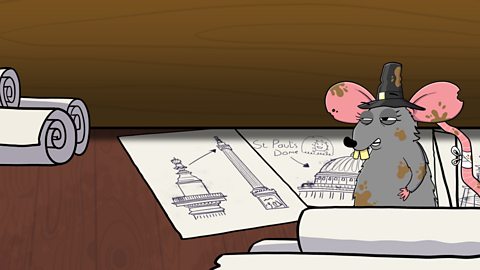
Image gallery. image
View the main characters in The Great Fire of London
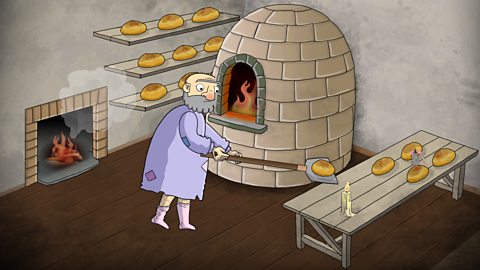
See also...
The Gunpowder Plot. collection
Three short animations exploring The Gunpowder Plot of 1605 - why it happened, the main events of the Plot, and the consequences for Guy Fawkes and the other plotters.
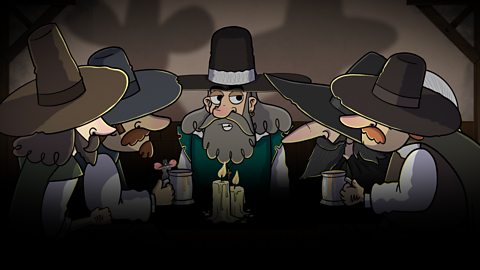
The Great Fire of London: Music, Dance and Drama activities (audio) audio
The audio programmes in this series explore The Great Fire of London and its aftermath through Music, Dance and Drama activities.
Castles and Knights. collection
A series of six animations exploring the topic 'Castles and Knights' with additional photos, illustrations and worksheets.