ALICE LEVINE'I'm Alice Levine, and I'm most definitely not an actress. But I've been asked to perform for one night only in Warhorse 'on the West End. I have no idea what I'm doing.'
ALICE LEVINEOh lord!
ALICE LEVINE'So I have to learn everything I can, before I take to the stage.'
ALICE LEVINEGo Warhorse!
ALICE LEVINE'Today is all about using your voice.'
ALICE LEVINEI'm gonna learn about one of the most important elements of performance, how to use my voice. How to use my voice. # How to use my voice. # Sure. Whether it's how to build a character and what they sound like, or how to project to an audience without screaming at them. I have found the perfect guy for this job to help me on my quest, and we're gonna meet him right now.
ALICE LEVINEHi. It's only Ben Aldridge of such productions as Our Girl and Lark Rise to Candleford.
BEN ALDRIDGEYou do not involve yourself in the lives of the locals. They must not become dependent on us in any way, shape or form. Do you understand?
MOLLY DAWESYes, sir.
BEN ALDRIDGEMore importantly, don't put yourself in jeopardy.
ALICE LEVINEHow are you? Nice to meet you. Thanks for being my teacher for the day.
BEN ALDRIDGENo worries. Do you like ice cream?
ALICE LEVINEYes!
BEN ALDRIDGEBecause we're in a ice cream parlour, I think we should go and… sample their flavours.
ALICE LEVINEI thought when are you gonna ask.
ALICE LEVINEBen, thanks so much for meeting me, because I am a complete novice, I don't know anything about acting, and you're gonna teach me a bit about the voice because you've got…
BEN ALDRIDGEI can try.
ALICE LEVINE…a wealth of experience.Don't give me that, you're the pro. So, first things first, I just need a kind of 101 on using the voice, and how that can help you kind of create a character, express a role.
BEN ALDRIDGEWell, the voice is obviously hugely important, because it's how you're heard. And what we're doing as actors is…
BEN ALDRIDGEwe're trying to, in some way, engage or entertain the audience, but the simplest form of what we're doing is telling a story. So being heard is really, really important.
BEN ALDRIDGEAnd being clear. The voice is our… way of communicating,
BEN ALDRIDGEand it's our most important tool, so you've kinda gotta look after it.
ALICE LEVINESo when you're first presented with a script and acharacter, how do you decide how that person's gonna sound? Is that dictated for you? Is that a kind of collaborative thing?
BEN ALDRIDGEWell often, of course, it's to do with where
BEN ALDRIDGEthe play or the piece is set. So if it were set in America, or if it were set in Leeds or something, that dictates what the accent's gonna be.
ALICE LEVINEWithin one character there can be a lot of different ways to use the voice, so to
BEN ALDRIDGEYeah.
ALICE LEVINEconvey different moods and different emotions.
ALICE LEVINEIs that tricky to differentiate between those things?
BEN ALDRIDGEI guess it's what's required of the character, really. And the situations. So…
ALICE LEVINEOur Girl, for example, you were quite shouty.
BEN ALDRIDGEQuite shouty. Dawes, get back! Move! Dawes! Move! Move! Move! King, I need to send a 10-liner. Turn off the ECF!
ALEXECF's off, so we can establish comms.
BEN ALDRIDGEDangles, tell Brains to Actually, I hadn't done that much shouting for quite a while.
ALICE LEVINEFor many years.
BEN ALDRIDGEI'm not very shouty, as a person. So, yeah, I had to work on… On that, actually. Having some authority, and some presence with my voice.
ALICE LEVINESo do you think we can do something practical with that advice? Can you maybe… Can we workshop it?
BEN ALDRIDGELike a warm-up or something?
ALICE LEVINEYeah.
BEN ALDRIDGEYeah.
ALICE LEVINEOK, cool.
BEN ALDRIDGEI'll tell you how to do that. OK, so vocal warmup, like we said, would be a bit of humming. So to just get the voice going.
ALICE LEVINEOK.
BEN ALDRIDGESo just…
BEN ALDRIDGEOK, and a really quick way of… Within a performance you'll probably use your range quite a bit, so from talking bassy to you'll probably talk higher. So what you need to do is warm the range up. So basically we're gonna do something called a vocal slide.
ALICE LEVINESo I'm gonna get given a theatre role, and I'm gonna have to create that character, and make it really believable. So can you help me with the voice element, how I'm gonna build that?
5500:03:47:24 00:04:06:13BEN ALDRIDGESo many factors go in to deciding what they would sound like. Those are things you wanna think about when you're creating a voice for a character. I guess another thing to do with voice is pacing. And actually pausing as well. A lot of dramatic tension can be found in a pause, in making people wait to hear what you're gonna say next.
BEN ALDRIDGESo if we look at 'stay focused, stay alert, stay alive', I could try that, and I could pause somewhere. I'm gonna do it to you rather than…
ALICE LEVINEOK, yeah, do it to me.
BEN ALDRIDGEStay focused. Stay alert. Stay alive.
ALICE LEVINEThat was a pregnant pause. No, that made a difference.
BEN ALDRIDGEMade a difference. So what did that do? What did that make you think? The pause?
ALICE LEVINEIt just added drama. I was like, "what is he gonna say next?"
BEN ALDRIDGEDid it make you think that that was what I was most concerned about? Like, getting you back?
ALICE LEVINEIt made me feel like maybe there's a little crack of emotion, where he was like, "the next thing I'm gonna say is really important, but I don't know if they're gonna stay alive." So things I've learnt today from you that I'm gonna take away and hopefully use in my debut stage performance.
BEN ALDRIDGEYes.
ALICE LEVINEArticulation.
BEN ALDRIDGEArticulation, because you want to be heard. Over anything, you want to be heard.
ALICE LEVINEAnd clarity as well.
ALICE LEVINE'Control your breathing.
ALICE LEVINE'It's important to warm up your voice. Your voice is a key part of your character. You need to think about how they'll sound. An actor's voice 'needs to be versatile.'
ALICE LEVINEWell thank you so much. I'm quite nervous now, because I'm not gonna remember it all, but I hope I'll be OK.
BEN ALDRIDGEYeah. I hope it's helpful. I hope it's a few things to think about. About how to use your voice.
ALICE LEVINECome see the show.
BEN ALDRIDGEI will come and see the show. I can't wait.
ALICE LEVINEThank you.
BEN ALDRIDGECannot wait. Good luck.
ALICE LEVINEThank you very much.
BEN ALDRIDGENice to meet you, Alice. Take care.
ALICE LEVINESee you soon. Thanks.
BEN ALDRIDGEBye.
Radio 1's Alice Levine meets actor Ben Aldridge who stars in BBC One’s Our Girl, to learn more about using her voice in performance.
They try a range of methods to help Alice understand how to warm up her voice, control her breathing and the different ways to use her voice in a performance, or for a character.
Ben shows Alice how to use inflection and dramatic pauses to create drama.
Teacher Notes
Students could annotate their script to suggest how they will use pitch, pace, pause and tone in their performance.
They could try experimenting with their voice applying various tones to a particular scene and evaluating the impact of their delivery.
Students could try recording their dialogue in order to evaluate their own performance, they could consider, with the removal of all other dramatic elements, the success of their delivery. This would be a particularly useful tool when learning lines.
Curriculum Notes
This clip will be useful for teaching Drama, particularly performance skills at Key Stage 4 in England, Wales and Northern Ireland, and National 4/5 in Scotland. It could also be useful for people of any age preparing for an acting role.
More from Alice's Journey to Wonderland
Developing a character (pt 1/8) video
Alice visits the set of soap opera Hollyoaks to find out how the actors there create their characters. She learns to think about her character's backstory and the influences that affect her.

Set and costume (pt 3/8) video
Alice visits the set of hit West End musical Charlie and the Chocolate Factory, to find out how the elaborate set was designed, and how set and costume help tell the story.
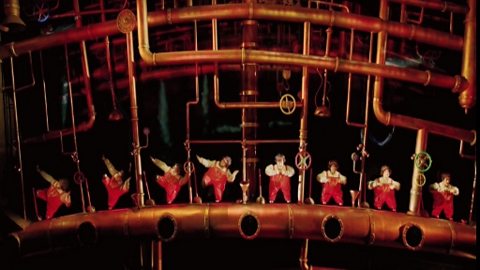
Improvisation techniques (pt 4/8) video
Alice visits the Comedy Store in London and learns some improvisation techniques from actor / comedian Isy Suttie (Dobby from Peep Show).

Working with multimedia (pt 5/8) video
Alice visits the set of The Curious Incident of the Dog in the Night-time to find out how working with multimedia can help her on her journey to become a West End actress.

Working with a Director (pt 6/8) video
Alice visits the set of CBBC drama Wolfblood and talks to actor Jacqueline Boatswain who plays Victoria Sweeney about how to get the most out of working with a director.
Preparing for a role (pt 7/8) video
It's almost time for Alice Levine to make her West End debut in War Horse. She gets some last minute tips from lead actor James Backway and gets on her costume and makeup.
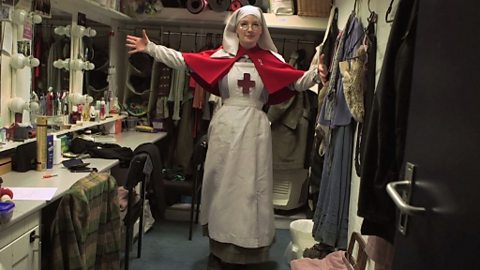
The big performance (pt 8/8) video
Alice is finally ready to rehearse for her West End debut in War Horse. She works through her lines and character with the director and other actors, before performing.