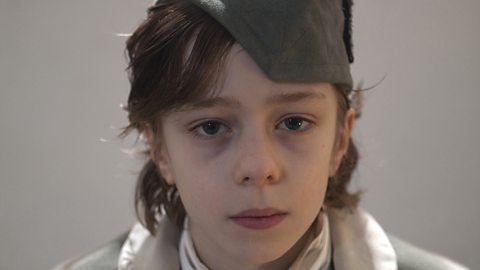
My name's Jane Angus. I live in Govan on the River Clyde. My dad works at the shipyards. My folks, me and my two sisters, we live in a two-roomed tenement on Main Street. Well, I did live there before all this trouble. Before I was caught stealing.
It was back in May. I was in Greenock, a bit further doon the Clyde. There was a real thrang of people at the train station. A paddle steamer had just arrived at the quay from the Isle of Bute. I seen this well-dressed lady. She was waiting on the platform for the train back to Glesgae. She put her basket doon, and…I picked it up.
WHISTLE BLOWS
You! Stop!
I was nearly out the station. I was nearly away. But the next thing I know, she's screaming for the police and I'm in the jail. Miss Nelson was her name…the lady whose basket I stole. She was frae Grangemouth. The basket had her jewellery in it. The policeman, Sergeant Mearns, said the jewels were worth £50! I don't know what came over me. I was famished. Look at me, I'm skin and bone!
I was locked away in the jail in Greenock for ten days and nights. Then they brought me here. It's called a reformatory school. I have to stay here for five year!
The Victorians tried something new. They very much thought that it was wrong to keep adult prisoners and child prisoners together, so they set up a new institution called the reformatory school. The idea behind this was that it would be a training school, effectively, for child criminals. Rather than simply punishing them, it wanted to change their lives. It wanted to take them off the streets, to give them a short, sharp, shock, because in some cases, they would be sent to prison for a short time as well, but then to lead them into a new life.
It's very hard to say whether reformatory school was cruel or kind. By modern standards, most people would think it was fairly cruel, but, by Victorian standards, it wouldn't have been too bad a place. Certainly that was the intention - to create an environment where children would have the space to learn to behave, but also to learn important life skills. There was a very strict routine that involved a very regimented timetable. Absolutely every second of the day was detailed in advance, in terms of where you had to be and what you had to do. Children had no free time to pursue their own interests and they didn't really have any rights.
We get up at six every morning. The first thing we have to do is wash. Breakfast is bread and butter with a big mug of tea. In the mornings, we do schoolwork - reading, writing and arithmetic. Then it's dinner time - 20 past 1 every day. You could set your watch by it! Monday is barley soup and potatoes. Tuesday is stewed beef and potatoes. Wednesday is bread and cheese. Thursday is barley soup…and potatoes. Friday we get a bit of fish…and potatoes. Saturday is lentil soup…and potatoes. Sunday we get stewed beef…and potatoes. Every week's the same.
The Victorians had clear ideas about the, sort of, the separation between boys and girls and the sorts of things that they would do in life. A Victorian boy in a reformatory would be expected to learn basic manual labouring skills. He would learn carpentry skills so he could work. Whereas, a young girl, it'd be quite different. Most girls that came out of reformatory schools would be expected to go and work in service, so that means as a servant in a big house. They need to learn how to behave as a servant. They would also need to learn how to sew and cook - those are the sorts of skills that a young girl would need when she left a reformatory.
Our school mistress is soor-like. I've never seen her smile. There's so many rules. We're not allowed to talk when we're eating or working. Her punishments are harsh. If you don't behave, you get bread and water for your dinner. I dinnae mind that as much as being locked in a room on your ain. I heard that some boys ran away from their reformatory school in Paisley. We've been warned that if we try and run away, they'll cut our hair off!
I left the reformatory school in June 1878. I didn't want to be a servant, so I managed to get a job in the shipyards, along with my dad, working as a French polisher, finishing off all the wood in the cabins. It's not just men that work in the ships, you know! But my health was poor. I had to stop working and I quickly got worse. They said I had consumption. It was in my lungs - they were all choked up.
You would notice the onset of consumption, because you'd develop a nasty cough and you'd also very, very rapidly lose weight and become very, very feeble. We still have what was called consumption now, but we call it tuberculosis, and it is very, very serious, but it's not the killer today that it was back in the 1870s. I knew there was nae cure…and so did they. I passed away on August 4th, 1879, just eight days short of my 18th birthday.
Video summary
Jane Angus, aged 12, tells us how she was caught stealing and sent to a residential school where young criminals were taught a trade to stop them re-offending.
She was sentenced to 10 days in prison, and then sent to a reformatory school for five years. These strict residential schools were meant to teach young criminals a trade to stop them re-offending.
After spending five years at the reformatory, Jane got a job as a French polisher, but then she contracted tuberculosis - known in Victorian times as consumption. Jane died in 1879 aged just 17.
Note that this film includes a reference to the symptoms of consumption (tuberculosis) which may be upsetting for some KS2 and KS3 pupils. Teacher viewing is recommended prior to showing the film in class.
Teacher Notes
Questions to consider whilst watching the film
Depending on the focus of your lesson, you may wish to ask the following questions after the video or the pause the short film at certain points to check for understanding.
- Why do you think Jane was stealing?
- What was the purpose of the reformatory school?
- Why was a typical day at the school so strictly timetabled?
- What impact do you think poverty had on the amount of crime in Victorian times?
- Do you think the length of the sentence was fair in comparison to the offence?
- What impact do you think the time spent in reformatory school had on the Jane's health?
Learning activities to explore after the video
History is a subject which can lend itself to a wide range of cross-curricular links. As a teacher, you will have a greater awareness of how this topic may act as stimulus for learning in other subjects. However, the suggestions below relate solely to ways of developing the children’s historical knowledge and understanding.
Key Question: What were the differing attitudes to boy and girl criminals?
Concept of similarity and differenceIt is important in history to encourage pupils not to make assumptions that life was the same for all Victorians. In particular life would be different depending on whether you were boy or a girl. A good initial stimulus to generate debate is this extract from the poem The Princess, written by Alfred Tennyson in 1847.
“Man for the field and woman for the hearth:Man for the sword and for the needle she:Man with the head and woman with the heart:Man to command and woman to obey;”
To be fair to Tennyson, he is mocking these views as his poem tells the story of a princess who rebels against the patriarchal society, establishing a university where only women are allowed to enter. However, the views in those four lines were commonly held at the time poem was written.
It was these sexist views which explain the different treatment of boy and girl criminals, which is explored in the video. The pupils could learn about the separate reformatory schools for boys and girls as a case study of gender roles in Victorian society. Ideally the class would focus on local examples and it may be that your local library or museum has suitable resources. However, if that is not the case, it is possible to use web-based sources.
This website contains information and some photographs of the Leeds Reformatory School for Boys. This serves an interesting comparison to the reformatory school for girls which Jane Angus was sent to. This theme could be explored further on the website as it has separate information for the both the Leeds Industrial School for Boys and for Girls. Although industrial schools was the focus for this BBC Teach video, these could be incorporated into a study of gender differences.
There is an opportunity in organising this lesson to promote positive interdependence. The class could be divided into groups of four and each individual could either be tasked with researching different aspects or, depending on time constraints, be provided with different information. The focus for each individual could be divided like this:1: Boys Schools: School Facilities2: Boys Schools: Curriculum3: Girls Schools: School Facilities 4: Girls Schools: Curriculum
EmpathyHistory can be more meaningful for pupils if rather than a generalised study of a topic, the same subject is explored by focusing on real people. The power of the particular can be used to develop pupils’ empathy for others. In history, when developing empathy with pupils, it is essential that the pupils have access to historical information. If not, the danger is the exercise does not develop historical thinking but is a creative and imaginative exercise, though this would be valid in other curricula areas.
The website, utilised above, has two case studies of Annie Hornby and Albert Taylor and although they were admitted to their schools in 1909 and 1910 respectively, which is outside the Victorian period, it contains the sort of historical information needed for true historical empathy. The class could work in pairs with each child given the admission record for either Annie or Albert. Ideally, the children would look at the original record as it is possible to read the handwriting, though it may be more effective if the information were transcribed or studied as a class before the empathy exercise. This may be as an improvised dialogue between Annie and Albert, talking about their families and why they were arrested. A teacher would need to exercise caution with this activity as both Annie and Albert suffered from parental neglect
The BBC is not responsible for any of the content in the above external links.
Learning aims or objectives
England
From the History National CurriculumPupils should:
- understand historical concepts such as similarity, difference.
- understand the methods of historical enquiry, including how evidence is used rigorously to make historical claims.
Northern Ireland
From the statutory requirements for Key Stage 2 - The World Around Us
Pupils should be enabled to explore:
- Change over time in places.To provide a balance of experiences in history pupils could study:
- Some of the characteristics of past societies and distinctive features of life in the past.Teaching should provide opportunities for children as they move through Key Stages 1 and 2 to progress:
- from identifying similarities and differences to investigating similarities and differences, patterns and change.
Scotland
From the Experiences and Outcomes for planning learning, teaching and assessment ofSecond Level Social Studies:
- I can use primary and secondary sources selectively to research events in the past.
- I can compare and contrast a society in the past with my own and contribute to a discussion of the similarities and differences.
Wales
From the new Humanities Area of Learning and Experience
School curriculum design for history should:
- develop historical … source-based skills.
- develop rich content across the time periods, through which learners can develop an understanding of chronology through exploring … change and continuity…the use of evidence.
Principles of progressionDescriptions of learning for Progression Step 2
Enquiry, exploration and investigation inspire curiosity about the world, its past, present and future:
- I have experienced a range of stimuli, and had opportunities to participate in enquiries, both collaboratively and with growing independence.
- I can collect and record information and data from given sources. I can then sort and group my findings using different criteria.
Human societies are complex and diverse, and shaped by human actions and beliefs:
- I can recognise similarities and differences between people’s lives, both in the past and present.
- I can identify aspects of life in my community that have changed over time.
How the Victorians introduced photograph police records. video
The story of young offender James Dunn Barr is used to explain how the invention of photography changed the way criminals, young and old, could be identified.
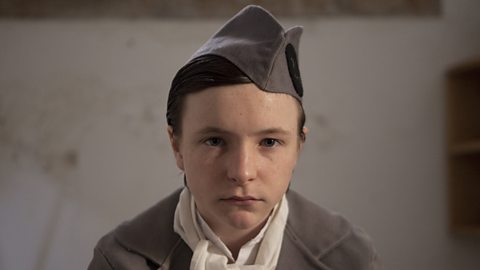
Life in prison for young Victorian offenders. video
This short film explores Victorian punishments through the eyes of John, a young offender who was sent to prison for six months in January 1876.
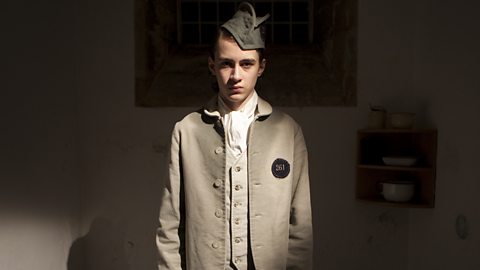
Life at a Victorian industrial school. video
13-year-old James Fleming from Perth explains how he came to be sent to an industrial school.