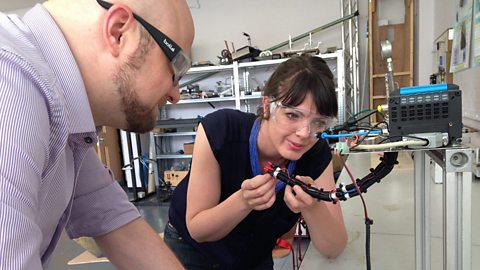
Scientists are applying their study of the natural world to the development of exciting new innovations.
Fran Scott shows inspirational examples of man-made products that are interpreting nature’s biological functions.
For example, spiders silk inspiring Kevlar, termite mounds inspiring passive cooling in buildings, whale fins inspiring turbine blades, sea sponges inspiring fibre optics and lotus leaves inspiring self-cleaning paint.
Teacher Notes
A good introduction into biomimetics.
This clip can be used to inspire students and give them reference points for further research.
It shows the process researchers go through to arrive at their innovative design ideas.
Students could take an investigative approach to the natural world around them and apply their design thinking to generate new ideas.
Curriculum Notes
This clip is suitable for GCSE Design and Technology and touches upon topics that appear in AQA, OCR A, EDEXCEL, EDUQAS, WJEC GCSE in England and Wales, and CCEA GCSE in Northern Ireland and SQA National 5 in Scotland.
More from Biomimetics - Designed by Nature:
Smart fabric inspired by pinecones. video
Scientist Veronika Kapsali presents her research into pinecones, and how it is helping her design a fabric that automatically cools the wearer if they get too hot.
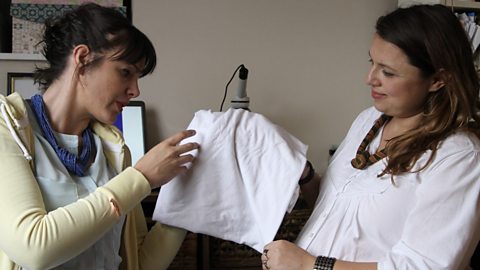
Auxetic materials used in protective wear. video
An explanation of the auxetic material found in the inner layer of a mussel shell and how it absorbs impact by becoming denser when stretched.
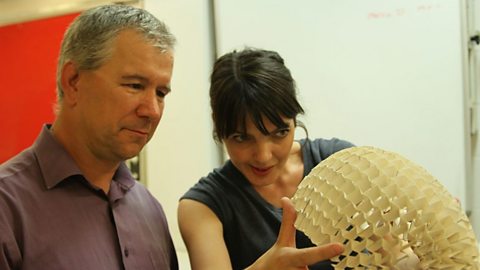
Technology based on biology. video
Designer Amy Congdon is using living materials like bone tissue and bacteria to grow new products in this design and technology resource for Key Stage 3, 4 and GCSE.
The development of robot design inspired by nature. video
We see how by looking at worms, elephants' trunks and octopuses' tentacles, engineers are developing robots with softer, more natural limbs, rather than the traditional stiff skeletal ones.