NARRATOR:'This is Kostis, one of the world's most endangered animals. He's a Mediterranean monk seal, rescued after he was separated from his mum in a storm.'
NARRATOR:'There used to be huge numbers of monk seals like Kostis in the Mediterranean and North Africa, but now there are less than 700 of his kind left. And over half live here, in Greece.'
NARRATOR:'Biologist Alex and his team are trying to assess the local seal population. But it's not an easy task.'
DR ALEX KARAMANLIDIS:These animals live primarily in coastal areas, in those areas of Greece, and as you can imagine, tourism, human development and all this kind of stuff are encroaching in their habitat.
NARRATOR:'With over 30 million tourists a year, the number of people visiting Greece is putting more pressure on these seals. And they've retreated into quiet, hard to reach sea caves to give birth, which makes keeping track of their numbers tricky.'
NARRATOR:'To see what's going on, Alex sets up remote cameras in these caves where the seals have come to give birth to their pups. And when they know mum's away, they can collect DNA samples to understand more about the population. Information like this is vital to conservation. It helps create education programs and laws to protect the seals.'
NARRATOR:'And it seems to be working.'
DR ALEX KARAMANLIDIS:Years ago, it would be difficult to see monk seals swimming around. We're all working for this common goal, to prevent the extinction of the species, and that seems to be happening.
NARRATOR:'But Mediterranean monk seals aren't out of danger yet. Although these caves provide a quiet place for the seals, they pose their own hazards. Pups are mainly born in the autumn, when storms and rough seas are common. Here they are more at risk of being sucked out to sea.'
NARRATOR:'Part of the team's work is the rescue and rehabilitation of stranded pups like Kostis. Since his rescue, he's received round the clock care. Kimon is part of a dedicated team looking after him.'
KIMON:'When he arrived, he was around 10 days old. And severely underweight, dehydrated.'
NARRATOR:'At three months old, Kostis needs some help learning to swallow the fish. In the wild, he would still be feeding on his mum's milk.'
KIMON:'But he still needs some assistance. But he's doing very well. He's very hungry.'
NARRATOR:'With such a small population of monk seals left, every individual counts. So hopefully Kostis will soon be ready to return to the wild where he'll be able to breed and add to the numbers.'
Video summary
Mediterranean monk seals are one of the world’s rarest mammals, with less than 700 left and half of those live along the coastline of Greece.
To monitor their numbers local scientists swim into secluded sea caves to count this year’s pups and release a rescued pup back to the wild.
This clip is from the BBC series, Blue Planet Live. Below are a few ideas to get you started with your class.
Teacher Notes
How are seals the same and different from animals that live on land?
Use the seal as a discussion point for identifying characteristics.
Learners could work in pairs to describe the seal and chosen land animal to each other.
They can identify where there are similarities and differences, recording these through labels and short sentences or verbally.
What is the habitat of the seal?
Comparison of the habitat of their chosen land animal and the seal.
Learners can work in same pairs or small groups to discuss the habitats.
There is an opportunity to introduce the use of adjectives to encourage language development.
The learners should be encouraged to think about all that needs to be in that environment for the animal (food, correct temperature etc) and not just the physical attributes.
They could write a short poem describing the environment.
What does the seal have that allows it to survive in the sea?
Introduction to the ideas of adaptations to environment and habitats.
The learners are applying their knowledge in this task and recognising living things are adapted to their environment which aids survival.
Further examples should be given which also include plants to exemplify this concept.
What is the reproductive cycle of the seal?
Describe the seal life cycle and the impact of this failing on the numbers of seals.
The learners can evaluate the impact of a declining population and how this will affect the seal numbers.
They should be encouraged to think about how this will impact on the other animals within the seal food chain – what will happen to the numbers of fish they usually feed on?
Why are seal pups not exactly the same as their mother?
Introducing the idea of variation.
The leaners should be made aware offspring inherit characteristics from both parents.
Discussion can be focused around what characteristics are the best to pass on for the seal pups to survive their early lives.
The ‘Big’ Questions (with opportunities for extended writing and discussion)
Why is it important to protect species like the monk seal?
Tourism generates income for the local population … is this more important than the number of seals?
What do you need to do to persuade locals and tourists that it is important to protect the seal population?
Suitable for teaching Science at KS2 in England, Wales and Northern Ireland and 2nd level in Scotland.
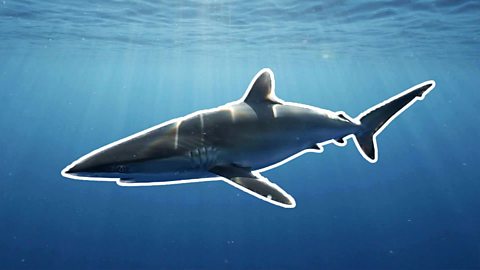
The effects of industrial fishing on Silky Sharks. video
A look at the migration of an endangered species of shark known as the silky shark.
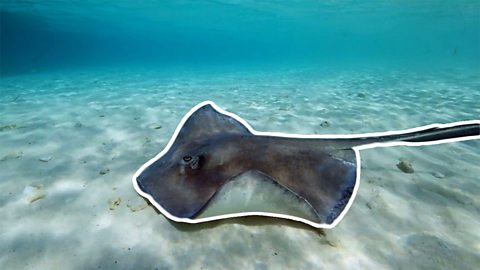
Protecting stingrays in the Bahamas. video
Owen O’Shea studies stingrays in the Bahamas and is teaching the locals to protect them.
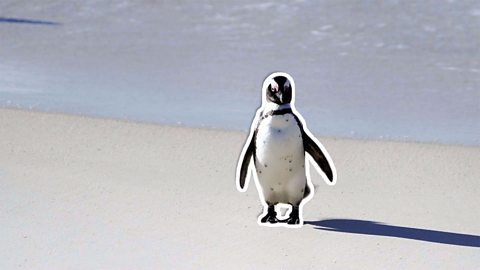
The declining food supplies for South African penguins. video
Scientists have come up with an unusual plan to help South African penguins.