NARRATOR:Africa's southern coast, home to an amazing array of marine animals;
NARRATOR:sealions, sharks, whales,
NARRATOR:and perhaps one of Africa's most overlooked residents, the African penguin.
NARRATOR:They spend most of their lives at sea hunting small fish.
NARRATOR:During the breeding season they must come ashore, returning every year to the same place.
NARRATOR:But these penguins, near Cape Town in South Africa, are in trouble. Most of the fish they rely on to feed their chicks have moved 300 miles East, most likely due to overfishing and climate change affecting ocean temperatures.
NARRATOR:As a result, many chicks don't make it.
NARRATOR:Over the last century, African penguin numbers have dropped by 99%, and this latest challenge could be disastrous.
CHRISTINA HAGEN:It's really hard to say what will happen for sure, but what is certain is that we need to act now if we want to try and save the species at all.
NARRATOR:Christina Hagen from Bird Life South Africa has a bold plan. She wants to attract the penguins to a new beach nearer the fish they so desperately need.
CHRISTINA HAGEN:We haven't tried to establish new colonies before, this will be a world-first for the African Penguin, and it's quite scary in a way, but it's also quite exciting.
NARRATOR:But how do you convince wild penguins to set up home in a new place?
NARRATOR:Penguins are more likely to be attracted to a place if there are already penguins there. So Christina had a brainwave: To enlist the help of local sculptor, Roelf Daling.
CHRISTINA HAGEN:We'll use decoys, so lifelike models of penguins, and also we'll play penguin calls broadcast on speakers so that it looks and sounds like a penguin colony.
NARRATOR:The use of fake animals, called decoys, has worked elsewhere, but this will be a first for penguins.
ROELF DALING:If I can create a colony exactly the same, we have better chances of establishing a new colony.
NARRATOR:Roelf is not just making any penguins, he's making happy penguins.
ROELF DALING:I made them fatter, to feel like they have a healthy ocean with a lot of fish and krill to eat, and I've made them sleepy, so I mean if you arrive somewhere and there's lots of people that ate a lot lying around, you think it's a good place and you want to stay there.
NARRATOR:The model penguins will need testing before the plan can be put into action.
NARRATOR:How will wild penguins react to these man-made animals?
NARRATOR:At first they seem dubious.
NARRATOR:And a little confused.
NARRATOR:These don't really smell like penguins,
NARRATOR:but that doesn't seem to put them off,
NARRATOR:as one individual copies the fake penguins
NARRATOR:and settles down for a rest.
NARRATOR:Roelf's plan seems to have worked.
NARRATOR:The model penguins are now ready to be put into their new home,
NARRATOR:a nature reserve just 30 miles from where these penguins are known to hunt.
NARRATOR:22 models are placed along the shore to attract passing penguins.
CHRISTINA HAGEN:If this project is successful it'll be a great legacy. Penguins that weren't there but are now because of something that we did to help them.
NARRATOR:All Christina can do now is wait for the breeding season to see if her plan works.
Video summary
This short film, first published in 2019, is for teachers and review is recommended before use in class.
Numbers of South African penguins have declined by 90%.
Over-fishing and climate change have caused their prey to moved hundreds of miles from their breeding colonies, too far for parents to hunt.
To help, local scientists have come up with a plan to create a new colony using fake model penguins to attract the real penguins to a new feeding ground.
This clip is from the BBC series, Blue Planet Live. Below are a few ideas to get you started with your class.
Teacher Notes
Where do penguins live?
This activity can be used to compare the different species of penguin and their habitat.
Learners will typically think that penguins only live in cold habitats.
They can use rich vocabulary to describe the difference in habitat between the African penguin and an Emperor penguin.
Why is penguin food important?
A food source has decreased for the penguins.
The learners should think about what this means for the penguin.
This introduces the ideas of food chains and also basic needs for life.
What are the characteristics of living things?
The decoy penguins look real and fool the other penguins.
The learners should explore what the characteristics are of the living penguin rather than the decoy to be introduced to the characteristics of living things.
What is the impact of overfishing?
The learners should be given group tasks with different roles to make cases for their position.
Why is fishing important for the local people? How does overfishing affect the penguins? Why is it important for the biologist to protect the penguins?
It is important for the learners to understand that there are different views on any one problem.
They should be encouraged to offer solutions in how human impact on the environment can be reduced.
What is climate change?
The learners should use secondary sources and be directed to news information about climate change and how this is being tackled.
Changes in the environment can be linked to the changes in food chains and how this influences other species.
Animal and plant adaptations to the environment should be considered by the learners and explored.
The ‘Big’ Questions_ (with opportunities for extended writing and discussion)
Does moving the penguins solve the problem of overfishing and climate change?
How much are you contributing…?
What is your carbon footprint and how can you help slow down climate change?
Suitable for teaching Science at KS2 in England, Wales and Northern Ireland and 2nd level in Scotland.
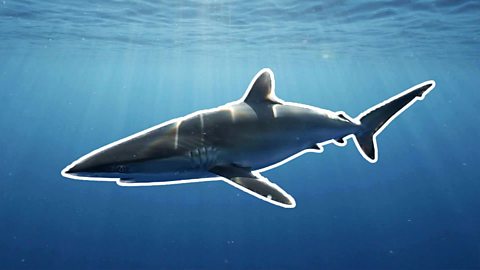
The effects of industrial fishing on Silky Sharks. video
A look at the migration of an endangered species of shark known as the silky shark.
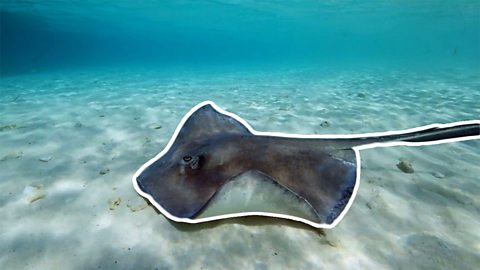
Protecting stingrays in the Bahamas. video
Owen O’Shea studies stingrays in the Bahamas and is teaching the locals to protect them.
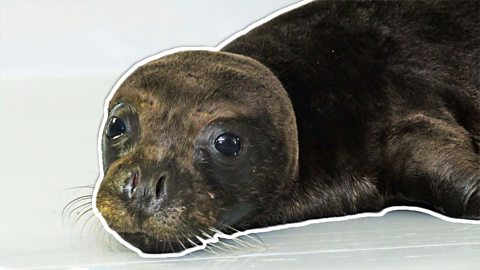
Protecting the Mediterranean Monk Seal. video
Scientists in Greece are working to protect the rare Mediterranean Monk Seal.