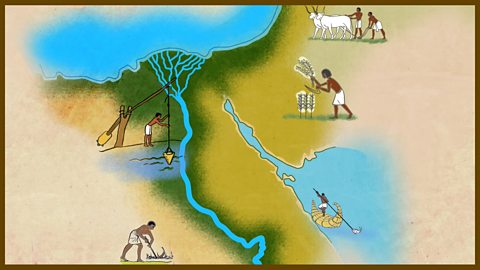
The exploration of the River Nile begins with a shaduf - an ancient tool for using the waters of the Nile for irrigation.
This is a painting that dates back thousands of years to Ancient Egypt.
Artworks like this tell us a lot about the time and place that they come from. This painting shows a farmworker using a shaduf.
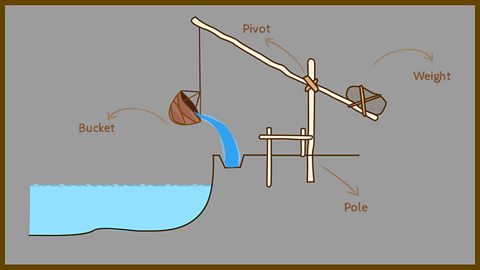
It's a very simple machine that can move large amounts of water.
It works like a simple crane. The invention of the shaduf was very important in the story of Ancient Egypt.
It helped people to easily access the water from the River Nile. They built a system of canals to bring the water to the crops a process that's called irrigation.
So it's no accident that one of the greatest and longest-lasting civilisations in history, grew up along the banks of one the world'slongest rivers.
The River Nile is more than six thousand five hundred kilometres in length and it passes through a whopping eleven modern day countries. Of course, back when the pharaohs were in charge the lands around The Nile were totally different.
Without the River Nile, Egypt would be a desert because very little rain falls there.
Luckily, lots of rain does fall upstream, near the sources of the river.
Every year, a very heavy rainfall in the East caused the river levels to rise downstream.
In Ancient Egyptian times, most years, the river then flooded onto the land surrounding it. When the flood water drained away again, the soil that was left behind was rich in nutrients, making it perfect for farming.
The Ancient Egyptians called The Nile 'Ar' which meant black, because that was the colour of the soil and silt left behind after theflooding.
Some years though the river didn't flood properly, causing a drought, when there was not enough water to go round.
Crops failed and famine followed with thousands of Ancient Egyptian people starving to death.
In good times though the river was home to many different species of animals and birds, lots of which made a good meal for anAncient Egyptian.
But not all the animals made a good meal, some were more interested in making a meal out of the hunters.
Crocodiles and hippos were a common sight on The Nile during the Ancient Egyptian period. Hippos are not meat eaters but they can still be very dangerous to humans.
In fact, some people think it was a hippo attack that caused the death of the Pharaoh Tutankhamun.
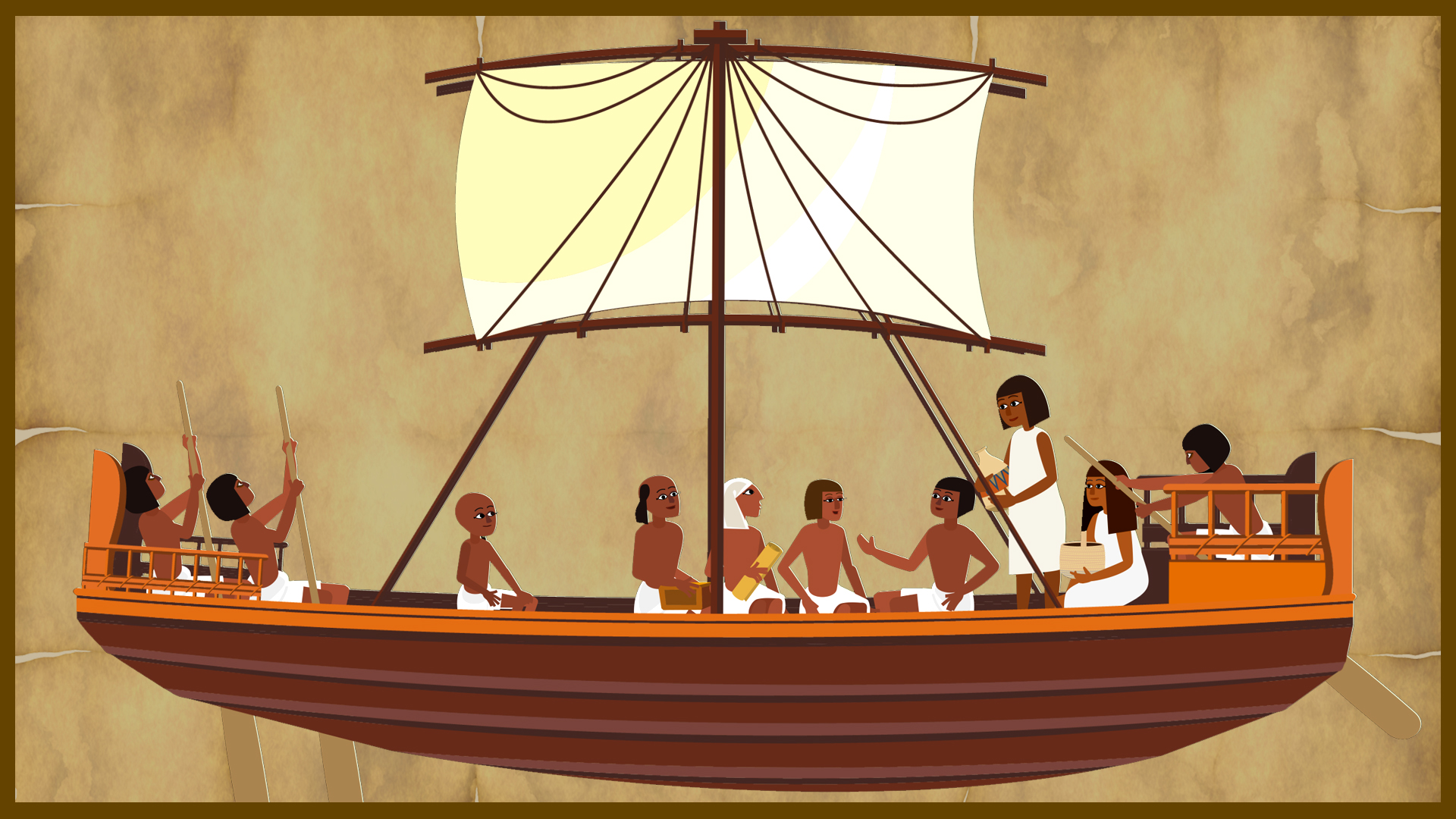
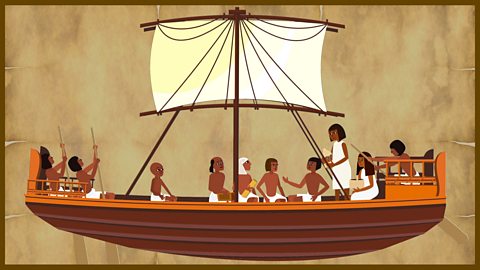
The Nile was Ancient Egypt's superhighway and was always busy with boats carrying people and goods back and forth to all thesettlements along the banks of the river.
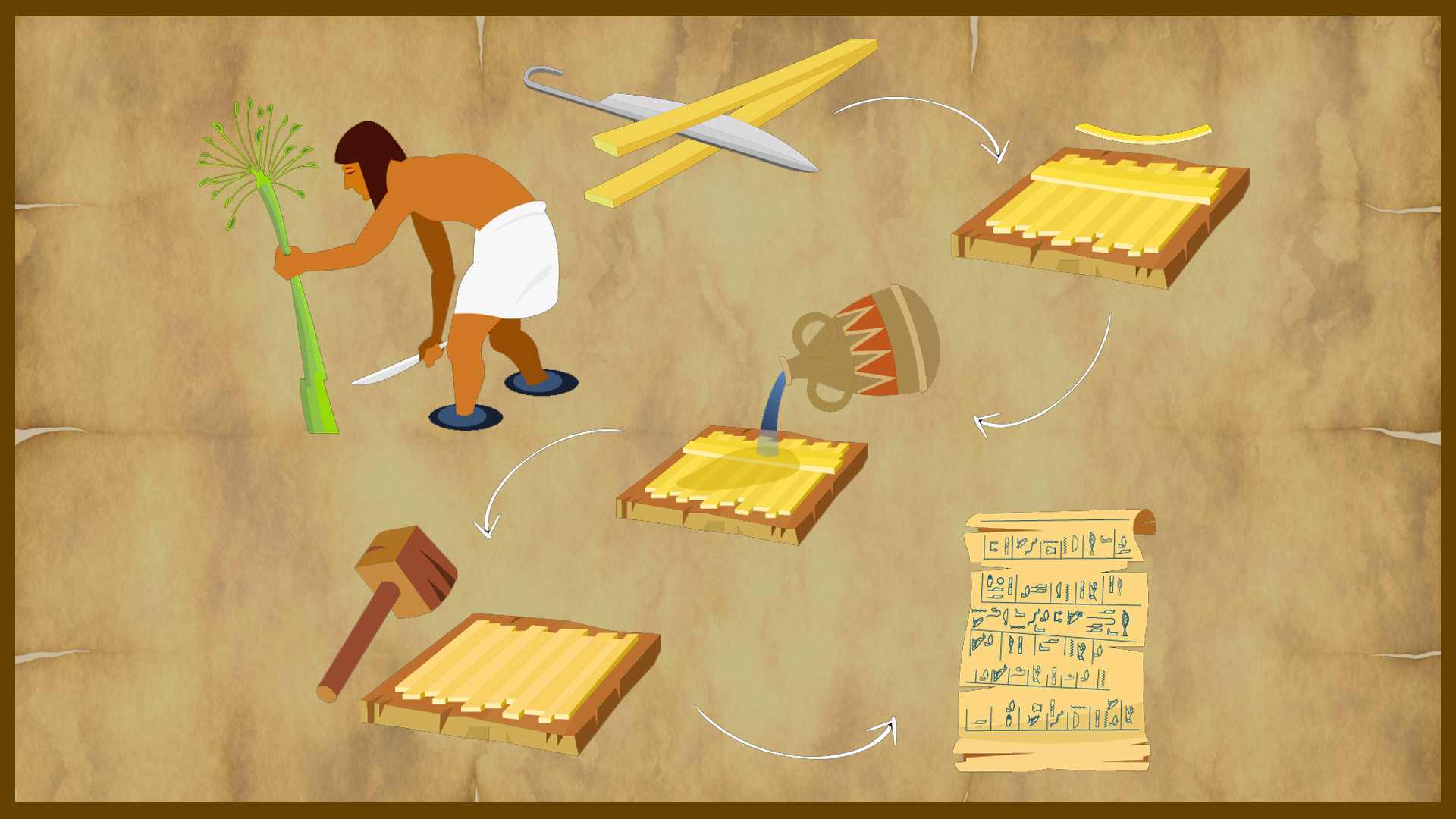
The reeds that lined the sides of the river were also put to good use. It was from these that the Ancient Egyptians created the first form of paper, papyrus.
Reeds were also woven together to make things like baskets and even boats.
With so much of life depending on the river it's no wonder that the Ancient Egyptians gave The Nile its very own god to look after it.
He was called Hapi and the people gave thanks to him for the floodwaters.
So you see? The River Nile really was crucial to the long success of Ancient Egypt.
The River Nile
Video summary
This video gives pupils an understanding of the vital role the River Nile played in the success of Ancient Egypt.
It begins by exploring a visual source of a farm scene from Ancient Egypt, highlighting the role of the shaduf - a tool used to move water from one place to another.
The video focuses on the River Nile and how important the river was to daily life - highlighting the various ways the river was used in normal years when the water was plentiful…and the disaster that struck in times of drought.
Moving through the video pupils will see the wildlife and resources that came from the River Nile and how these were used in the advancement of Ancient Egyptian civilisation.
We learn how the reeds were used for making a wide variety of essential items - including papyrus, the first form of paper - and we hear about the Ancient Egyptian god called 'Hapi' who was the god of the River Nile.
Further resources
The steps for making papyrus from reeds. image
Click to display the image full-size
Diagram of a shaduf. image
Click to display the image full-size
A typical Nile ship. image
Click to display the image full-size
Teacher's Notes
This video gives a snapshot of Ancient Egypt and its greatest resource - the River Nile.
It also helps to explore the value and importance of sources in finding out about the past. It can be used to help pupils understand how we find out about the past as well as the role of ‘place’ in historical civilisations.
If it wasn’t for the River Nile Ancient Egypt certainly wouldn’t have been as successful as it was and potentially may never have existed.
It also provides a platform to explore the STEM subjects in the context of Ancient Egypt, using the shaduf to move water from the River Nile into the irrigation system, for example.
Points for discussion (History Linked)
- Why was the River Nile so important?
- What is a shaduf?*
- How were shadufs used?
- How did the Ancient Egyptians use the River Nile?
- Why do you think the River Nile was so important to Ancient Egyptian life?
- Can you find the countries that the River Nile runs through today?
- Can you think of positive and negative things about living so close to the River Nile?
- What animals lived in and around the River Nile?
- Who was the Ancient Egyptian god of the River Nile?
Suggested Activities (Cross Curricular opportunities)
Building a shaduf – Using a variety of resources from home or school can the pupils build their own shaduf? More importantly, can they design and create one that works! As they do this, they can explore the challenges of working with materials that are strong, waterproof and also flexible! Which shaduf can move the most water from one point to another, which can last the longest and which can hold the water without any leaking out?
Diary Entry – Starting at the source of the River Nile, can the pupils write a diary entry or series of entries showing their journey from source to the mouth of the river. What do they see? Feel? Hear? Taste and smell? Using all of their senses as a source of inspiration.
Map work – Using a base map of the region, pupils can use atlases to find the modern day countries and mark these and their capital cities on the map. Following this, pupils can find and mark on other significant features of the region such as the River Nile. As pupils complete their map work, they can design and use a key to make their map easier to understand.
Sounds of the River Nile – Following from their diary entries, pupils can list what each of their senses would experience on a journey down the River Nile. As they capture this, start to use instruments and voice to create a piece of music to accompany their diary entries.
Biodiversity of the River Nile – After watching the video, pupils can research the plants and animals that lived in and along the River Nile in Ancient Egyptian times. After researching these, they can place them onto a Venn Diagram to compare the past with the present day – finding which are alive and living in the region to this day. After this, pupils can investigate the food chains that exist in the region.
This film is relevant for teaching History at KS2 in England, Wales and Northern Ireland and 2nd Level in Scotland.
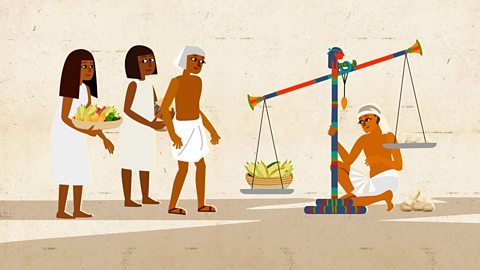
Society and culture. video
A deben weight is the historical artefact leading to an exploration of Society and culture.
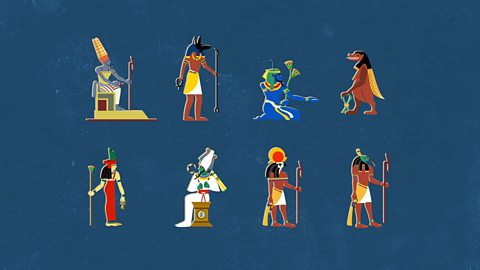
Gods and goddesses. video
Exploring the many gods and goddesses of Ancient Egypt and their various roles within society.
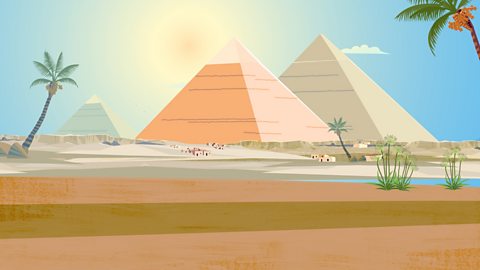
Pyramids. video
Exploring the different types of pyramids in Ancient Egypt - their construction and their purpose.
See also...
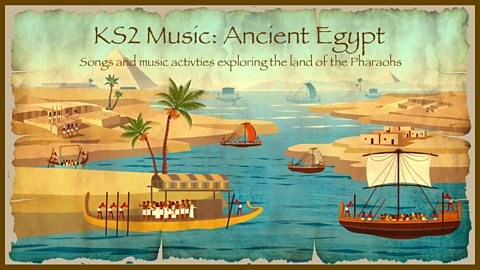
KS2 Music: Ancient Egypt. collection
A collection of fun, catchy songs and activities to help you consolidate your study of Ancient Egypt.
Song: 'Living, living River Nile'
Join in with a song about the significance of the River Nile to the Ancient Egyptians.