During the war women did jobs that men normally would have done.
This included jobs in farming, nursing, transport and making weapons.
By 1918, 90 per cent of shells used in the war were made by women.
A million women worked in munition factories.
By the end of the war over one million shells a week were fired by Britain so it was important work.
Ida Petch. Munitions Worker. Aged 22.
I’m about to have me check up with the doctor. They call us Canary Girls. That’s cos if you work here weighing explosives and filling shells for the war your skin changes colour and you end up all yellow …like a canary.
It don’t bother me though. I’ve been here two years now so I’m used to being yellow.
You got to be careful working with explosives. No metal is allowed in the factory. We’re not allowed rings, hairpins, buttons. Nothing that could make a spark.
Weighing chemicals, packing shells, it isn’t a nice job. See, the stuff we work with here it’s poisonous. Not good for you. In the weighing rooms the air makes you sneeze and you get this horrible taste at the back of your throat. You get chest pains, you feel sick, your skin goes scabby. That’s why we have check-ups with the doctor.
So why do we do it? Why work twelve hours a day seven days a week if it’s so horrible? First reason’s money. I earn ten times more in here than I did when I was a chambermaid. Not many men earn what we do. We don’t have to ask our dads or husbands if we want new shoes or a hat. If we want new shoes or hats we buy our own. I like that feeling. I tell you, when this war’s over I won’t ever be a chambermaid again.
Then there’s the other reason we work here. They say our shells are winning the war. Well I got two brothers at the front. All us canary girls have brothers, boyfriends, husbands at the front. Sooner we win the war, sooner our boys come home.
Video summary
This short film is for teacher use and contains potentially upsetting content; teacher review is recommended before use in class.
Newsreel of women working on the land and in factories is accompanied by a commentary from schoolchildren with key facts about the war work done by British women.
There’s a particular focus on the munitions factories, which employed more than 1 million women in the war years.
A dramatic monologue introduces Ida Petch, 22, a munitions worker.
She describes conditions in the factory and the hazards of working with explosive substances.
These chemicals caused blisters.
They also left the women’s skin tinged with yellow, earning them the nickname ‘canary girls’.
Ida shares her feelings about her work.
She’s glad of the money and proud to help with the war effort.
She also relishes her new-found independence and swears to maintain it once peace comes.
This clip is from the series WW1 A to Z.
Teacher Notes
Pupils could find out about a range of jobs taken on by women on the Home Front during the war.
Using books and websites as sources, pupils could script their own dramatic monologues for a woman war worker.
The women could describe her day, her thoughts about her job and her hopes for the future.
This short film is suitable for teaching history at Key Stage 2 / Second Level or above.
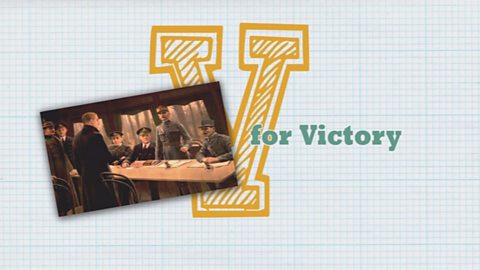
V is for Victory. video
Newsreel, schoolchildren and dramatic monologue show the victory celebrations in 1918 at the end of WW1.
X is for Xmas Truce. video
Through newsreel, children's commentary and dramatic monologue, this short film for primary schools tells the story of one Christmas Eve in 1914 when peace broke out in the trenches.

Y is for Your Country Needs You. video
A selection of British newspaper headlines from WW1 suggest the impact propaganda had in Britain.