MUSIC: Mars, The Bringer Of War by Gustav Holst
KATIE MELUA:'How does this music make you feel?'
KATIE MELUA:Very strong or very scared? Are you preparing for a battle or running from your enemy?
KATIE MELUA:I get so excited knowing that music can make you see things you'll never see in real life.
KATIE MELUA:Listening to this piece, I think I'm an astronaut travelling through space maybe with one of the first creatures to be sent up there, like Laika the dog.
KATIE MELUA:Laika and I travel to Mars, full of excitement.
KATIE MELUA:When we get there we discover an orchestra deep in one of the underground caves on Mars, playing this very piece.
KATIE MELUA:Can you believe music this loud and fiery was written by a quiet and shy Englishman?
KATIE MELUA:His name was Gustav Holst, and as well as writing music he was a teacher in a school.
KATIE MELUA:He was also interested in astrology. The idea that the different planets, up in the sky, might affect how we feel down here on Earth.
KATIE MELUA:'Holst thought that music would be the perfect way to show these different moods.'
KATIE MELUA:'He started off with Mars, a planet which was named after the Roman god of war.'
KATIE MELUA:For this planet Holst wanted to create music that felt powerful, strong and even angry. He decided to call this piece Mars, Bringer Of War.
KATIE MELUA:Holst wrote Mars in 1914 before the First World War started. But it wasn’t played until the war was over in 1918.
KATIE MELUA:That war must have been a horrible and frightening experience, and I wonder if some of the audience were thinking of those experiences when they heard this terrifying piece of music for the first time. So, does this music make you think of war?
KATIE MELUA:Maybe the marching rhythm reminds you of an army preparing to fight. And what about the booming beats on the big drums? They're called timpani, and Holst uses them a lot. What do those timpanis sound like to you?
KATIE MELUA:Holst wrote a different composition for each planet. You can hear this one, for Venus, sounds very different. Holst called this Venus, Bringer Of Peace. How do you feel listening to this?
MUSIC: Venus, Bringer Of Peace by Gustav Holst
KATIE MELUA:'I used to listen to classical music by candlelight, and it was so powerful because I couldn’t see anything, it was complete darkness. And with a candle, my mum would be at the piano, playing beautiful pieces of music that were very moving and very inspiring.
KATIE MELUA:And I couldn’t believe that something that I couldn’t see or touch was making me feel such strong emotions.
KATIE MELUA:Modern film composers often write music like Mars for movies. And I bet you've heard pieces like this in the cinema. Perhaps while battles in space or invasions of Earth are happening onscreen.
KATIE MELUA:'Some of the melodies and chords in this music are so tense and colourful, I'm frightened. But I'm imagining things in my mind and heart and like when you watch a scary movie, I love the feeling of being on the edge of my seat.
KATIE MELUA:'This is just my reaction though, and you may hear the sound of space or war, or hear the music in a completely different way. That's a great thing, it's your music. The only thing we need to know is how to press play. Then after that you can let the orchestra take you wherever you want.'
KATIE MELUA:Mars finishes with an explosion of music. Music that sounds as big as a planet to me. At first, the melody seems to fade away into the distance.
KATIE MELUA:'But then listen for the surprise attack.
KATIE MELUA:'It's loud enough to make your bones rattle.
KATIE MELUA:'I wonder how you feel at the end. Are you running for your life or safe and strong on top of the world?
Katie Melua explains why 'Mars, the Bringer of War' from Gustav Holst’s Planet Suite is her favourite piece of classical music.
She explains how the movement captures her imagination and describes some of the images the piece conjures in her mind.
This short film is from the BBC series, Play On!
Teacher Notes
This short film could be used when studying 20th Century Music.
Students could listen to Mars and write down how it makes them feel.
They could also listen to Venus and analyse and compare the two pieces.
Students could also use this short film during a Film Music composition topic.
Students could be given a theme or scene and be set the challenge of composing to the given brief.
Curriculum Notes
This short film will be relevant for teaching music at KS3 and KS4/GCSE in England, Wales and Northern Ireland and National 4 and National 5 in Scotland.
It appears in OCR, Edexcel, AQA, WJEC CCEA and SQA.
More from Play On!
Myleene Klass on 'The Four Seasons' by Antonio Vivaldi. video
Myleene Klass explains why 'The Four Seasons' by Antonio Vivaldi is her favourite piece of classical music.
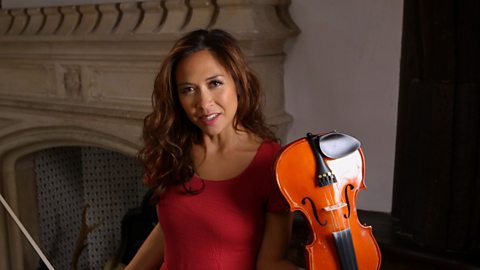
Dionne Bromfield on 'Rhapsody in Blue' by George Gershwin. video
Dionne Bromfield explains why she loves 'Rhapsody in Blue' by George Gershwin.

Jameela Jamil on 'Fanfare for the Common Man' by Aaron Copland. video
Jameela Jamil explains why 'Fanfare for the Common Man' by Aaron Copland is her favourite piece of classical music.
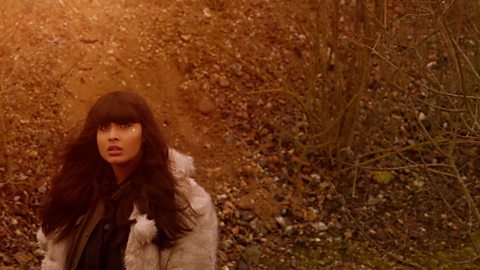
Dan Starkey on 'Night on the Bare Mountain' by Mussorgsky. video
Dan Starkey explains his love of 'Night on the Bare Mountain' by Mussorgsky.
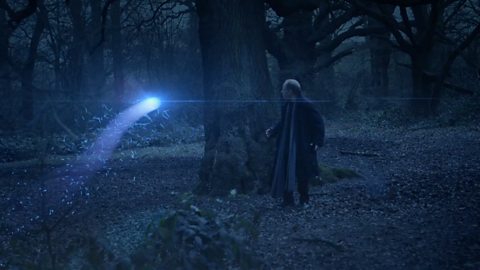
Khalil Madovi on 'Short Ride in a Fast Machine' by John Adams. video
Khalil Madovi explains his love of 'Short Ride in a Fast Machine' by John Adams.

Danielle Peazer on 'Dance of the Knights' by Sergei Prokofiev. video
Dancer Danielle Peazer explains her love of 'Dance of the Knights' by Sergei Prokofiev.
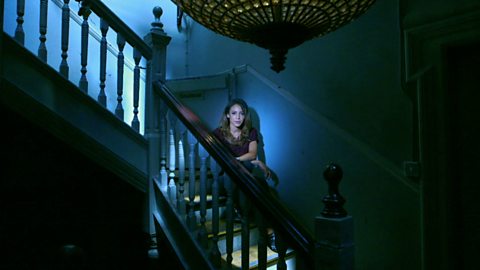
Dev Griffin on 'HandsFree' by Anna Meredith. video
DJ Dev Griffin describes his love of 'HandsFree' by Anna Meredith, explaining why it is his favourite piece of classical music.

Martin Dougan on 'Zadok the Priest' by George Frideric Handel. video
Presenter Martin Dougan explains his love of 'Zadok the Priest' by George Frideric Handel.
Barney Harwood on 'Beethoven's 5th Symphony' video
Former Blue Peter presenter Barney Harwood explains why he loves 'Symphony No.5' by Ludwig Van Beethoven.