MYLEENE KLASS:'Can music sound like the world around you?
MYLEENE KLASS:'Can it sounds like the wind…
MYLEENE KLASS:'or a summer afternoon?
MYLEENE KLASS:'Listening to this music, do you feel chilly… or warm?'
MUSIC: Winter by Antonio Vivaldi
MYLEENE KLASS:Well, I feel cold. The violins sound like dripping icicles and freezing cold air biting at my skin.
MYLEENE KLASS:But this music can take you right through the year, because now I can hear the sound of the spring sun bursting through the clouds.
MYLEENE KLASS:Until, in the heat of summer, a fierce storm approaches, now the cellos sound like thunder and the violins are wind and rain swirling around me. This is the kind of music that changes as fast as the British weather.
MYLEENE KLASS:'And, has just as many moods.'
MYLEENE KLASS:All of this music came from the imagination of an Italian man called Antonio Vivaldi. He had a head that was so covered in bright ginger hair that people referred to him as the red priest. But it was also a head that was bursting with musical ideas.
MYLEENE KLASS:'One day in 1723, Vivaldi sat down to write four pieces of music each based on a poem describing a season of the year. We now call those pieces The Four Seasons.'
MYLEENE KLASS:Vivaldi was also an amazing violinist. He liked to try and get as many different sounds out of the violin as possible.
MYLEENE KLASS:We've all seen violinists move their bows backwards and forwards. He asked, in The Four Seasons, that they use their fingers to pluck the strings.
MYLEENE KLASS:This is called pizzicato. What kind of weather does it remind you of?
MYLEENE KLASS:For me, it's the most magical winter rain that I've ever heard. Vivaldi wrote The Four Seasons as a violin concerto.
MYLEENE KLASS:Concerto is a piece of music where an instrument takes a solo lead role. And, in this case, the violin is definitely the star of the show.
MYLEENE KLASS:'In each of the seasons the violin has a kind of musical conversation with the rest of the orchestra. Listen to this chase across the fields in Autumn. What's the mood f the conversation here?'
FAST STRINGED NOTES
MYLEENE KLASS:Violin is one of those instruments that is pretty tricky to master, however, once you've got the hang of it, it can sound beautiful. Vivaldi really did know what he was doing when it came to writing for the violin, and The Four Seasons just shows it off to perfection.
MYLEENE KLASS:I was very fortunate, because I was born into a line of six generations of classical musicians. So, for me, classical music was always in my household. If you're new to classical music don't be frightened of it. All it is is bigger pieces, sometimes without words, that you just have to paint the pictures, and put the story in, for yourself.
MYLEENE KLASS:'I think that The Four Seasons is the perfect piece to start off with if you're not used to classical music because it's so evocative. You can hear with the pizzicato and the strings that they sound like rain drops. You can make your own story up to it and still never get it wrong.'
MYLEENE KLASS:'Vivaldi's music has so much of the world in it.'
MYLEENE KLASS:If you listen to The Four Seasons you'll hear it's packed with the sounds of life. Dogs barking, teeth chattering, ice cracking up, Cuckoos, parties. 'You'll even hear mosquitoes buzzing.'
MYLEENE KLASS:Do you know, it's so cold right now, I can't wait to escape the winter, and of course, with Vivaldi's help, I can.Time to switch seasons, can you guess which one I've gone for?
Myleene Klass explains why 'The Four Seasons' by Antonio Vivaldi is her favourite piece of classical music.
She explains how the concertos capture her imagination and describes some of the images the piece conjures in her mind.
This short film is from the BBC series, Play On!
Teacher Notes
This short film can be used to illustrate the work of Antonio Vivaldi, and to encourage students to explore and develop their own taste in classical music.
Students could listen to ‘The Four Seasons’ in full and explore their own interpretation of the story being told.
Provide each student with a large sheet of paper, around A2 in size, and fold this into 6 or 8 sections.
As students listen to the music they could draw or paint the image created in their mind.
When the music changes and a new image is created, they could move onto the next section of their paper.
Once the music is complete, students should have a piece of artwork depicting all of the different moods and stories created by the music.
They could share these with class and discuss the differences in their interpretations.
Play students a short extract from each movement of Vivaldi's 'Four Seasons' and see if they can identify the seasons correctly, giving reasons for their choices.
Apply this detective work principle to other pieces of music, for example, Holst's 'The Planets'.
Curriculum Notes
This short film will be relevant for teaching music at KS3 and KS4/GCSE in England, Wales and Northern Ireland and National 4 and National 5 in Scotland.
It appears in OCR, Edexcel, AQA, WJEC CCEA and SQA.
More from Play On!
Dionne Bromfield on 'Rhapsody in Blue' by George Gershwin. video
Dionne Bromfield explains why she loves 'Rhapsody in Blue' by George Gershwin.

Jameela Jamil on 'Fanfare for the Common Man' by Aaron Copland. video
Jameela Jamil explains why 'Fanfare for the Common Man' by Aaron Copland is her favourite piece of classical music.
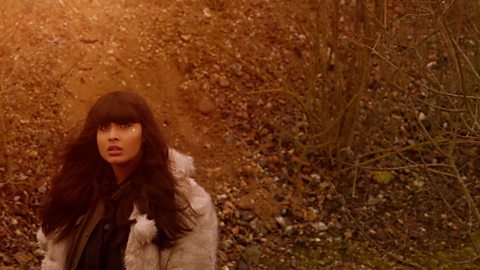
Dan Starkey on 'Night on the Bare Mountain' by Mussorgsky. video
Dan Starkey explains his love of 'Night on the Bare Mountain' by Mussorgsky.
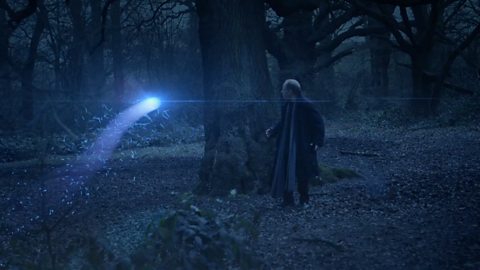
Khalil Madovi on 'Short Ride in a Fast Machine' by John Adams. video
Khalil Madovi explains his love of 'Short Ride in a Fast Machine' by John Adams.

Danielle Peazer on 'Dance of the Knights' by Sergei Prokofiev. video
Dancer Danielle Peazer explains her love of 'Dance of the Knights' by Sergei Prokofiev.
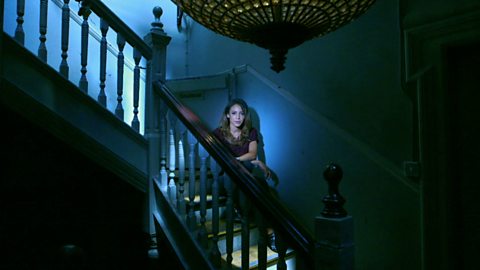
Dev Griffin on 'HandsFree' by Anna Meredith. video
DJ Dev Griffin describes his love of 'HandsFree' by Anna Meredith, explaining why it is his favourite piece of classical music.

Martin Dougan on 'Zadok the Priest' by George Frideric Handel. video
Presenter Martin Dougan explains his love of 'Zadok the Priest' by George Frideric Handel.
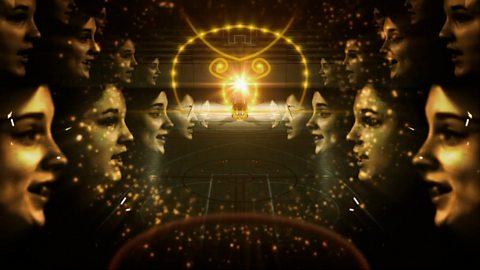
Barney Harwood on 'Beethoven's 5th Symphony' video
Former Blue Peter presenter Barney Harwood explains why he loves 'Symphony No.5' by Ludwig Van Beethoven.

Katie Melua on 'Mars, the Bringer of War' by Gustav Holst. video
Katie Melua explains why 'Mars, the Bringer of War' from Gustav Holst’s Planet Suite is her favourite piece of classical music.