Dan Snow:Hello, I'm Dan Snow.
Dan Snow:Now before World War One broke out in 1914, a completely different kind of battle had been going on in British society, involving the women of the Suffrage movement and their fight for the right to vote.
Dan Snow:War meant that their protests were put on hold, as women stepped into the jobs left vacant by the men who'd joined the military effort.
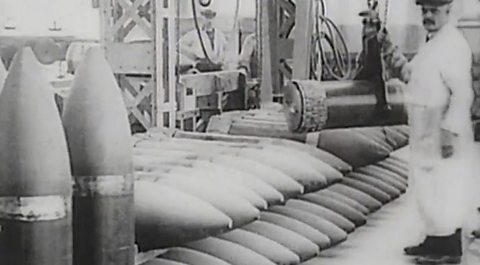
Dan Snow:They were taking on roles they had never been allowed to do before, and working in places like munitions factories making the explosives needed for the forces.
Dan Snow:Their country needed them, and so the status of women changed out of necessity, with one leading campaigner, Millicent Fawcett, saying the war "set women free".
Dan Snow:But as this clip from the journalist Kate Adie shows, when the war came to an end, many traditionalists argued that those freedoms were only for the duration of the conflict, and they wanted things to return to how they'd been before.
Kate Adie:Fighting officially ended across Western Europe on the 11th of November, 1918.
800:01:08:07 00:01:22:10Kate Adie:For many women war workers, the celebrations were short-lived. A week after the Armistice, 6,000 munitionettes marched on Parliament demanding immediate guarantees for the future.
Kate Adie:According to The Times, they were "loudly cheered by soldiers". 'But the phrase 'only for the duration' was coming home to roost.
Kate Adie:By the end of 1918, only a third of adult women were in employment, the same as before the war. Within a dozen years, their wages were less than half those of men in the same industries.
Kate Adie:The clock had struck midnight. The Cinderellas were no longer in the limelight, they were at home by the hearth.
Kate Adie:The lot of women was to be carers once more. To return to a traditional maternal role.
Kate Adie:A Ministry of Labour leaflet made clear the government's position: 'A call comes again to the women of Britain, a call happily not to make shells, but to help renew the homes of England. To sew and to mend, to cook and to clean, and to rear babies in health and happiness.'
Kate Adie:The union leader, Mary Macarthur, was caustic in her analysis: "The new world looks uncommonly like the old one," she said.
Kate Adie:But there had been a shift. Women had been on the public stage, in the media, shouldered responsibility, tasted independence, not as queens, saints or martyrs, but as ordinary women. They could now think of themselves differently.
Kate Adie:Three years after the Armistice, the suffrage campaigner and academic, Maude Royden, climbed to the pulpit here in St. Botolph's in the city of London. The first woman in the Church of England to preach from the pulpit.
Kate Adie:A woman in the pulpit had been unimaginable before the war. But now women from all backgrounds had experienced a taste of public life and held their own in the workplace.
Kate Adie:Their own lives had become entwined with national events. Having proved what they could do for the duration of the war, they emerge to press the case that they always should do it and continue the struggle for fairness and equality.
Video summary
Kate Adie looks at the legacy of World War One on the women’s suffrage campaign.
Women were pressured into returning to the home and leaving the workplace.
However, the change in women’s roles during World War One meant they would not be satisfied with this.
Women from all backgrounds started to demand fairness and equality.
Teacher Notes
Key Stage 3:Could be used after studying the Suffragette campaign prior to World War One.
Before watching the clip students could decide whether or not the Suffragettes should have suspended their campaign or not.
Then after the clip they could debate whether the role of women in World War One helped with the campaign or merely delayed women getting the vote.
Key Stage 4 / GCSE / Higher:
Students could read other interpretations and sources about the role of women in World War One, then watch this clip.
They could write an argument about whether their role in the War helped in winning the vote or not.
They could use evidence from the clips and interpretations to support their arguments.
This clip will be relevant for teaching History at KS3 and KS4/GCSE in England Wales and Northern Ireland.
Also at 3rd Level, 4th Level, National 4/National 5 and Higher in Scotland.
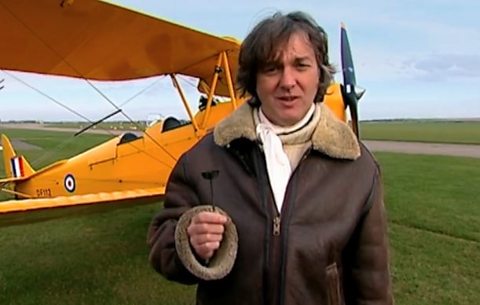
How challenging was the life of a pilot in World War One? video
James May looks at the dangers and challenges facing pilots in World War One.
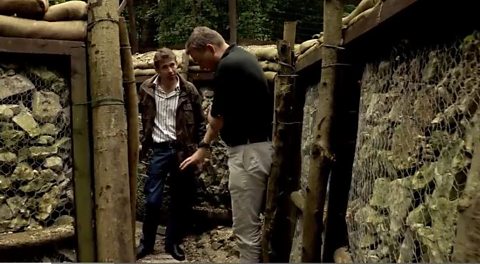
What were trench conditions like in World War One? video
Saul David looks at how British soldiers coped with trench conditions in World War One
How did Britain meet demands for weapon production in World War One? video
Saul David on how Britain struggled to produce the weapons to supply the army in World War One.