ANNA KING:
The first thing I'm going to show you is mixing colours. It's very rarely that I would ever use colours straight out of the tube, especially things like black and white, because, if you look at what things actually look like in real life, nothing's ever pure white or pure black.
I work mostly in quite subtle colours. I don't like anything too brash and bright, and I'll always mix them quite a lot. Yeah, it's important to get your colours right before you put them on the board. And as soon as you've got something down on your blank piece, it's so much easier to keep going because it's that first brush mark that's the hardest.
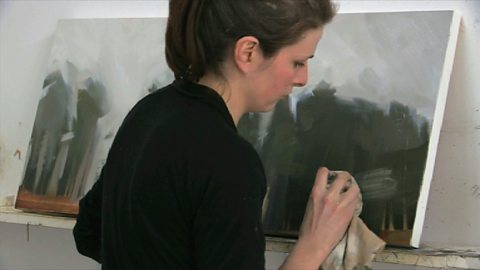
I mean, having said I'll talk about colours, I'm now doing a painting that's pretty much all grey! I work in oil paint, but I'm quite unusual in the way I work, in that I paint onto paper pasted onto board, which is not really a traditional way of doing it, but it allows me to give a sketchy finish sometimes and have the paper showing through the paint.
One technique that I've developed that's quite unique to me, as far as I know, is to draw into the wet oil paint with pencil. It's quite committing once you start drawing into the paint. You have to try and sort of relax before I make a mark and, sort of, sometimes almost not think about it and let the pencil sort of dance a bit across the paper.
The other thing I use is this. I think it's for smudging pencil or something. But I use it if I want to get sort of lines without the actual mark of the pencil. So I guess I use the paint to, sort of, mark out the, sort of, form of the painting and then the pencil just brings the detail into it. So something that didn't really look like anything before now has a bit of form to it.
I'd guess I'd say that, sort of, less is more is quite an important aspect of my painting. So I like to leave them not unfinished, but quite sort of sparse looking, with a lot of space and light in them. I hate it when things are overworked and the paint gets all muddled and dirty.
I think when it's finished, it's finished, and then I just won't touch it again. And I think that's quite an important thing, actually, as well - is knowing when to stop. Because if you take it too far, then you can lose a bit of the sort of essence of something, especially if it's a really quick piece you're doing. Sometimes it's better just to leave it.
So this is just a really quick painting of a street scene. I'm not too displeased with this, so…
Video summary
Anna King demonstrates her painting techniques.
She shows how she mixes paint colours and outlines why it’s so important to get it right.
She explains how to achieve detail and form with the technique of drawing into wet oil paint on paper.
Teacher Notes
This clip can be used to show how to record photographs outdoors as inspiration for developing a painting.
It also demonstrates techniques for painting and drawing landscapes.
These clips will be relevant for teaching Art and Design at GCSE/KS4 in England, Wales and Northern Ireland and National 4/5 or Higher in Scotland.
The topics discussed will support OCR, Edexcel, AQA, WJEC GCSE in England and Wales, CCEA GCSE in Northern Ireland and SQA National 4/5 and Higher in Scotland.
Landscape painter Anna King. video
Artist Anna King explains why she is inspired to paint landscape
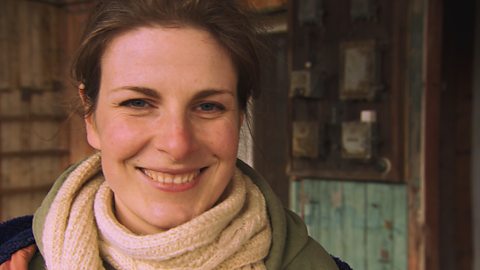
Finding inspiration to paint. video
Artist Anna King shows us why she like painting derelict buildings
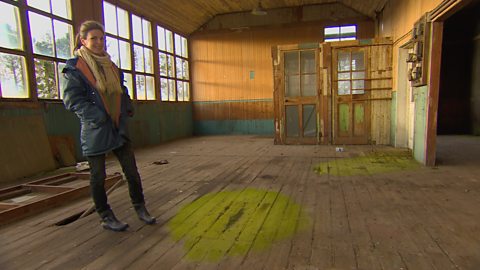
How to develop a painting. video
Artist Anna King develops a landscape oil painting from scratch