A collection of short Hey Duggee videos and simple activity sheets for use in Reception and Early Years settings.
Mapped to the EYFS 2023 curriculum (details below), these seven Hey Duggee videos have been created to help children aged 3-5 explore and identify different feelings (angry, happy, scared, sad, tired, excited and upset).
The videos are accompanied by downloadable activity sheets that can be used for a follow-on group or classroom activity. With supervision, children can create simple colour-in feelings puppets to match each feeling and help them work each feeling out. Ideas for follow-on activites are detailed at the bottom of this page.
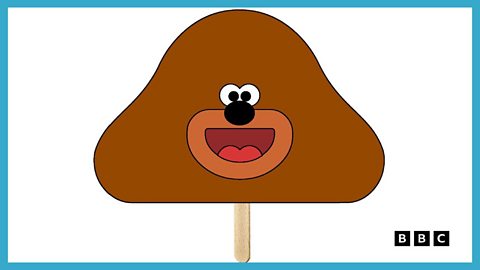
Start by watching the introduction video and click here to download the step-by-step guide to making the Duggee colour-in feelings puppets.
An introduction to the Hey Duggee 'Work It Out' badge resources, with a brief guide to making the colour-in feelings puppets.
Happy: Huh
Narrator: Duggee and the 'Work It Out' badge.
Everyone: Duggee!
Duggee: Woof, woof?
Roly: Happy.
Tag: Isn't Happy.
Narrator: Oh dear, it looks like Happy can't tell us…
Happy: I can't…err…I don't know!
Narrator: How he's feeling.
Duggee: Woof.
Betty: What's that?
Narrator: A feeling is what you have when something happens. For example, when you see something funny and laugh. That's a feeling called joy.
Duggee: Hmmmm
Narrator: When something confuses you.
Duggee: Huh?
Narrator: That's a feeling, it's confusion. When you smile at something sweet.
Duggee: Aww.
Narrator: That's a feeling too, its delight.
Norrie: What are you feeling, Happy?
Happy: I don't know.
Narrator: I think a Duggee puppet might help Happy to work it out. Let's make some.
Everyone: Make puppets!
Narrator: You'll need templates, safety scissors, colouring pens, tape and lollipop sticks. Make sure an adult does the cutting.
Duggee: Woof!
Narrator: First, cut out each puppet template, and colour it in. Then use a bit of tape to attach one lollipop stick to the back of the puppet, and look you've made Duggee's face.
Videos
Watch the videos and download the activity sheets that can be used for a follow-on group or classroom activity.
Angry and Happy
Angry
Narrator: Now we'll start by asking, what are you feeling Happy?
Happy: I don't know!
Nori: Look, his eyebrows are pointing down.
Roly: His mouth is the wrong way round.
Narrator: Perhaps Happy feels angry? Which feels like your head is a volcano ready to explode. Your tummy is bubbling and boiling like hot soup and you feel like a steam train all puffing and loud.
Happy: Head like a volcano, tummy boiling like soup, puffing steam train. That's it. I feel angry!
Narrator: So we need to make an angry face like this one. We'll use a template to cut out Duggee's angry face. Make sure an adult does the cutting. Now it's your turn to colour in the head. Stick a lollipop-stick to its back and wow! Huh, that is an angry face.
Happy
Narrator: And we'll end on a feeling we all really enjoy…Happy!
Tag: Yay!
Happy: Hop, hop, hop.
Narrator: When you're really happy it feels like your smile lights up the room, your heart is so full it could almost burst, and you'll feel light and shiny like a star.
Tag: Ooh, I had that feeling when I waved to the bus driver. 'Hello'. And she waved back.
Bus Driver: 'Hellooooo'
Narrator: Sometimes, music can make us feel happy.
Duggee: Woof. Woof. Woof. Woof.
Narrator: Happy!
Everyone: Wow!
Happy: My mum always says, laughter is the best medicine.
Betty: Is it?
Happy: That's what my mum says.
Everyone: Wow!
Narrator: Get your adult to cut out Duggee's happy face and then colour it in. Stick the lollipop stick to the back of Duggee's head with some tape and what a big smile Duggee.
Angry and Happy. document
Download / print the Angry and Happy colouring-in sheet. (2.7 MB)
Scared and Sad
Scared
Narrator: What feeling shall we do next? How about scared.
Duggee: Woof.
Narrator: When you're scared it might feel like your heart is pounding like a drum, your whole body shakes and shivers like you're freezing cold, and your voice comes out all high and squeaky like a mouse.
Betty: I had that feeling! When I let go of my balloon. Nooooo… noooo… nooooo… Ahhhhhh!
Narrator: Let's get cutting, colouring and taping. Because everyone feels scared sometimes, even Duggee.
Sad
Narrator: Sad is another kind of feeling.
Tag: Duggee.
Norrie: This song.
Betty: It's making us.
Roly: Saaaaad.
Roly: I had that feeling… When I dropped my ice cream, and it all melted.
Narrator: So let's make a sad face. Again cut out Duggee's head and colour it in. Put the lollipop stick in place and there look. Duggee's sad face.
Scared and Sad. document
Download / print the Scared and Sad colouring-in sheet. (2.6 MB)
Tired and Excited
Tired
Narrator: Ahh yes, tired.
Duggee: Oh, woof.
Narrator: I agree Duggee. A little nap.
Roly: But, I'm not sleepy.
Narrator: This time there are some zigzag zzz's to colour in too. You see them? That's what we use when we want to show that someone is sleeping. Yes, that face is very tired.
Excited
Narrator: How about this one?
Roly: I was all buzzy and jumping!
Narrator: It's something Duggee feels when he's waiting for the postman.
Squirrels together: Huh, the postman!
Postman: Special delivery for ah…Dubedee?
Squirrels together: Excited!
Narrator: Excited. Yes, well done! You worked it out! So like before. Get your adult to cut out Duggee's excited face. Colour it in and use tape to add the stick to the back. This face is excited.
Tired and Excited. document
Download / print the Tired and Excited colouring-in sheet. (2.7 MB)
Upset
Upset
Narrator: Or you might feel really upset…
Norrie: Are you okay Duggly?
Happy: Uh oh…
Narrator: …for all sorts of reasons. Even if people try to cheer you up. Then it's useful to have an upset Duggee puppet. There's a big tear here because sometimes being upset can make you cry.
Upset. document
Download / print the Upset colouring-in sheet. (1.6 MB)
Teacher notes
Before watching the videos
Watch each video through first (including the introductory video at the top of this page), to check it's appropriate for your cohort. You might also like to download and print the colour-in sheets in advance.
Children in your setting may be familiar with using a feelings board or ‘How do you feel today?’ interactive display or self-registration system. This opens up opportunities for age-appropriate discussion about feelings; what they are and how we can try to identify, embrace and manage them. Through observation, get to know the emotional needs of your learners. Be aware of those children for whom self-regulation is particularly challenging. These children may benefit most from being involved in making the puppets.
After watching the videos
Enjoy colouring in and making the puppets in small groups, with adult support as required. Talk about Duggee's facial features. What do they tell us about how he is feeling?
The Hey Duggee puppets can be kept as a classroom resource for roleplay, storytelling, circle time or further exploration of feelings in small groups. In particular, children with additional needs in communication, behaviour or social and emotional development may benefit from using the puppets to help them self-regulate and express themselves.
To pose a thinking question, you could ask the children which Duggee they feel like today, and why.
Curriculum links
These short films support children’s development across all three prime areas of the Statutory Framework for the Early Years Foundation Stage (EYFS) 2023:
- Communication and language
- Physical development
- Personal, social and emotional development.
The videos and activities specifically support development towards these Early Learning Goals (ELG):
- Speaking - participate in small group, class and one-to-one discussions, offering their own ideas, using recently introduced vocabulary.
- Self-regulation - show an understanding of their own feelings and those of others and begin to regulate their behaviour accordingly.
- Managing self - be confident to try new activities and show independence.
- Fine motor skills - use a range of small tools, including scissors.
Curriculum for Wales 2022 - The videos and activities support progression along all five of the developmental pathways:
- Belonging, communication, exploration, physical development and well-being. In particular, they support practitioners in developing ‘emotionally safe environments that support children to begin to recognise and manage their feelings and behaviours in positive ways’.
Northern Ireland Curricular Guidance for Pre-School Education 2018:
- Personal, social and emotional development - encouraging children to talk about how they feel at different times.
- Language development - make their needs, thoughts, feelings and ideas known; self-regulate their emotions.
- Physical development - demonstrate fine motor skills; use a range of small equipment.
The Northern Ireland Primary Curriculum Foundation Stage:
- Personal development and mutual understanding – to explore their own, and others’ feelings and emotions.
3-18 Curriculum, Scotland, early level benchmarks:
- Talks clearly to others in different contexts, sharing feelings, ideas and thoughts.
- Talks about personal experiences.
- Can express and communicate ideas, thoughts and feelings through activities within art and design.
Explore more EYFS lesson videos
Moodboosters. collection
We've teamed up with BBC Children in Need and children’s mental health charity stormbreak, to develop a series of fun, simple and interactive classroom videos for primary schools to get your class moving for mental health and wellbeing.
Feeling Better. collection
A collection of short films for Reception and Early Years settings, presented by Dr Radha Moghil and exploring a whole range of feelings and emotions, as well as providing talking points and tools to feel better.
Go Jetters. collection
A collection of short geography 'Funky Facts' videos for use in your Early Years or KS1 classroom. Explore places all around the world with Ubercorn and the Go Jetters.