ZARA HOHN:'When I was roughly about 14 years old 'I had an infection which actually got into my blood.
ZARA HOHN:'I just thought it was a general illness. 'Until I actually collapsed and my parents called the ambulance.
ZARA HOHN:'They rushed me to the hospital 'to see what was going on because I was just sort of bleeding to death. 'And basically died in the operation.
ZARA HOHN:'Somehow they got an emergency blood transfusion. 'And they managed to get me back. 'I actually woke up.'
ZARA HOHN:And then-- But the first thing was on my mind was I still wanted to do athletics.
ZARA HOHN:'It was really hard because… 'I was really weak, to the stage where I couldn't walk. 'And laid in the hospital bed for months.
ZARA HOHN:'Because I wanted to do athletics again 'It made my journey even harder because no coaches 'thought that I'd be strong enough or good enough.'
ZARA HOHN:It was just-- Felt like it was almost impossible that I'd be an athlete. Until my dad took over and told me that he'll coach me and get me there.
ZARA HOHN:'Although I was doing athletics before my illness 'it wasn't nowhere near as serious as it is now.'
ZARA HOHN:So I always remember where I'm coming from, which is a weak person that no-one believed in. 'It's about proving the people that didn't believe in me 'that I can actually do it.
ZARA HOHN:'I need to think back to where there was a time when I couldn't walk. 'It motivates me a lot.
ZARA HOHN:'When I'm running down the track 'I don't think of nothing at all. 'Especially if it's a good race because I'm so deep into a zone 'my mind actually goes blank.
ZARA HOHN:'My ambition is to be the world number one. 'I want to be… 'World champion - Olympic champion.'
ZARA HOHN:I want to be able to inspire other people. And make them believe they can do anything they want to do.
ZARA HOHN:Despite what anybody else tells them. And just to show that if you keep on going and you train hard that you can succeed.
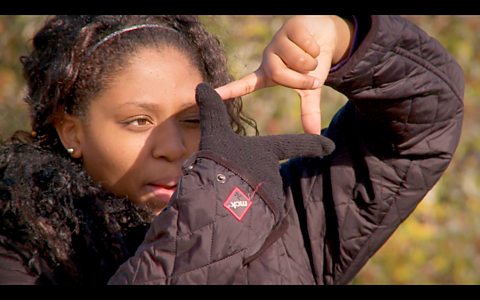
Zara Hohn is a promising young British athlete from Sheffield who hopes to take part in the 2012 Olympics.
She talks about her training regime, what drives her, and the huge obstacles that she has had to overcome in order to become one of the country’s top athletes.
This clip is from the series Making Media.
Teacher Notes
Through considering a report constructed by their peers, students can analyse the ways in which an item can be put together by seeing how the sound elements, the interview and the music, are combined with the visuals in order to hold the interest of the audience.
They can consider in detail the shots used and how the editing has matched sound and image.
Students can use this sequence as a basis for a similar report with a local personality.
Curriculum Notes
These films will be relevant for Media Studies KS3, KS4 in England, Wales and Northern Ireland and National 4/5 or Higher in Scotland.
This topic appears in OCR, Edexcel, AQA, WJEC GCSE in England and Wales, CCEA GCSE in Northern Ireland and SQA National 5 and Higher in Scotland.
More from the series Making Media
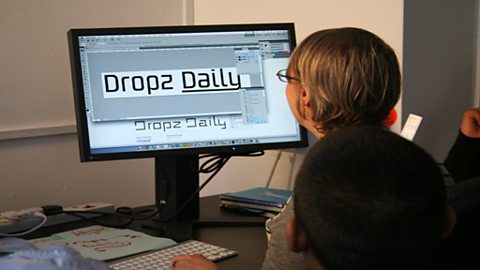
Media Studies KS3 / GCSE: How to build a website. video
A group of young entrepreneurs learn the key concepts of user-focused web design.
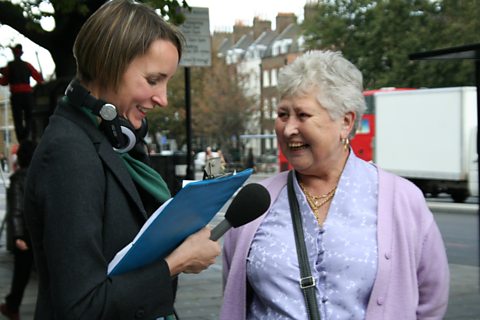
Media Studies KS3 / GCSE: How to conduct an interview. video
A panel of young people assess and learn key skills for interviewing in media production.
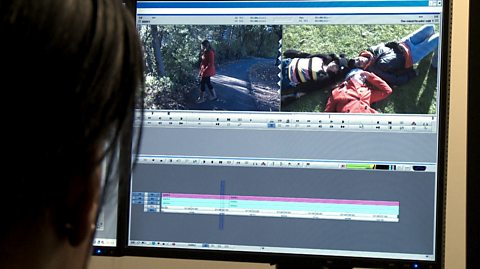
Media Studies KS3 / GCSE: How to edit a film trailer. video
Three young film-makers learn insider tips and tricks for creating a film trailer.
Media Studies KS3 / GCSE: Research, planning and filming. video
Five young film-makers learn to research, plan and shoot a film.
Media Studies KS3 / GCSE: Editing a film. video
A guide to creating a film narrative, from preparation to storytelling techniques.
Media Studies KS3 / GCSE: How to shoot a music video. video
Young people learn creative tips for shooting a music video with basic equipment.