Primary > KS1 Science > Space
How does the Earth travel around the sun?
MADDIE MOATE: It’s estimated that the Earth is home to about three trillion trees, and around 9 million different types of animals - including about 8 billion people. It’s the only planet in the universe - that we know of - which has life on it. All life on Earth depends on the sun.
CHILD: The sun is a huge burning star which gives out heat and light.
CHILD: The Earth is the third closest planet to the sun and has perfect conditions for life to exist.
MADDIE: The Earth travels around the sun and each complete circle - or ‘orbit’ - takes about one year.
CHILD: But why does the Earth travel around the sun instead of travelling in a straight line through space?
MADDIE: It’s all to do with gravity. Gravity is the invisible force that pulls objects towards each other.
CHILD: The sun has gravity too - pulling the Earth towards it. That’s why when we drop these objects they fall down to the ground.
MADDIE: Everything in the universe has gravity, including the sun. The sun’s gravity is pulling the Earth towards it. Stopping the Earth from floating away.
CHILD: Ok, but why doesn’t the Earth crash into the sun?
MADDIE: The Earth is travelling very fast through space. If the sun didn’t have gravity the Earth would travel in a straight line. But the sun’s gravity pulls the Earth towards it, causing the Earth to circle around - or orbit - the sun. It takes the Earth 365 days to orbit the sun: that’s a whole year.
CHILD: Actually! It’s 365 and a quarter days!
CHILD: But you can’t have a quarter of a day.
MADDIE: That’s why every four years we have to add another day to February to make it right.
CHILD: We call that a leap year.
CHILD: If the sun is always in the same place, why do we see it move across the sky?
MADDIE: Great question! Let’s ask an expert.
DR BECKY: Hi, I’m Dr Becky and I am a space expert. Now although it might look like it’s the sun that’s moving in the sky, it’s actually us here on planet Earth that are moving. Just like when you sit in a car and you look out of the window, and you see buildings zooming past you. It’s not the buildings that are moving, it’s you in the car. So, in the same way when the Earth moves around the sun on it’s orbit, it also spins around once every 24 hours or one day. And so, it appears as if the sun is moving, but actually it’s the earth that’s spinning.
So as our side of the Earth faces the sun, that’s when it’s daytime for us. And then as the earth spins on its axis and then our side of the Earth faces away from the sun, that’s when it’s night time.
MADDIE: Earth has one moon, and while the Earth orbits the sun, the moon orbits the Earth. It takes 27 days for the moon to make one rotation around the Earth. The moon reflects the sun’s light. As it moves around the Earth, the amount of sunlight that falls on the surface changes. To us on Earth it looks like the moon changes shape; that’s because we are only able to see the part of the moon that is reflecting the sun’s light. Every object that exists has gravity. The Earth’s gravity pulls the moon, but the moon’s gravity also pulls the Earth. This is what causes the tides - the movement of water in the seas and oceans on Earth.
CHILD: That’s why when you go to a beach the ocean can be at high tide, low tide or in between!
MADDIE: The Earth is constantly changing.
CHILD: I know what’s always changing on Earth - the seasons!
MADDIE: The seasons change because the Earth is not sitting straight: it’s tilted. And as Earth orbits the sun a different part of the Earth is tilting towards the sun. When the upper part of the Earth is tilted towards the sun it gets more light and warmth, so it would be summer there. At the same time, the lower part of the Earth is tilted away from the sun; it gets less light and warmth, so it would be winter there.
MADDIE: What are you all up to?
CHILD: We’re making up poems about the seasons.
CHILDREN: Listen to this one.
Spring hums like a bee on the breeze
Summer sings like the birds in the trees
Autumn crackles like the leaves on the ground
Winter whispers, barely making a sound. Shhhhhh!
MADDIE: Very nice! Could you write some words or even your own poem about the seasons?
Video summary
Download/print a transcript of the video.
In this video, narrated by Maddie Moate, a group of children visit a space centre to make discoveries about planet Earth.
They learn how the Earth's tilt on its axis results in the seasons; they find out about day and night; how long Earth's orbit of the sun takes; and how the moon reflects light from the sun.
Space expert Dr Becky Smethurst answers the question: If the sun is always in the same place, why do we see it move across the sky?
Teacher notes
Download/print the Teacher notes for this unit.
Discussion points:
1. The Earth
- What colours make up the Earth and what does each colour show?
- How does the Earth move around the sun and what does this cause?
- Ask pupils to think about why facing the sun causes warmer, brighter times and facing away causes cooler, darker times.
2. The Moon
- What is a moon? Do all planets have a moon or moons?
- How many moons does the Earth have?
- Discuss reflection of the sun’s light and how the moon reflects this which makes it visible at night.
3. Gravity
- What is gravity and what does this do?
- Which item pulls the Earth and causes it to orbit around it?
- How long does it take the Earth to orbit the sun and why do we have a leap year every four years?
4. Seasons
- Discuss why we have seasons and why the tilt of the earth causes these.
- What are the key characteristics of the seasons and what do humans do differently during each season?
Suggested activities:
1. Investigating gravity
- After discussion gravity and what it does, consider how we can stop things falling to the ground, how can we create stronger push than pull forces.
- Can pupils use magnets and paperclips to defy gravity and make a small paper rocket clipped onto the paper clip float?
2. Diary of Earth
- Following learning from the video about planet Earth, can pupils write a diary entry as the planet, exploring what it feels and looks like as the seasons and time of the year changes.
- Pupils to share their diary entries and discuss key messages from these.
3. Earth art
- Following discussions about the colours that make up the Earth, can pupils create their own collage/piece of artwork based on the Earth, showing the colours of the planet.
- Discuss and share these pieces of work and why the colours used were chosen.
4. Seasonal poetry
- After watching the video and seeing the explorer’s example, can pupils create their own poem on the seasons.
- Share and appraise works and discuss interpretations of these poems created.
Curriculum notes:
- This video aligns with Science in the National Curriculum in England, Northern Ireland, and 1st Level in Scotland.
- It also supports the Science and Technology Area of Learning and Experience within the Curriculum for Wales.
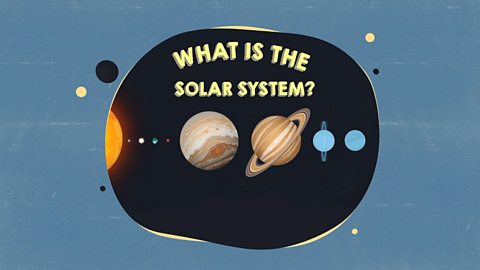
What is the solar system? video
This video explores the key characteristics of each planet within our solar system.
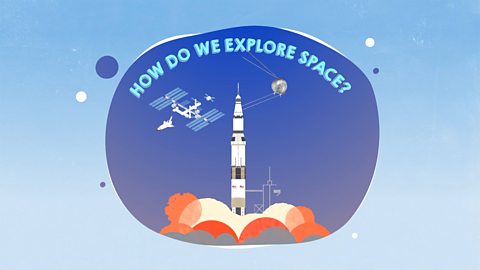
How do we explore space? video
In this video a group of children learn all about those who have explored space in the past and what they found out.
Primary > KS1 Science > Space
